
standard breed · Hybrid (USA, UK)
Olive Egger
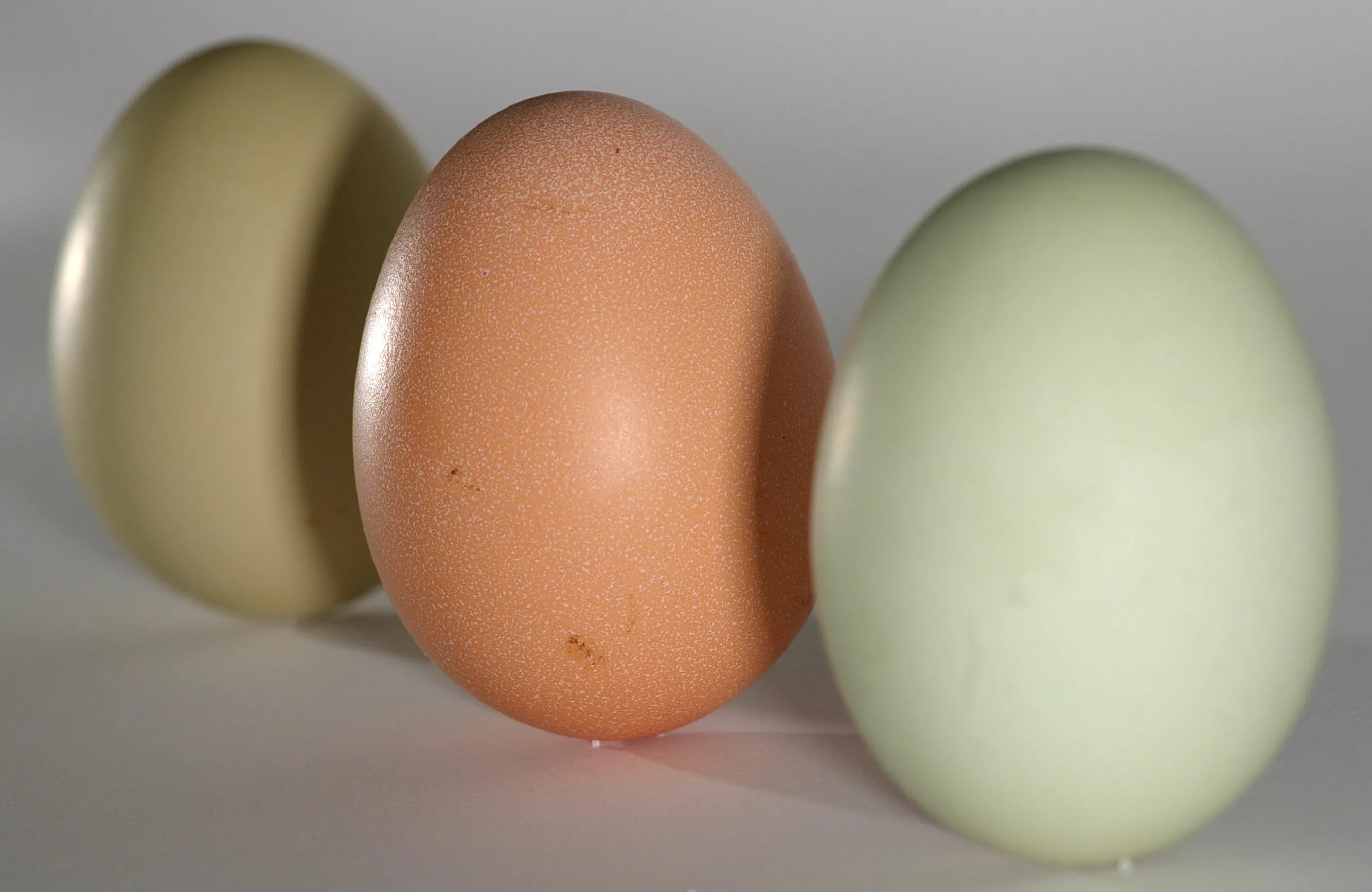
A cross between a blue-egg breed (Ameraucana, Cream Legbar) and a dark-brown egg breed (Marans, Welsummer). The result: rich olive-green eggs that vary from hen to hen.
| Size class | standard |
|---|---|
| Weight (hen) | 6 lb (2.72 kg) |
| Weight (rooster) | 7 lb (3.18 kg) |
| Eggs per year | 200 |
| Egg color | olive green |
| Egg size | large |
| Climate tolerance | All climates |
| Temperament | friendly |
| Goes broody | rarely |
| Noise level | moderate |
| Beginner-friendly | Yes |
| Origin | Hybrid (USA, UK) |
Is the Olive Egger right for your flock?
The Olive Egger is a standard breed that's well-suited to first-time keepers. Hens lay around 200 olive green eggs per year and tolerate most climates well.
Temperament: friendly. Broodiness: rarely. Noise level: moderate.
What this breed needs
- Coop space: about 4 sq ft per bird inside the coop. Run the numbers for your specific flock size in the coop size calculator.
- Climate fit: adapts to a wide range of climates with no special accommodations.
- Eggs: a steady, reliable producer — a good general-purpose layer. For a month-by-month breakdown, see Olive Egger Egg Production: How Many Eggs Per Year?.

History
An Olive Egger is not an American Poultry Association–recognized breed. It is a hybrid category defined by an outcome — hens that lay olive-green eggs — produced by crossing a blue-egg line with a dark-brown-egg line. Parentage is not fixed: different breeders and hatcheries use different pairs. That framing is the load-bearing institutional fact for this page, the same structural honesty Flockmath’s Easter Egger profile uses for another non-APA colored-egg category.
University of Maine Extension (#2104) lists Olive Egger among tinted-egg layers as “a mix of breeds that produce olive tinted eggs,” alongside Easter Egger (explicitly “not a recognized breed by American Poultry Assn”). Michigan State University Extension: an Olive Egger “is the product of a cross between a hen and rooster that are from a brown egg and a blue egg laying breed.” Texas A&M AgriLife Extension (Archer): same cross recipe — brown-egg × blue-egg parents produce the olive-green result. Cackle Hatchery (hatchery guidance, Gail Damerow FAQ): “not a particular breed”; “hybrid developed by crossing two different breeds”; APA would struggle to classify them because “they don’t all look alike.”
What the cross is for. Olive shells are not a separate “olive gene.” They are the visual result of blue shell pigment through the shell plus a brown surface overlay. MSU Extension: Ameraucana-type blue uses oocyanin/biliverdin that permeates the shell; brown layers deposit protoporphyrin late as a surface tint; in an Olive Egger “a brown pigment overlays a blue egg shell resulting in a green egg. The darker the brown pigment the more olive color of the resulting egg.” Ameraucana Breeders Club FAQ (pigment chemistry already cited on the Ameraucana and Easter Egger profiles): biliverdin creates blue; protoporphyrin-IX creates brown; hens on the “olive green or khaki spectrum” get a coating of protoporphyrin late in the uterus. Cackle’s breeding FAQ: blue shells are blue throughout; brown pigment sits outside; olive = blue base + brown overlay; shade tracks how dark each parent’s contribution is. Blue-egg parents commonly named in hatchery/extension language include Ameraucana, Cream Legbar, and Araucana; dark-brown parents include Black Copper Marans, Welsummer, and Barnevelder — examples of the recipe, not a single pedigree. Cackle’s own F1 SKU uses Cream Legbar roosters × Welsummer hens; Hoover (hatchery) discloses two crosses under one Olive Egger product (Americana × French Cuckoo Marans, and Legbar × Welsummer). Read the SKU.
F1 vs later generations. Cackle: F1 = first filial cross for olive shells; breeding Olive Egger × Olive Egger does not reliably keep olive — hybrids are “genetically unstable” for shell color. F2 projects (Cackle’s separate SKU) deliberately widen the color basket (olive, blue, green, speckled, chocolate-toned) by backcrossing F1 hens to Marans / Ameraucana / Cream Legbar males. Cackle also warns against using Easter Eggers as the blue parent if the goal is reliable olive — EE shell colors vary and may not pass blue cleanly. That distinction matters: Easter Egger is a blue-gene mongrel category; Olive Egger is a targeted blue × dark-brown project. Related profiles for the parent types: Ameraucana, Welsummer, Black Copper Marans, Barnevelder, Easter Egger.
Conservation. Livestock Conservancy /olive-egger/ 404s. Cackle prints APA: No and TLC: Not Listed. Absence is expected for a hybrid category — not a missing Watch listing to invent.
Care
There is no Conservancy, APA, or club closed annual egg count for “the Olive Egger.” Planning numbers are hatchery SKUs and Flockmath’s disclosed Normal — and hatcheries disagree because they sell different products.
Eggs.
- Cackle Olive Egger™ (F1, Cream Legbar × Welsummer): 180–200/year (estimates only); medium–large; olive green; claims ~97% of hens lay olive (hatchery claim, not an extension trial).
- Cackle F2 Olive Egger™: 150–220/year; shell color “All Shades of Brown, Green, Blue, Speckled, Olive, Dark” — a color basket, not reliable olive.
- Hoover Olive Egger (hatchery): 260 large olive eggs/year — one printed number covering two disclosed crosses; both crosses “have a chance of laying brown eggs.”
- Flockmath: 200.
Flockmath’s 200 matches Cackle F1’s ceiling and the sibling Olive Egger egg guide Normal. It sits above Cackle F2’s floor and below Hoover’s 260 commercial print. No extension table row was found this pass that publishes a closed Olive Egger annual count (USU’s table used on other profiles does not isolate this hybrid in the sources fetched here). Maine names the category for farm-stand tinted eggs without a count.
Shell color class. Flockmath’s olive green is a planning class, not one Pantone. MSU: darker brown overlay → deeper olive. Texas A&M: shade can lighten with age on brown-pigment hens while the basic color class stays; a hen lays one color for life. Cackle F1: light to dark olive and green-brown tones vary by hen. F2 / mixed SKUs may escape to blue, brown, or speckled — that is genetics, not a broken hen.
Weights & looks. Cackle F1: hen 5½ lb, rooster 6½ lb. Hoover: mature 5–6 lb; pea comb listed on that SKU. Flockmath: hen 6.0, rooster 7.0. No institutional closed weights — the mismatch is named. Cackle FAQ: appearance “determined by the breeds used”; birds “may or may not have peacombs, muffs, beards, or feathered legs, and may or may not be rumpless.” Do not expect a single “Olive Egger look.”
Climate. No institutional climate profile for the hybrid as a class. Flockmath all and Hoover’s “Cold and Heat Hardy” are management-facing labels, not Conservancy hardiness ratings. UMN names Ameraucana (a common blue parent), not Olive Egger, among heavier winter breeds. Poultry Extension: pea combs frostbite less than large single combs — useful when the bird inherited a pea comb; single-comb throwouts need damp-cold care like any single-comb bird. UMN still ties frostbite to moisture + cold.
For coop sizing / egg modeling: coop size calculator and egg production calculator.
Temperament
Institutional temperament language for this hybrid is thin and hatchery-led.
Cackle F1 Breed Facts: Active; body copy calls them friendly/useful backyard birds with individual variation. Hoover: “Mellow, Active, Friendly, Docile.” Flockmath friendly / beginner-friendly / moderate noise aligns with Hoover’s softer list and against Cackle’s facts-table Active alone. This profile names that spread. Parent temperament (Legbar flightiness, Marans calm, Welsummer calm-vs-active disagreements already documented on those profiles) can pull individuals either way — another reason “the Olive Egger personality” is not a closed trait.
Broodiness. Cackle F1: Variable. Hoover: Rarely. Flockmath rarely. Those disagree at the facts-table level; Flockmath follows Hoover’s rare framing and the sibling egg guide’s rare note, while naming Cackle’s Variable.
Health
No fetched extension or club page identifies an Olive-Egger-specific infectious disease. Honest gap.
Management points that are sourced:
- Buyer expectation risk: you are buying a color project, not a show breed. Cackle/Maine: not APA; looks vary; F2 and OE×OE matings scramble shell color (Cackle).
- Do not use Easter Eggers as a shortcut blue parent if reliable olive is the goal (Cackle breeding FAQ) — EE blue inheritance is unreliable for this project.
- Shell-color myths: Poultry Extension (Jacob) on blue eggs — retroviral insertion story does not mean the birds are sick or GMO; Alliance FAQ still useful for the old blue-egg cholesterol marketing myth (Texas A&M / Cawley 1979), which must not be recycled for olive eggs either. MSU and Texas A&M: color does not change major nutrition vs other chicken eggs.
- Frostbite / moisture: Poultry Extension + UMN — manage damp cold; pea combs help when present.
- Araucana tuft lethality: if a seller’s “blue parent” is rumpless/tufted Araucana-type, Alliance/Cackle lethal-allele warnings from the Easter Egger / Ameraucana pages still apply — ask what you are actually buying.
If frostbite occurs, UMN recommends a veterinarian; severe untreated frostbite can mean permanent tissue loss and may require isolation from pecking.
Olive Without a Standard: The Bottom Line
If you want olive-class eggs and can live without a breed standard, Olive Egger is the category Maine Extension, MSU Extension, Texas A&M AgriLife, and hatchery FAQs all describe: a blue × dark-brown hybrid project, not an APA breed. Flockmath’s 200 eggs/year matches Cackle F1’s 180–200 ceiling and sits below Hoover’s commercial 260 — read the SKU before you treat any number as “the” Olive Egger rate. Expect olive shade to track how dark the brown overlay is (MSU; ABC pigment language), one color per hen (Texas A&M), and F2 / OE×OE offspring that may leave the olive class entirely (Cackle).
Expect variable looks, frequent marketing as if it were a breed, temperament language that runs from Cackle Active to Hoover “mellow/docile,” and broodiness that hatcheries print as Variable or Rarely. Ask which parents made your birds — Cream Legbar × Welsummer, Ameraucana × Marans, or something else — and whether you are buying F1 olive-focused stock or an F2 color-basket project. You are buying a hybrid color recipe with a paper trail, sibling in spirit to Easter Egger, not a Conservancy heritage breed and not a guaranteed Pantone olive forever.
Sources
- Olive Egger = brown-egg × blue-egg cross; brown protoporphyrin overlays blue (oocyanin) shell; darker brown → more olive; color ≠ nutrition: Michigan State University Extension — “Why are chicken eggs different colors?” (Dorothy Munn, 2013).
- Same cross recipe; olive egger named; one color for life; brown pigment late / blue permeates; age can lighten shade within class; color ≠ major nutrition difference: Texas A&M AgriLife Today — Archer, “Cracking the mystery on chicken eggs” (2024).
- Olive Egger listed as mix producing olive-tinted eggs; Easter Egger not APA: University of Maine Cooperative Extension — Bulletin #2104
- Biliverdin / protoporphyrin-IX; olive/khaki = protoporphyrin coating over blue; O locus / SLCO1B3 notes: Ameraucana Breeders Club — FAQ
- Easter Egger definition (not a breed); cholesterol myth (Cawley / Texas A&M); hatchery mongrels: Ameraucana Alliance — FAQ
- Blue-egg retrovirus story ≠ sick/GMO birds: Poultry Extension — “Colored Eggs and Food Safety,” Dr. Jacquie Jacob, University of Kentucky.
- Frostbite moisture/ventilation; Ameraucana (not OE) among heavier winter breeds: University of Minnesota Extension — “Caring for Chickens in Cold Weather.”
- Pea vs single comb frostbite incidence: Poultry Extension — “Frostbite in Chickens,” Dr. Jacquie Jacob, University of Kentucky.
- Conservancy gap:
/olive-egger/404; Cackle TLC Not Listed / APA No. - Hatchery guidance (labelled): Cackle — Olive Egger™ — Cream Legbar × Welsummer F1; 180–200 eggs; APA No; TLC Not Listed; Broody Variable; Temperament Active; weights 5.5/6.5; ~97% olive claim. Cackle — F2 Olive Egger™ — 150–220; color basket; Broody Somewhat Setter. Cackle — “Olive Egger Chickens: 6 Questions Answered” and How to Breed… — not a breed; blue+brown overlay; parent-breed lists; F1/F2; OE×OE unstable; don’t use EE as blue parent for reliable olive.
- Hatchery guidance (labelled): Hoover’s Hatchery — Olive Egger — two crosses disclosed; 260 eggs/year; temperament mellow/active/friendly/docile; broodiness rarely; 5–6 lb; cold and heat hardy; brown-egg chance.
Ours: framing Flockmath’s 200 against Cackle F1 180–200 while naming F2 150–220 and Hoover 260 as different products; refusing APA/Conservancy status narratives; naming variable parentage (not one fixed pedigree); naming weight and temperament/broodiness spreads across hatchery facts tables; cross-linking Ameraucana, Easter Egger, Welsummer, Marans, and Barnevelder profiles instead of re-deriving parent-breed histories; grounding olive = blue + brown overlay in MSU + ABC (with Texas A&M as corroborating extension); and leaving breeds.json unchanged this pass.