
standard breed · USA
Easter Egger
Not a recognized breed but a hybrid that carries the blue-egg gene. Each hen lays a single color from her own palette of blue, green, or pinkish eggs — a backyard favorite.
| Size class | standard |
|---|---|
| Weight (hen) | 5 lb (2.27 kg) |
| Weight (rooster) | 7 lb (3.18 kg) |
| Eggs per year | 240 |
| Egg color | blue, green, or pink |
| Egg size | large |
| Climate tolerance | All climates |
| Temperament | friendly |
| Goes broody | rarely |
| Noise level | moderate |
| Beginner-friendly | Yes |
| Origin | USA |
Is the Easter Egger right for your flock?
The Easter Egger is a standard breed that's well-suited to first-time keepers. Hens lay around 240 blue, green, or pink eggs per year and tolerate most climates well.
Temperament: friendly. Broodiness: rarely. Noise level: moderate.
What this breed needs
- Coop space: about 4 sq ft per bird inside the coop. Run the numbers for your specific flock size in the coop size calculator.
- Climate fit: adapts to a wide range of climates with no special accommodations.
- Eggs: a steady, reliable producer — a good general-purpose layer. For a month-by-month breakdown, see Easter Egger Egg Production: How Many Eggs Per Year?.
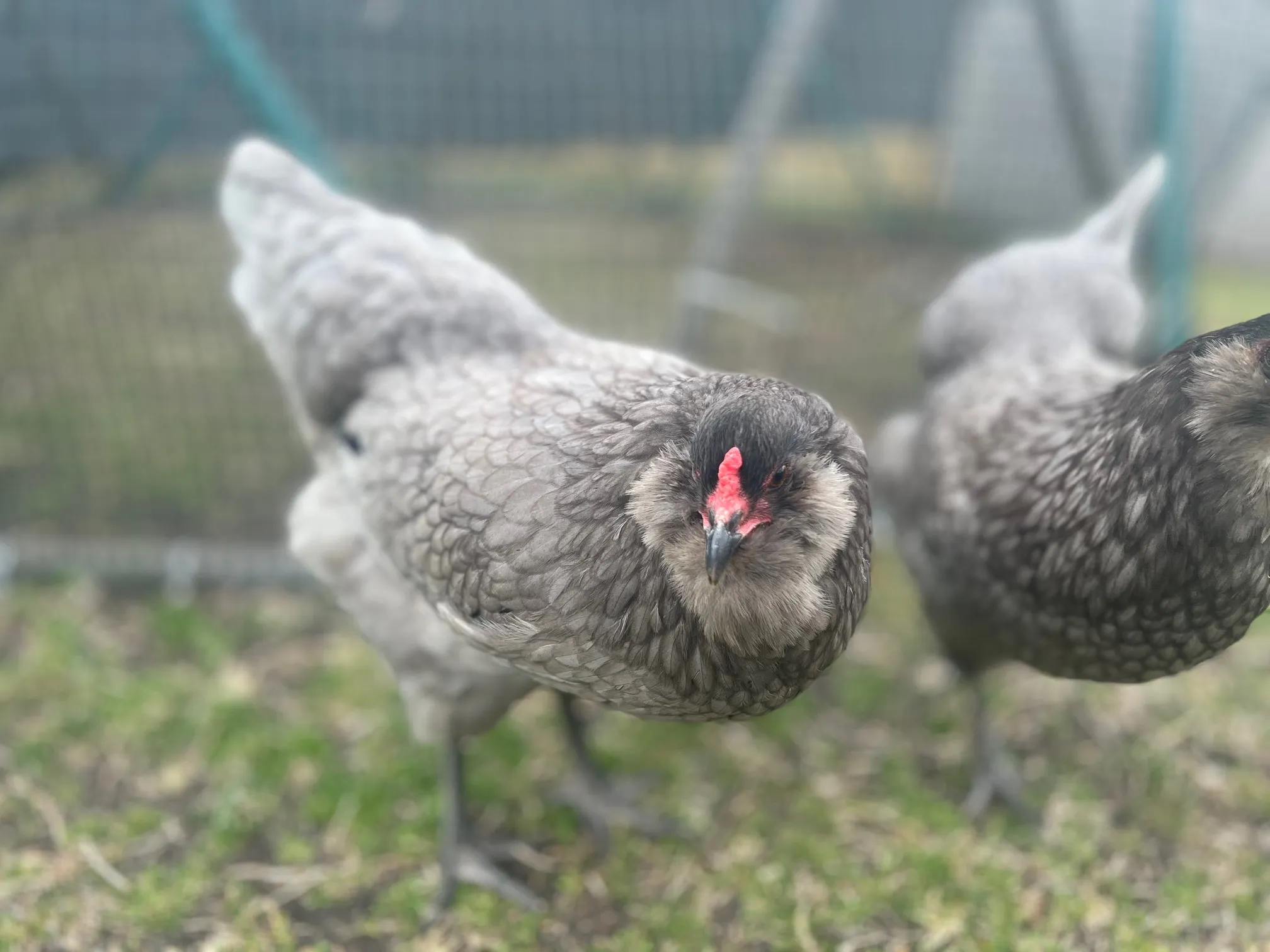

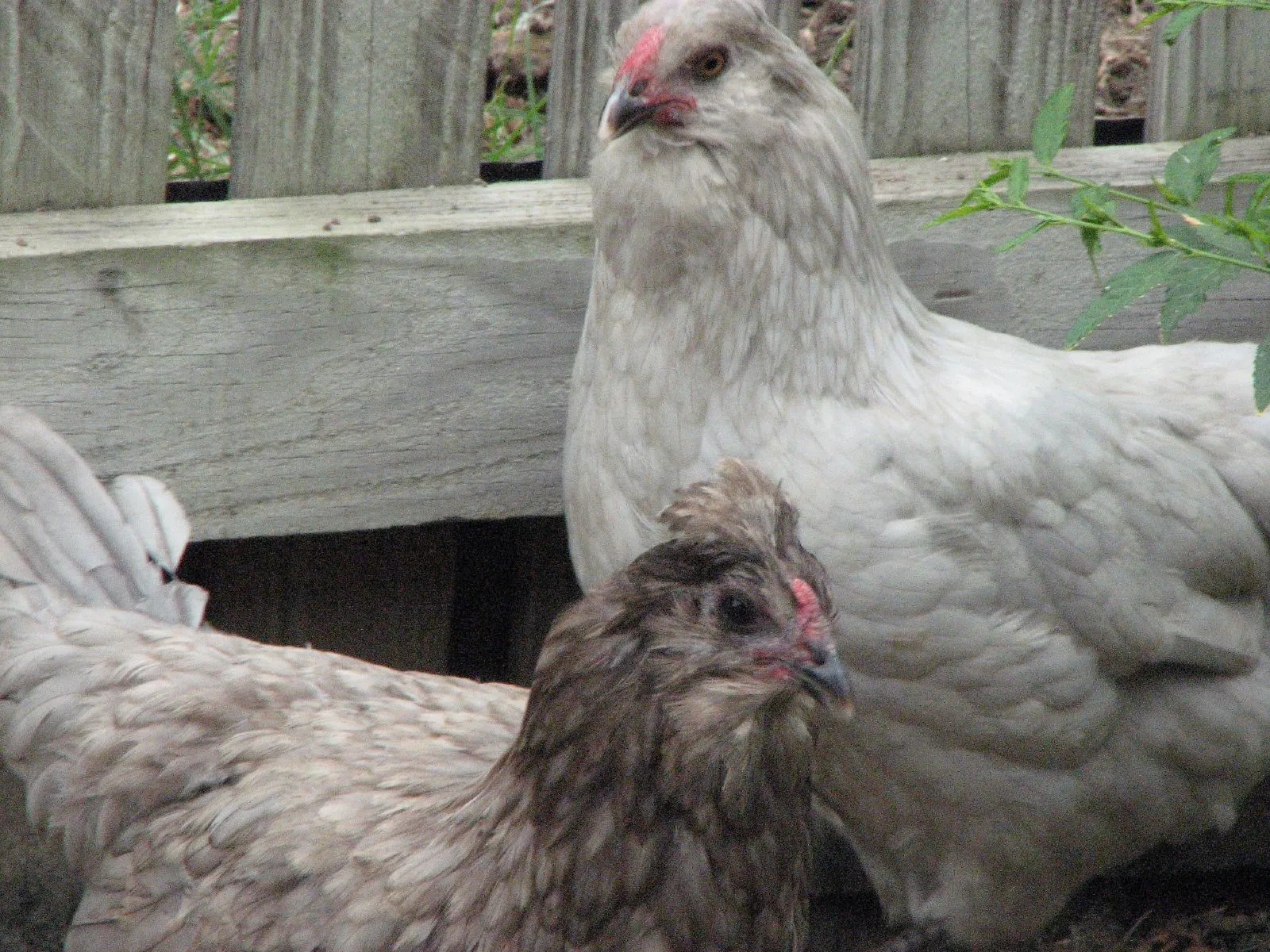

History
An Easter Egger is not an American Poultry Association–recognized breed. It is a catch-all label for mixed-ancestry chickens that carry the blue-egg gene but do not meet a fixed breed (and variety) standard. That framing is the load-bearing institutional fact for this page — not APA recognition dates, Conservancy priority status, or a single “official” weight and color list.
The Ameraucana Alliance defines an Easter Egg chicken / Easter Egger as any chicken that possesses the blue egg gene but doesn’t fully meet any breed descriptions in the APA and/or ABA standards; even a bird that looks like an Ameraucana can still be an Easter Egger if it fails a variety description or does not breed true at least 50% of the time. “By definition an Easter Egger is not a breed of chicken.” The Ameraucana Breeders Club publishes the same core definition. Alliance history (Blehm) states that both standardized Araucana (APA 1976) and Ameraucana (APA 1984) were developed from mixed blue-egg populations that people already called Easter Eggers / mongrels — not the other way around as a simple “Ameraucana × brown layer” origin story.
University of Kentucky Extension (ASC-190) matches that practical definition from the extension side: “Easter egger” or “Easter egg chicken” names any chicken that carries the blue egg color gene but does not meet the Ameraucana standard; genetically, blue eggshell is a dominant trait, and crossing Araucana-type blue layers into other breeds produces colored-egg offspring. UKY also separates true Araucana (rumpless, ear tufts) from Ameraucana (tailed, muffs and beard). University of Maine Extension (#2104) lists Easter Egger among tinted-egg layers and states plainly it is “not a recognized breed by American Poultry Assn,” while separately noting Ameraucana is sometimes casually called an “Easter Egg chicken” — a naming collision keepers still hit at feed stores. UF/IFAS Extension (AN239) table row: Easter Egger is a hybrid, not a pure breed, nicknamed for eggshell color, with multicolored plumage and green / blue / light brown shells.
Commercial hatcheries still muddy the labels. The Alliance and Cackle Hatchery (hatchery guidance) both warn that many chicks sold as “Americana,” “Americauna,” or even “Araucana/Ameraucana” are Easter Eggers — fine backyard birds, disqualified under APA show standards. Cackle markets a production Easter Egger™ line (APA: No; TLC: Not Listed) selected for colorful shells and varied plumage rather than a show standard. Lafeber (commercial) repeats the not-APA point and the “Americana” mislabeling trap.
Conservation status is an honest non-topic: Livestock Conservancy has no Easter Egger breed page (/easter-egger/ 404s this pass). That absence is expected for a hybrid category, not a missing “Watch” listing to invent.
Care
There is no Conservancy or APA closed weight/egg-count standard for Easter Eggers. Planning numbers come from extension tables and labelled hatchery/commercial pages — and they do not all agree.
Eggs. Utah State University Extension’s breed table: Easter Egger (mix) 200–280 eggs/year; shells blue, green, pink; size medium; temperament varies; note “mixed breed, multi-colored eggs.” Cackle Hatchery Breed Facts: 200–280 eggs/year (estimates only); shells green / blue / pink / multi; egg size medium–large. Lafeber: about 200/year (“Very Good”), medium to large, various colors. University of New Hampshire Extension lumps “Ameraucana/Easter Eggers” at 180–200 eggs/year — a lower, combined row that does not isolate Easter Eggers from true Ameraucanas. Flockmath’s 240 sits inside USU/Cackle 200–280, above UNH’s lumped band and above Lafeber’s ~200 point estimate. Parentage drives the spread more than for a standardized breed: production-leaning crosses sit high; heritage-leaning crosses sit low. UF/IFAS lists Easter Egger rate of lay as Excellent without a closed annual count.
Egg color genetics (not folklore). UKY Extension: blue eggshell color is genetically dominant; Ameraucana / Easter Egger shells vary from pink to green. Peer-reviewed genetics (Wang et al., PLOS Genetics, 2013) confirms blue eggshell shows autosomal dominant inheritance (classic oocyan / O), with homozygotes darker blue than heterozygotes, and identifies an EAV-HP insertion near SLCO1B3 as causative in studied blue-shelled chickens. Ameraucana Alliance / ABC technical FAQ language: green/olive tones arise when biliverdin (blue through the shell) meets a protoporphyrin (brown) overlay — not a separate “green gene.” Alliance (Blehm): there are effectively two base shell colors, blue and white; brown and green are coatings/tints. Hatchery/commercial confirmation of the backyard rule of thumb: Cackle and Lafeber both state that each hen lays one shell color consistently; the rainbow basket is a flock effect. Lafeber: whatever color is first laid is the color for that hen’s lifetime (shade may lighten; she does not switch green ↔ pink ↔ blue as a palette). Flockmath’s description line (“each hen lays a single color…”) matches that hatchery/commercial claim; treat the exact “for life” wording as commercial-backed, with extension/genetics supporting genotype-driven color rather than daily switching.
Weights & type. Cackle: hen 5½ lb, rooster 6½ lb. Lafeber: anecdotal 4–5 lb. Flockmath: hen 5.0, rooster 7.0. No institutional closed weights — the mismatch is named, not silently averaged.
Climate. USU lists Easter Egger among breeds recommended for hot weather (with Leghorn, Ancona, Minorca). N.C. Cooperative Extension (New Hanover) calls Easter Eggers a fun color choice for North Carolina backyards and groups them with Rhode Island Reds as generally friendly and backyard-suitable. UMN Extension names Ameraucana (not Easter Egger) among heavier breeds that over-winter well. Many Easter Eggers inherit pea combs and facial feathering from Ameraucana-type ancestry (club/hatchery descriptions), which Poultry Extension (Univ. of Kentucky) notes as lower frostbite incidence than large single combs — but Cackle also notes individuals may hatch with a single comb, so frostbite risk is not uniform. Flockmath climate all is usable as management-dependent; it is not a Conservancy hardiness rating. UMN still ties frostbite to moisture + cold and wooden roosts regardless of comb type.
For coop sizing and egg modeling: coop size calculator and egg production calculator. Matching annual-egg detail lives on the site’s Easter Egger egg guide.
Temperament
Institutional temperament language is softer and more mixed than hatchery “perfect family bird” copy.
USU: Easter Egger temperament “Varies.” The same USU page recommends Easter Eggers for children and family for friendly temperaments and colorful eggs — a use-case tag, not a closed “always docile” trait. UF/IFAS does not print a temperament cell for Easter Egger beyond hybrid / excellent layer notes. N.C. Cooperative Extension: Easter Eggers are generally friendly and backyard-suitable. Cackle Breed Facts print Temperament: Active; FAQ/body copy says many keepers find them friendly/curious and beginner-suitable, while also saying individual temperament can vary. Lafeber: Friendly and docile; noise moderate. Flockmath’s friendly / beginner-friendly flags align with N.C. Extension, Lafeber, and Cackle’s softer body copy, and sit against USU’s explicit Varies and Cackle’s facts-table Active. This profile names that spread rather than papering it over.
Broodiness. Cackle Breed Facts: Broody: Variable. Flockmath records rarely. Those disagree. Cackle’s separate bantam spotlight claims Easter Egger hens “excel at brooding” — that is a bantam-product page, not imported here as a standard-size fact. UKY’s non-sitter list does not name Easter Eggers; Araucana appears among possible broody breeds. Treat broodiness as line- and individual-dependent for a mixed category.
Health
No fetched extension or club page identifies an Easter-Egger-specific infectious disease. Honest gap. Management points that are sourced:
- Mislabeling risk is a buyer-health problem for expectations, not pathology: Alliance and Cackle both document hatchery “Americana/Araucana” labeling of mongrels — buy knowing you may not have a show Ameraucana.
- Crossbeak / scissor beak: Cackle (hatchery) reports about 1 in 100 of their Easter Egger chicks may develop some severity as they grow — labelled hatchery observation, not an extension prevalence study.
- Araucana tuft lethality: Alliance and Cackle note the tufted Araucana allele’s lethal homozygous effect; most Easter Eggers are marketed as tailed/muffed types that avoid that breeding trap — still ask sellers what you are actually buying if rumpless/tufted birds appear in a mix.
- Frostbite / moisture: Poultry Extension + UMN — manage damp cold; pea combs help on average when present; single-comb throwouts need the same care as any single-comb bird.
- Cholesterol myth: Alliance FAQ cites Texas A&M Extension poultry specialist William O. Cawley (1979) debunking old hatchery claims that blue “Araucana” eggs were lower-cholesterol / higher-nutrition — do not repeat those claims.
If frostbite or injury occurs, UMN recommends a veterinarian; severe untreated frostbite can mean permanent tissue loss and may require isolation from pecking.
Color Without a Standard: The Bottom Line
If you want a pastel egg basket and can live without a breed standard, Easter Egger is the category university extension and breed clubs both describe: blue-egg-gene birds that are not APA Ameraucanas or Araucanas. Flockmath’s 240 eggs/year is a planning Normal inside Utah State / Cackle 200–280, above UNH’s lumped Ameraucana/EE 180–200 and Lafeber’s ~200, with the honest caveat that parentage moves individuals across that band. Expect blue, green, or pinkish shells — one color per hen (Cackle/Lafeber), flock rainbow from multiple hens — driven by dominant O genetics (UKY; PLOS Genetics) plus optional brown overlay for greens.
Expect variable looks (beards/muffs common but not required; plumage “any”), frequent feed-store mislabeling as “Americana,” temperament that extension tags as variable even when many birds are family-friendly, and broodiness that hatchery facts call variable rather than Flockmath’s rarely. Ask what you are buying: true Ameraucana from a specialty breeder, or an Easter Egger selected for color and backyard utility. You are buying a hybrid category with a paper trail, not a Conservancy heritage breed and not a guaranteed sky-blue show Ameraucana.
Sources
- Definition (not a breed; blue-egg gene without meeting APA/ABA breed/variety / breed-true rules); hatchery mongrels sold as Araucana/Ameraucana; Ameraucana/Araucana developed from Easter Egger populations; cholesterol myth (Cawley / Texas A&M cited on page): Ameraucana Alliance — FAQ
- Same definition; blue shell biochemistry (biliverdin / protoporphyrin overlay); O locus notes: Ameraucana Breeders Club — FAQ
- History essay (Easter Egger not a breed; any physical description; Americana misspelling; Araucana 1976 / Ameraucana 1984; green = blue + brown tint; both standardized breeds bred up from Easter Eggers): Ameraucana Alliance — “Ameraucana Chickens,” John W. Blehm
- Dominant blue-egg trait; Easter egger = blue-gene bird not meeting Ameraucana standard; Araucana vs Ameraucana morphology; pink-to-green shell range: University of Kentucky Cooperative Extension — Jacob & Pescatore, ASC-190 “Selecting the Right Chicken Breed”
- Easter Egger not APA-recognized; Ameraucana sometimes called “Easter Egg chicken”; tinted-egg farm-stand note: University of Maine Cooperative Extension — Bulletin #2104
- Table: Easter Egger (mix) 200–280 eggs; blue/green/pink; temperament varies; hot-weather list includes Easter Egger; family/children recommendation: Utah State University Extension — “Managing Chickens From Chicks to Peak Egg Production.” (USU’s Ameraucana row tagline “Easter egger” breed is not followed — it conflicts with Alliance/ABC.)
- Table: hybrid, not pure breed; green/blue/light brown eggs; excellent rate of lay: UF/IFAS Extension — AN239 “Raising Backyard Chickens for Eggs.”
- Backyard recommendation (blue or green eggs; generally friendly): N.C. Cooperative Extension — New Hanover County, “From Coop to Kitchen…”
- Lumped “Ameraucana/Easter Eggers” 180–200 eggs/year: UNH Extension — “Producing Your Own Eggs.”
- Ameraucana (not EE) among cold-hardy heavier breeds; frostbite moisture/ventilation: University of Minnesota Extension — “Caring for Chickens in Cold Weather.”
- Pea vs single comb frostbite incidence: Poultry Extension — “Frostbite in Chickens,” Dr. Jacquie Jacob, University of Kentucky.
- Autosomal dominant blue eggshell (O); EAV-HP / SLCO1B3 mechanism: Wang et al., PLOS Genetics (2013)
- Conservancy gap:
livestockconservancy.org/easter-egger/404 this pass. - Hatchery guidance (labelled): Cackle Hatchery — Easter Egger — 200–280 eggs; APA No; TLC Not Listed; Broody Variable; Temperament Active (facts) / friendly-curious (body); one color per hen; crossbeak ~1/100; weights 5.5/6.5. Cackle — “Blue Egg Chicken: Ameraucana or Americana?” — flock rainbow vs per-hen consistency; National Geographic 1948 “Easter Egg Chicken” naming note. Bantam spotlight used only where labelled bantam.
- Commercial retailer (labelled): Lafeber — Easter Egger — ~200 eggs; one color for life; friendly/docile; noise moderate; adaptable hot/cold; not APA; Americana mislabel; Alliance origin note.
Ours: framing Flockmath’s 240 inside USU/Cackle 200–280 while naming UNH’s lumped 180–200 and Lafeber ~200; refusing APA-recognition or Conservancy-status narratives that do not exist; naming USU “Varies” / Cackle facts “Active” vs Lafeber/Flockmath friendly language; naming Cackle Variable broodiness vs Flockmath rarely; naming weight mismatches (Cackle / Lafeber / Flockmath); labelling “one color for life” as hatchery/commercial-backed while grounding dominance and blue/green mechanism in UKY + PLOS + club pigment language; dropping Cackle’s “quail flavor” meat line given Alliance myth-busting of that marketing tradition; and leaving breeds.json unchanged this pass.