
standard breed · USA
Rhode Island Red
One of the most popular dual-purpose breeds in North America, prized for consistent egg laying and exceptional hardiness in cold climates. Rhode Island Reds are reliable producers and forgiving for first-time keepers.
| Size class | standard |
|---|---|
| Weight (hen) | 6.5 lb (2.95 kg) |
| Weight (rooster) | 8.5 lb (3.86 kg) |
| Eggs per year | 260 |
| Egg color | brown |
| Egg size | large |
| Climate tolerance | All climates |
| Temperament | friendly |
| Goes broody | rarely |
| Noise level | moderate |
| Beginner-friendly | Yes |
| Origin | USA |
Is the Rhode Island Red right for your flock?
The Rhode Island Red is a standard breed that's well-suited to first-time keepers. Hens lay around 260 brown eggs per year and tolerate most climates well.
Temperament: friendly. Broodiness: rarely. Noise level: moderate.
What this breed needs
- Coop space: about 4 sq ft per bird inside the coop. Run the numbers for your specific flock size in the coop size calculator.
- Climate fit: adapts to a wide range of climates with no special accommodations.
- Eggs: a top-tier producer — among the most productive backyard breeds. For a month-by-month breakdown, see Rhode Island Red Egg Production: How Many Eggs Per Year?.


History
The Rhode Island Red’s story starts in Little Compton, Rhode Island, in the 1850s, on farms working with mixed barnyard stock. Breeders there — most associated with the Tripp and Macomber families — crossed Malay birds, prized for deep color and a rugged constitution, with Asiatic stock including the Java and early Cochin lines, then folded in Brown Leghorns from Italy to sharpen egg production. By the 1880s and 1890s the cross had stabilized into a recognizable type, developed jointly across the Rhode Island–Massachusetts border.
In 1898, a group of breeders met at the Coffee Tavern in Fall River, Massachusetts, and founded the Rhode Island Red Club of America — the breed club still active today, and the source for that founding date and location.
The American Poultry Association admitted the single-comb variety to its Standard of Perfection in 1904. The rose-comb variety followed soon after — though sources disagree on exactly when: the Livestock Conservancy dates it to 1905, Oklahoma State University Extension to 1906. Both are cited below; we haven’t resolved which is correct.
In 1954, the Rhode Island Red was named the official state bird of Rhode Island — one of only three US states to choose a domesticated bird over a wild species. The designation followed a public vote sponsored by the Audubon Society of Rhode Island, the Rhode Island Federation of Garden Clubs, and the Providence Journal, beating out the osprey and the ruby-throated hummingbird. Governor Dennis J. Roberts signed it into law at noon on May 3, calling the breed “a symbol of Rhode Islanders all over the world.”
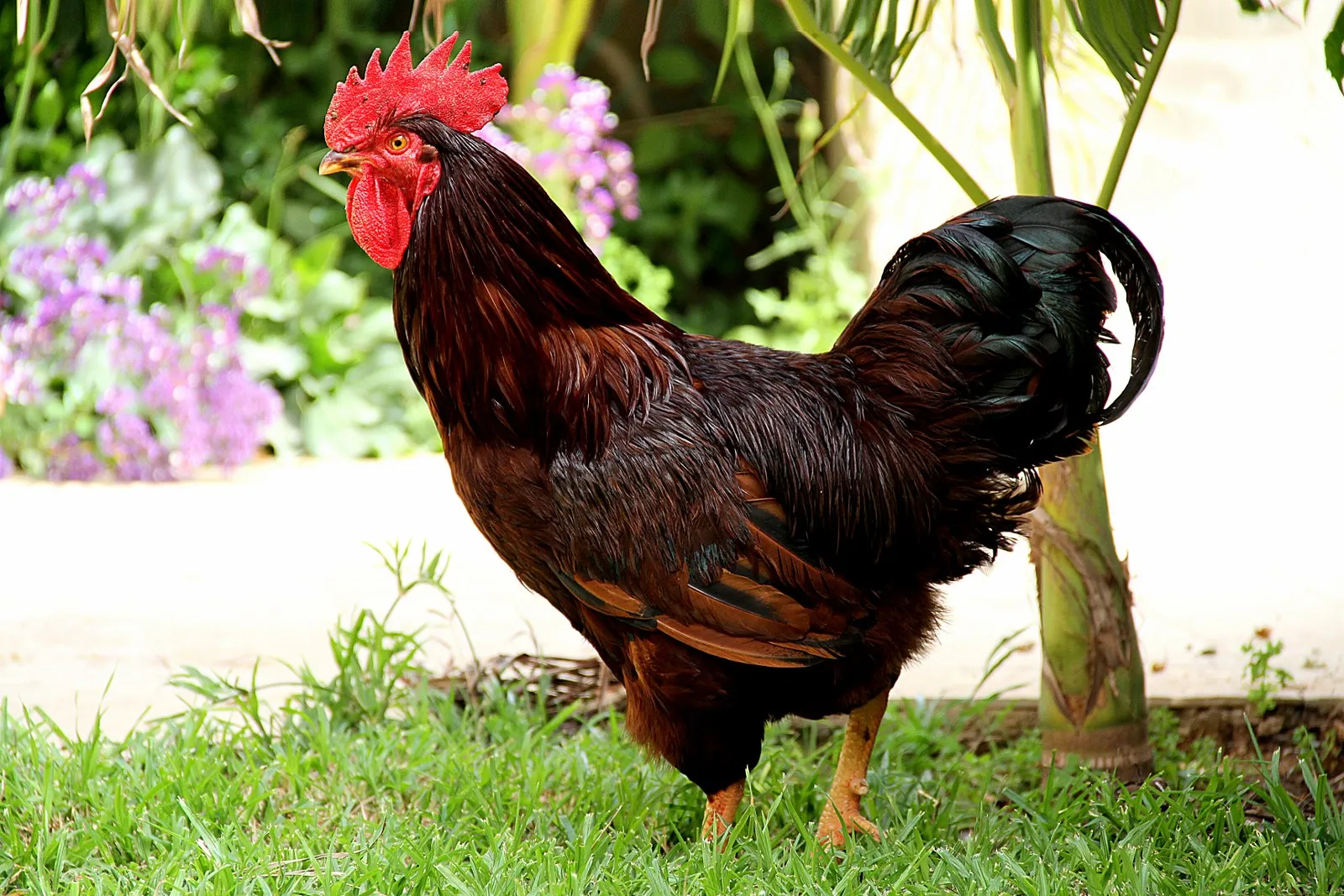
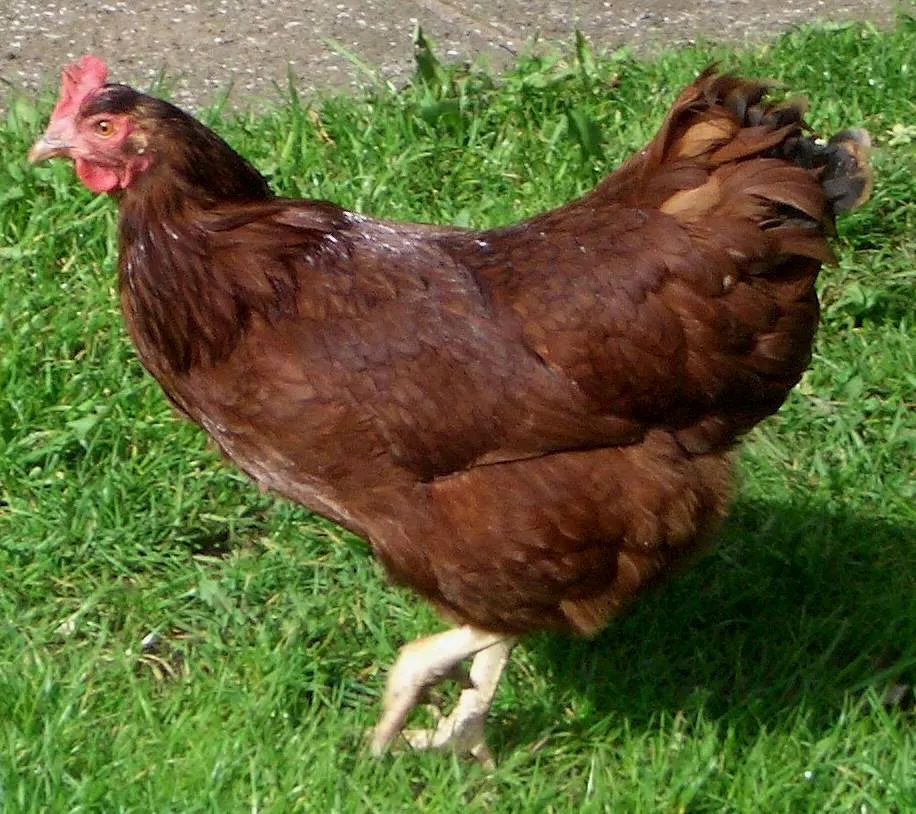
Since the 1940s, the breed has effectively split in two. Commercial and hatchery breeders selected for heavier egg production, yielding birds that are smaller, lighter in color, and rarely broody — the type most keepers buy today. Old-type Rhode Island Reds — larger, darker, more broody — have become comparatively rare, kept mostly by breed-standard exhibitors and conservation-minded flock owners.
That divergence shows up directly in how much the breed is said to lay: Oklahoma State University’s extension page cites 150–200 eggs a year, while the Livestock Conservancy cites 200–300. Neither figure is wrong — they’re describing different birds. The lower number tracks older, exhibition-strain data; the higher range sits closer to hatchery-strain output, which is also where Flockmath’s own 260-egg figure lands. If you’re buying chicks or hatching eggs, it’s worth asking the breeder or hatchery which type you’re getting.
The Rhode Island Red graduated from the Livestock Conservancy’s Conservation Priority List in 2023 — it’s no longer considered at meaningful population risk, a reflection of just how firmly established the breed is across both backyard and commercial flocks.
Care
Rhode Island Reds have a genuine reputation for tolerating conditions that would set other breeds back. Oklahoma State University’s extension page notes they “handle marginal diets and poor housing conditions better than other breeds and still continue to produce eggs.” That’s a real strength, not a license to skip good husbandry — but it does make the breed a forgiving choice for a keeper still learning the basics. For actual coop-space numbers, run your flock size through the coop size calculator; the figures above already reflect this breed’s standard size class.
The breed’s hardiness holds up in both directions of climate, which is why Flockmath lists it as tolerant of all climates. There’s one comb-specific caveat worth knowing, though: most Rhode Island Reds carry the large single comb (the rose-comb variety exists but is less common), and extension sources are consistent that large, flat single combs are more prone to frostbite in severe cold than the smaller pea or rose combs found on breeds like Wyandottes or Ameraucanas. This doesn’t undo the breed’s overall cold tolerance — it’s a comb-specific risk, not a whole-bird one — but in hard-freeze climates it’s worth keeping the coop dry and well-ventilated (damp bedding is the biggest frostbite risk factor extension sources point to), avoiding metal or plastic roosts and nest materials that hold cold, and watching roosters in particular, since their combs run larger than hens’.
One more small, honest note: the deep mahogany color fades with prolonged sun exposure, according to Oklahoma State University’s breed page — cosmetic only, but worth knowing if a show-quality bird looks noticeably lighter by late summer.
Temperament
Multiple institutional sources describe the breed’s temperament as calm — the Livestock Conservancy lists “calm” as the defining trait, and most hens are genuinely easygoing, decent foragers, and tolerant of handling.
Roosters are the exception worth flagging honestly. Both the Livestock Conservancy and Oklahoma State University’s extension page separately note that Rhode Island Red males can be aggressive. That it shows up independently across two institutional sources suggests a real breed tendency, not an anecdote. If you’re keeping a rooster and have small children, or plan to handle birds often, it’s worth factoring in — hens don’t carry the same reputation.
Broodiness follows the same historical split as egg production: old-type strains go broody readily, but the Livestock Conservancy notes this trait has been “partially eliminated in some of the best egg production strains.” A hatchery-strain Rhode Island Red is accordingly less likely to go broody than a general “heritage breed” description might suggest — consistent with Flockmath’s own “rarely” broody rating.
Health
Extension literature doesn’t flag any disease or condition specific to the Rhode Island Red beyond what applies to chickens generally — worth stating plainly rather than inventing a health section where the sourced literature is thin. The one genuine breed-relevant health point is the frostbite risk tied to its large single comb, covered above under Care, since prevention is a housing and management question more than a treatment one. If frostbite does occur, University of Minnesota Extension recommends consulting a veterinarian — left untreated, severe frostbite can cause permanent loss of the comb, wattle, or affected toes, and flock mates may peck at an injured bird, so isolating it during recovery is worth planning for.
Beyond that, the breed’s documented hardiness — tolerating “marginal diets and poor housing conditions better than other breeds,” per Oklahoma State University — points to a resilient bird by extension-source consensus, though resilient doesn’t mean immune to the ordinary risks of chicken-keeping (external parasites, respiratory issues from poor ventilation) that apply across breeds and aren’t specific enough to this one to restate here.
Heritage or Hatchery: The Bottom Line
If you’re getting day-old chicks from a hatchery or feed store, expect a lighter-colored, more productive, rarely-broody bird — closer to Flockmath’s 260-egg figure and bred for output. If you’re buying from a breed-standard exhibitor or a conservation-minded flock, expect a darker, heavier, more broody bird closer to the “old-type” the Livestock Conservancy describes, with lower but still solid production. Neither is the “real” Rhode Island Red — they’re both the breed, just bred toward different goals for more than eighty years now.
Either way, you’re getting one of the most forgiving, well-documented breeds available: a dual-purpose bird with a century-plus paper trail from its own breed club and from state agricultural extension programs. The main things to plan around are the aggression some roosters show, and, in hard winters, protecting that large single comb from frostbite.
Sources
- Breed history, ancestry, conservation status, egg-laying range, and temperament: The Livestock Conservancy — “Rhode Island Red, Non-Industrial Chicken.” States the breed “graduated from The Livestock Conservancy’s Priority List in 2023,” gives 200–300 eggs/year, and describes the post-1940s split between production and “old-type” strains.
- Characteristics, hardiness, standard weights, and the lower egg-production figure: Oklahoma State University Extension — “Rhode Island Red Chickens.” Cites 150–200 eggs/year and notes the breed “handle[s] marginal diets and poor housing conditions better than other breeds.”
- Breed club founding (1898, Fall River, Massachusetts): Rhode Island Red Club of America — Hall of Fame & History.
- State bird designation (May 3, 1954): State of Rhode Island — Facts & Figures.
- Comb type and frostbite risk in cold climates: Poultry Extension — “Frostbite in Chickens,” Dr. Jacquie Jacob, University of Kentucky, and University of Minnesota Extension — “Caring for Chickens in Cold Weather.”
Ours: the framing that connects the two published egg-count ranges (150–200 vs. 200–300) to strain divergence is our synthesis of what both institutional sources independently describe, not a claim either source states outright.