
standard breed · USA (hybrid)
Black Star
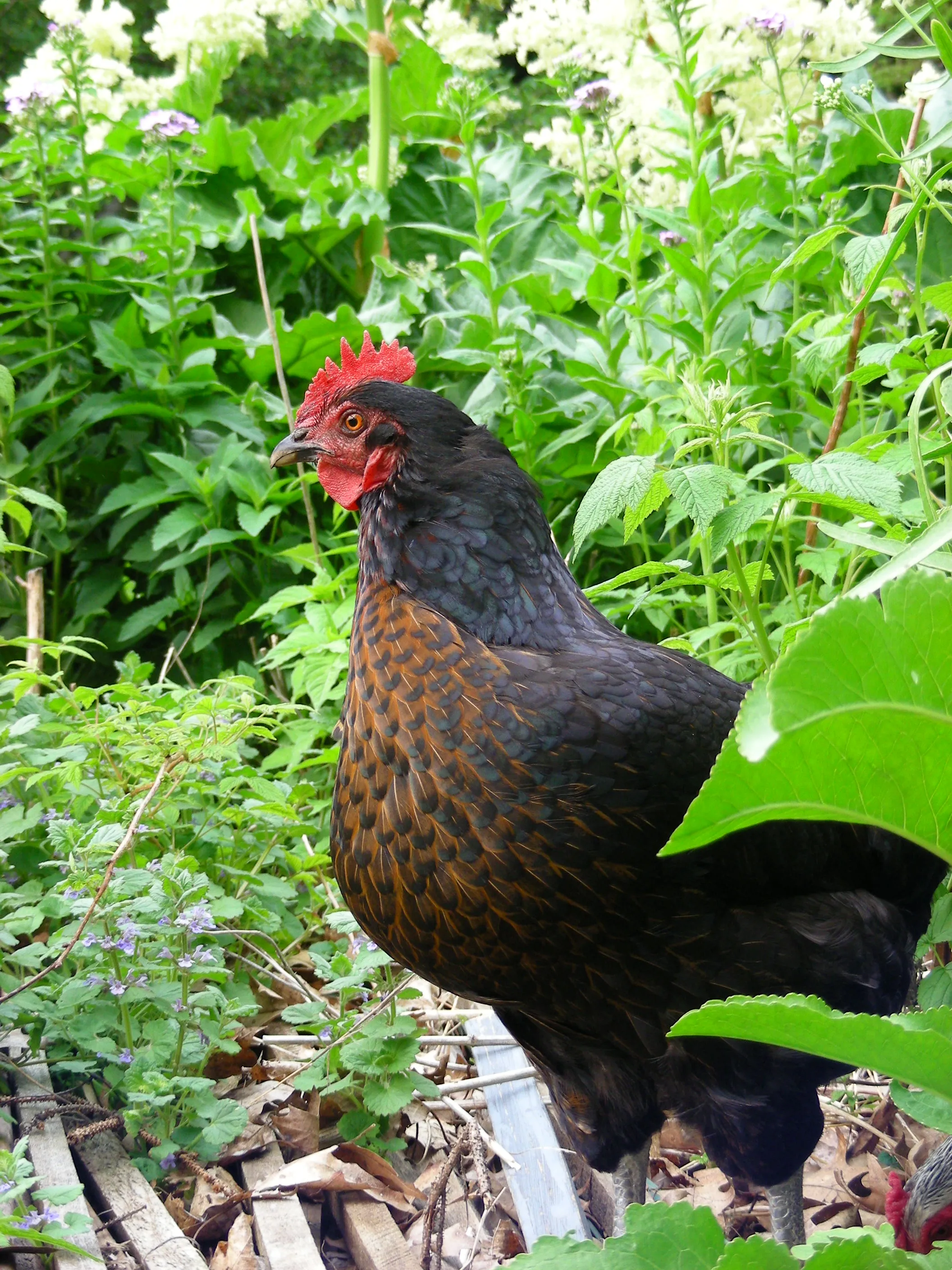
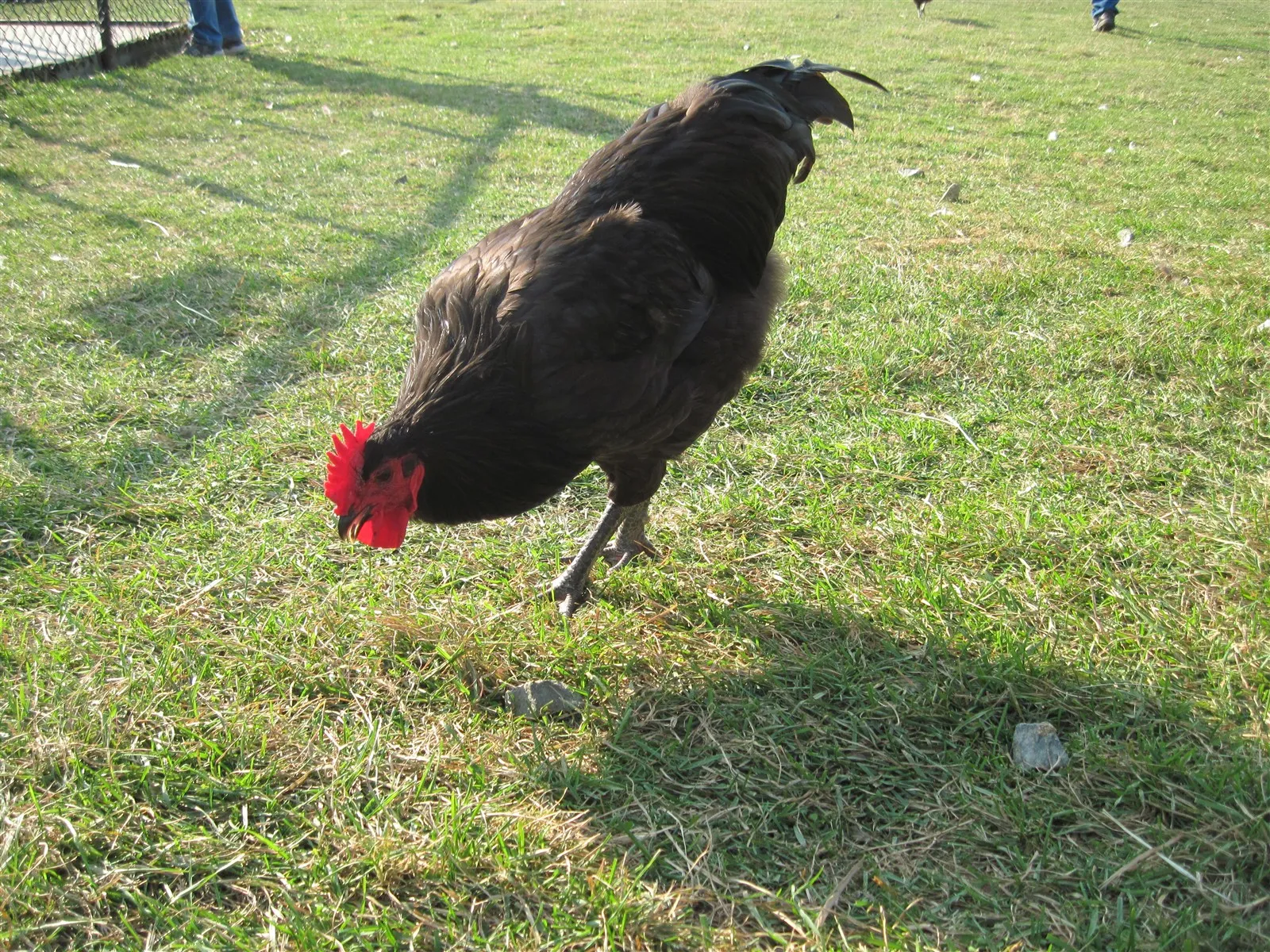
A black sex-link cross (RIR rooster x Barred Rock hen): pullets are black, cockerels have a white head spot. Hardy, friendly, and an excellent first-flock choice.
| Size class | standard |
|---|---|
| Weight (hen) | 6 lb (2.72 kg) |
| Weight (rooster) | 8 lb (3.63 kg) |
| Eggs per year | 280 |
| Egg color | brown |
| Egg size | large |
| Climate tolerance | All climates |
| Temperament | friendly |
| Goes broody | rarely |
| Noise level | quiet |
| Beginner-friendly | Yes |
| Origin | USA (hybrid) |
Is the Black Star right for your flock?
The Black Star is a standard breed that's well-suited to first-time keepers. Hens lay around 280 brown eggs per year and tolerate most climates well.
Temperament: friendly. Broodiness: rarely. Noise level: quiet. A reasonable choice for suburban yards.
What this breed needs
- Coop space: about 4 sq ft per bird inside the coop. Run the numbers for your specific flock size in the coop size calculator.
- Climate fit: adapts to a wide range of climates with no special accommodations.
- Eggs: a top-tier producer — among the most productive backyard breeds. For a month-by-month breakdown, see Black Star Egg Production: How Many Eggs Per Year?.


History
A Black Star is not an American Poultry Association–recognized breed and is not a Livestock Conservancy heritage chicken. It is a shared trade name for a black sex-link hybrid — a first-generation production cross sold under several labels — not a single company’s trademarked product line like ISA Brown. That framing is the load-bearing institutional fact for this page: closer to Flockmath’s Easter Egger / Olive Egger “recipe, not one pedigree” honesty than to ISA’s single-brand industrial sheet.
What extension calls the class. Mississippi State University Extension (P3036, fetched): sex-links are crossbreds whose hatch color differs by sex; “extremely good egg layers” that can produce 300 eggs per year or more; common varieties are black sex-links (Black Stars) and red sex-links (Red Stars). Black Stars are “a cross between a Rhode Island Red or New Hampshire rooster and a Barred Rock hen.” University of Kentucky Extension ASC-190 (Jacob & Pescatore, fetched) and Poultry Extension’s sex-linked-traits article (Jacob, fetched): the black sex-link (also known as Rock Reds) is produced by crossing a barred hen with a non-barred rooster; typically a Barred Plymouth Rock hen with a Rhode Island Red or New Hampshire rooster. Male offspring feather barred like the dam; females are solid, typically black. At hatch both sexes have black down; males are identified by the white dot on their heads. Female offspring lay brown-shelled eggs. Poultry Extension’s companion sexing article repeats the same cross direction and white-spot rule, and warns that reversing the cross (barred male × non-barred female) does not work. Offspring of a sex-linked cross cannot be used to make another sex-linked cross.
Sexing claim in breeds.json. The site description’s “pullets are black, cockerels have a white head spot” and “RIR rooster × Barred Rock hen” match the UKY/Poultry Extension / MSU recipe (with New Hampshire as an allowed alternate sire). Soft finding: do not confuse this with weaker pure Barred Rock head-spot sexing (~80% accuracy in Jacob’s sexing article) — a different, single-breed trick.
Name collision — Black Star vs Black Sex Link vs Rock Red. Extension treats Black Star as a common name for the black sex-link class. Hatcheries disagree on the sticker and on how much parentage they disclose:
- Cackle Hatchery (labelled): sells Black Sex Link; explicit Rhode Island Red rooster × Barred Rock hen; APA No; TLC Not Listed; strain developed since 1992.
- Hoover’s Hatchery (labelled): Black Sex-Link; Barred Rock hen × Rhode Island Red cockerel (same direction).
- Townline Hatchery (labelled): Black Sex Link; Barred Rock and Rhode Island Red; AKA Rock Reds and Black Stars.
- Murray McMurray Hatchery (labelled): sells Black Star; sex-link colour sexing described the same way (pullets nearly all black; cockerels white head dot); carries two proprietary lines (black/red chest vs barred/grey chest) and will not take requests for a specific line — parents not named on the product page.
So “Black Star” on a box is not automatically McMurray’s proprietary pair of lines, and “Black Sex Link” is not a different biological class — it is usually the same sex-link recipe under another label. Read the SKU. Red sex-links (Golden Comet, Cinnamon Queen, Red Star) are a sister class using silver/gold colour sexing, not barring.
What it is not. Livestock Conservancy /black-star/ and /black-star-chicken/ both 404 this pass. Conservancy Heritage FAQ (fetched): sex-links and other commercial chickens are not Heritage. Parent breeds — Rhode Island Red, Barred Plymouth Rock, New Hampshire Red — have Conservancy documentation; the cross does not.
Care
There is no Conservancy or APA closed backyard standard for “the Black Star.” Planning numbers are extension class language plus labelled hatchery SKUs — and hatcheries disagree.
Eggs.
- MSU: sex-links as a class often 300+/year (egg colour depends on the mix).
- Cackle Black Sex Link: 200–280/year (estimates only); light brown; large.
- Hoover Black Sex-Link: 250 large brown eggs/year.
- Townline Black Sex Link: up to 300/year; large brown.
- McMurray Black Star: production “best”; Q&A 4+ eggs/week under good conditions — no closed annual integer.
Flockmath’s 280 matches the sibling Black Star egg guide Normal and sits at Cackle’s ceiling, above Hoover’s 250, below Townline’s 300 and MSU’s open-ended 300+. There is no company “hen-housed to 100 weeks” sheet for this shared name the way ISA Brown has — do not invent one. Age decline for hard layers still follows general UF/IFAS backyard-layer guidance used on the ISA profile (significant drop often after two or three years) rather than a Black-Star-specific product curve.
Weights. Cackle: hen 6–7 / rooster 8–9. McMurray: female 6 / male 8. Hoover: mature 5–6. Townline: females 6 / males 8. Flockmath: hen 6.0 / rooster 8.0, matching the hatchery midpoint — no APA closed weights exist for this hybrid.
Climate & housing. McMurray: cold tolerance excellent, heat good. Hoover: cold and heat hardy; “hold its own through the cold dark winter.” Cackle: hardy; free-range or coop. Flockmath climate all is usable planning language for this dual-purpose-leaning hybrid class. Single combs still need ordinary damp-cold frostbite care (Poultry Extension / UMN general guidance).
For modeling: egg production calculator, coop size calculator, feed consumption calculator. Parent-breed profiles: Rhode Island Red, Barred Plymouth Rock. Sister hybrid: Golden Comet; proprietary commercial peer: ISA Brown.
Temperament
MSU does not print a separate Black Star temperament cell beyond listing sex-links among egg-focused options. Hatchery language fills the gap and should stay labelled:
- Cackle: temperament Active; body copy hardy / beginner-friendly / free-range capable.
- Hoover: Gentle, Active; Barred Rock temperament claim.
- McMurray: disposition excellent.
Flockmath friendly / beginners true / noise quiet aligns with Hoover gentle + McMurray excellent and against Cackle’s facts-table Active alone — named spread. Quiet is site planning, not an extension Black Star tag fetched this pass.
Broodiness. Cackle: Non Setter. McMurray: not at all likely. Hoover: Rarely. Flockmath rarely matches. Consistent with hybrid layers selected away from sitting (Conservancy FAQ’s general broodiness note for egg-focused birds).
Health
No fetched extension page names a Black-Star–specific infectious disease. Honest gap.
Management points that are sourced:
- Buyer expectation: you are buying an F1 sex-link product, not a breed that breeds true (UKY; Poultry Extension; Cackle; McMurray). Hatch Black Star × Black Star and you lose reliable colour sexing and uniform production.
- SKU variation: McMurray’s two proprietary Black Star lines vs Cackle/Hoover/Townline’s disclosed RIR × Barred Rock recipe — appearance and performance can differ by seller.
- Hybrid production lifespan: plan replacements; McMurray Q&A notes hens are most productive their first two years before slowing (hatchery). Pair with UF general age-decline framing used on ISA Brown.
- Frostbite / moisture: single-comb birds in damp cold — Poultry Extension + UMN general care.
- Nutrition: production layers need correct layer calcium/protein; Conservancy notes many store rations are formulated for commercial hybrids.
If egg binding, prolapse, sudden crash with illness signs, or injury occurs, consult a licensed poultry veterinarian or local extension.
Color-Sexed Brown Layer: The Bottom Line
If you want easy day-old sexing, large brown eggs, and a hardy backyard production hen — and you can live without a breed standard or chicks that breed true — Black Star is the trade-name face of the American black sex-link recipe that MSU and UKY both describe: usually a Rhode Island Red (or New Hampshire) rooster × Barred Rock hen, pullets solid black, cockerels with the white head spot. Flockmath’s 280 eggs/year is a planning Normal at the top of Cackle’s 200–280, above Hoover’s 250, below Townline’s 300 and MSU’s class-level 300+.
Expect friendly-to-active manners depending on the hatchery sheet, rare broodiness, and a bird whose parents are Conservancy-documented even though the cross is not. Ask what is in the box: disclosed RIR × Barred Rock, or McMurray’s unnamed proprietary Black Star lines. You are buying a sex-link recipe with many labels, sibling to Golden Comet and cousin in spirit to ISA Brown — not a heritage breed and not a second generation of the same “Black Star.”
Sources
- Sex-links as class; Black Stars = black sex-links; RIR or NH rooster × Barred Rock hen; 300+ eggs class language: Mississippi State University Extension — P3036 Choosing the Right Breed for Your Backyard Flock
- Black sex-link / Rock Reds; barred hen × non-barred rooster; RIR or NH; white head dot on males; brown eggs; reverse cross fails; hybrids don’t breed true: University of Kentucky Cooperative Extension — ASC-190; Poultry Extension — Sex-Linked Traits in Poultry (Jacquie Jacob); Poultry Extension — Sexing Day-Old Chicks (Jacob; also ~80% pure Barred Rock spot-sexing distinction).
- Not Heritage; sex-links excluded: The Livestock Conservancy — Heritage Chicken FAQ
- Conservancy gap:
/black-star/and/black-star-chicken/404 (fetched this pass). - Hatchery (labelled): Cackle — Black Sex Link — RIR × Barred Rock; 200–280 eggs; APA No; TLC Not Listed; Non Setter; Active; weights 6–7/8–9; gender accuracy 95–100%; since 1992.
- Hatchery (labelled): Hoover’s — Black Sex-Link — Barred Rock hen × RIR cockerel; 250 eggs; Gentle/Active; Rarely broody; 5–6 lb; cold/heat hardy.
- Hatchery (labelled): Townline — Black Sex Link — Barred Rock × RIR; up to 300 eggs; AKA Rock Reds and Black Stars; weights 6/8.
- Hatchery (labelled): Murray McMurray — Black Star — two proprietary lines, parents undisclosed; white head-dot sexing; “best” production / 4+ eggs/week; not broody; weights 6/8; Heritage no; TLC none; first-two-years peak Q&A.
Ours: framing Black Star as a shared trade name for the black sex-link class rather than one proprietary brand; verifying the breeds.json sexing/parentage claim against UKY/Poultry Extension/MSU; naming hatchery parentage and egg-count disagreements (Cackle 200–280 vs Hoover 250 vs Townline 300 vs McMurray undisclosed); placing Flockmath 280 at Cackle’s ceiling without inventing a commercial hen-housed cycle metric; naming weight disagreements; labelling quiet as site planning; and leaving breeds.json numbers unchanged this pass.