
standard breed · France (hybrid)
ISA Brown
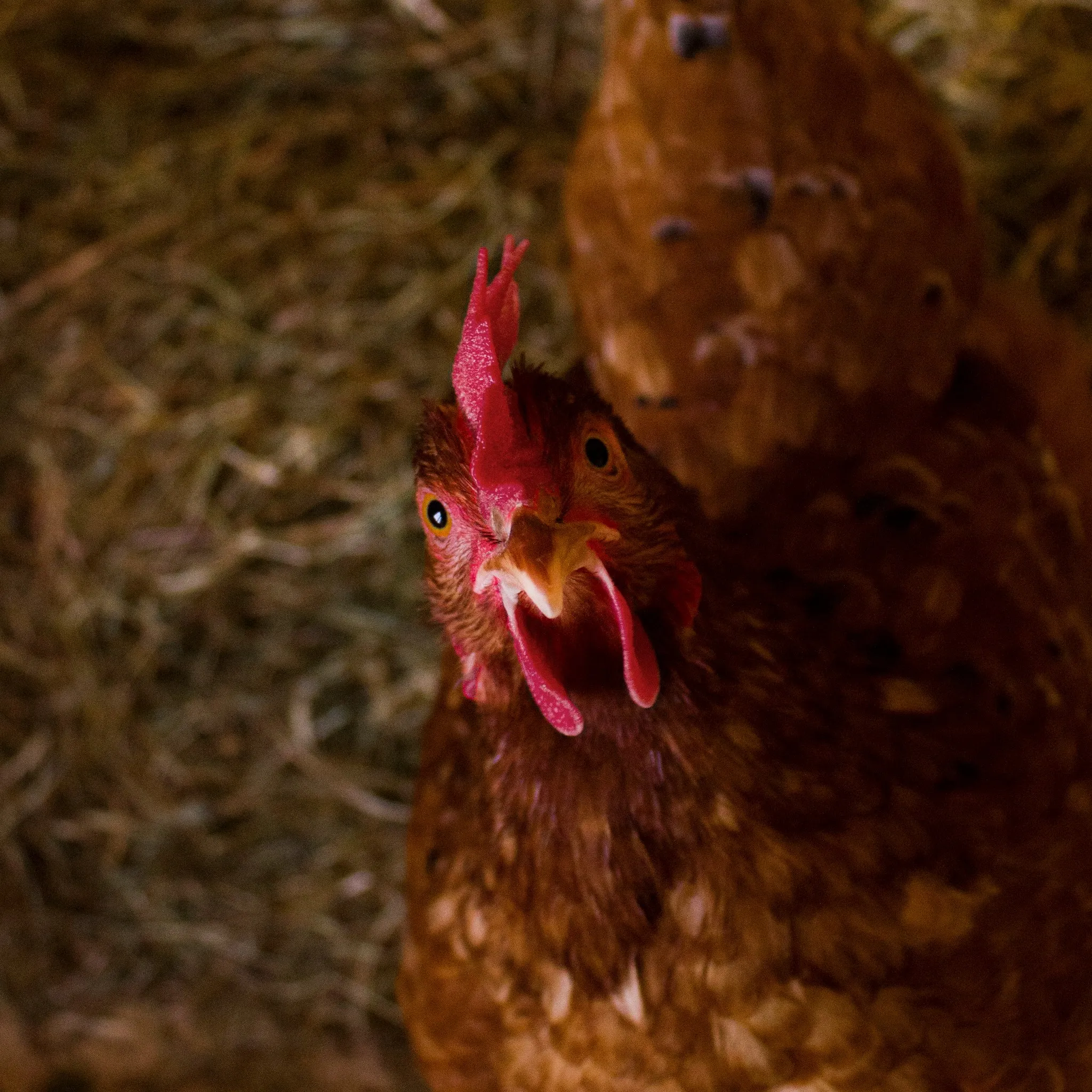
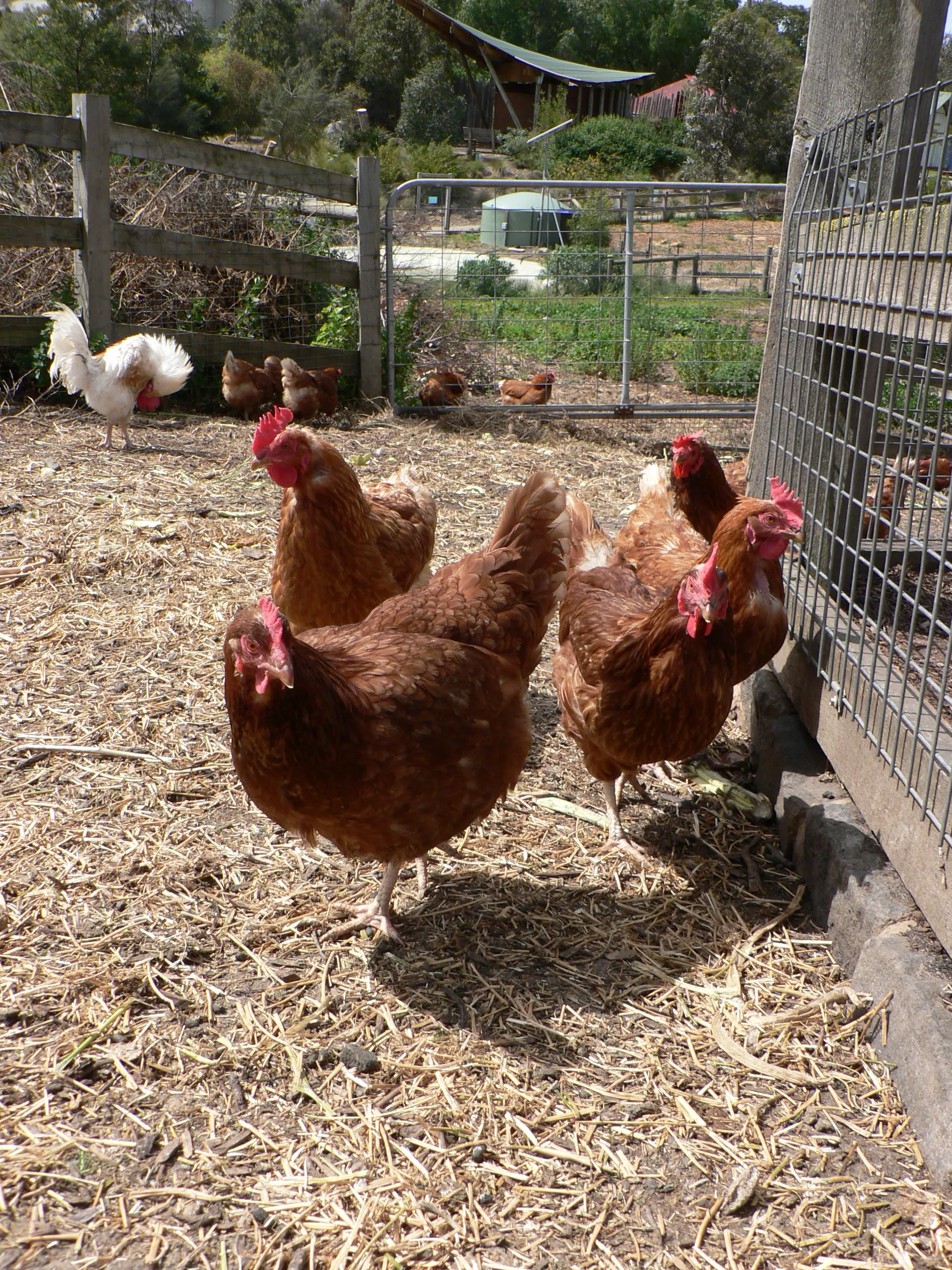
A modern hybrid layer (Institut de Selection Animale) capable of 300+ eggs per year. Friendly, calm, and easy to handle — but like most hybrid layers, expect production to decline within a few years, well short of a heritage breed's lifespan.
| Size class | standard |
|---|---|
| Weight (hen) | 5 lb (2.27 kg) |
| Weight (rooster) | 6 lb (2.72 kg) |
| Eggs per year | 300 |
| Egg color | brown |
| Egg size | large |
| Climate tolerance | All climates |
| Temperament | friendly |
| Goes broody | rarely |
| Noise level | quiet |
| Beginner-friendly | Yes |
| Origin | France (hybrid) |
Is the ISA Brown right for your flock?
The ISA Brown is a standard breed that's well-suited to first-time keepers. Hens lay around 300 brown eggs per year and tolerate most climates well.
Temperament: friendly. Broodiness: rarely. Noise level: quiet. A reasonable choice for suburban yards.
What this breed needs
- Coop space: about 4 sq ft per bird inside the coop. Run the numbers for your specific flock size in the coop size calculator.
- Climate fit: adapts to a wide range of climates with no special accommodations.
- Eggs: a top-tier producer — among the most productive backyard breeds. For a month-by-month breakdown, see ISA Brown Egg Production: How Many Eggs Per Year?.


History
An ISA Brown is not an American Poultry Association–recognized breed and is not a Livestock Conservancy heritage chicken. It is a proprietary commercial brown-egg hybrid layer line marketed under the ISA brand (Institut de Sélection Animale), now part of the Hendrix Genetics laying-hen family alongside Dekalb, Shaver, Bovans, Babcock, and Hisex. That framing is the load-bearing institutional fact for this page — the same structural honesty Flockmath’s Easter Egger and Olive Egger profiles use for non-APA categories, applied here to an industrial product rather than a colored-egg mongrel recipe.
Company origin (fetched). ISA’s own history page: in 1975, France’s Ministry of Agriculture pushed for an internationally competitive poultry sector; Alain Audubert’s appraisal stressed excellence, innovation, and research; Institut de Sélection Animale (ISA) was formed by merging poultry stock from Studler S.A. and I.N.R.A. Magneraud (INRA-M). By the mid-1980s, ISA was a global brand; today the company calls the ISA Brown one of the most popular brown laying hens worldwide. The live ISA Brown product page adds “more than 40 years” of excellent performance and the “Global Superstar” marketing frame — feed conversion, adaptability across climates and housing systems, livability, and egg-production persistency. Soft finding: a commonly repeated 1978 “first release” year was not found on the ISA/Hendrix pages fetched this pass; this profile uses 1975 company founding and the company’s own 40+ years / mid-1980s global language rather than inventing a release date.
Corporate lineage. Hendrix Genetics Layers’ production-standards article (fetched): when ISA and Hendrix Poultry Breeders merged in 2005, breeding programs combined; from 2008 pure-line testing extended to 100 weeks of age to select for longer single-cycle persistency and egg quality — the industry goal language of 500 first-quality eggs per hen housed in a long cycle. Hendrix’s brands overview (fetched) states that ISA Brown hens are “the most common brown egg laying chickens walking around the globe,” and that layer brands under ISA/Dekalb/Shaver/Bovans/Babcock/Hisex are recognized for high first-quality egg numbers, with North Carolina Layer Performance and Management Tests cited as external proof context on that page.
What it is not. Livestock Conservancy /isa-brown/ and /isa-brown-chicken/ both 404 this pass. Conservancy Heritage Chicken FAQ (fetched): Heritage Chicken requires APA Standard breeds established before the mid-20th century, natural mating, and related criteria; the FAQ explicitly rejects labeling sex-links and other commercial chickens as Heritage. Cackle-style “TLC: Not Listed” language is expected for a modern hybrid — not a missing Watch status to invent. Parent-line recipes are proprietary breeding-company IP; treat “Rhode Island Red × Rhode Island White” folklore as unverified unless a fetched company page says it (none fetched here did).
Sibling hybrid profiles on this site for comparison shopping: Golden Comet, Black Star. Hatchery “red sex-link” labels are not interchangeable with the ISA brand without reading the SKU.
Care
There is no Conservancy or APA closed backyard standard for “the ISA Brown.” Planning numbers come from extension tables, breeding-company commercial sheets, and labelled hatchery pages — and they measure different things.
Eggs (calendar year vs commercial cycle).
- Utah State University Extension table (fetched): ISA Brown (hybrid) — 300–320 eggs/year; light brown; size medium; temperament calm/docile; “consistent layer, great for beginners.” Same page: hybrids such as ISA Brown and Golden Comet deliver high egg yield but shorter lifespan.
- ISA / isa-poultry.com product page (cage housing, fetched): laying period 18–100 weeks; eggs hen housed 476; peak production 97%; average egg weight 62.5 g; livability 92%; adult body weight 1950 g; shell strength 4150 g/cm². Marketing copy: capable of laying up to 500 first-quality eggs; excellent persistency.
- Hendrix Indonesia market page (fetched): similar 18–100 week cage table — 470 eggs hen housed; peak 96.5%; egg weight 63.0 g.
- Hendrix Germany market page (fetched, floor/aviary): 18–90 weeks; 429 eggs hen housed; peak 96%; body weight 1900 g.
- Townline Hatchery (labelled hatchery, fetched): “best brown egg layer”; 285–300 eggs annually; also prints hen-housed average to 76 weeks = 321 eggs, average egg weight 62.8 g, livability 97.3%; claims ~60% of the world brown-egg market (hatchery claim).
Flockmath’s 300 matches the USU floor and the sibling ISA Brown egg guide Normal. It sits inside Townline’s annual 285–300 and below USU’s 320 ceiling. Company 476 / 470 / 429 figures are hen-housed counts over a commercial laying period starting at ~18 weeks, not a backyard “eggs in calendar year one.” Do not equate 476 with “nearly 500 eggs every year forever.”
Production decline — name the sources, do not overclaim.
UF/IFAS Extension PS029 (fetched; layers in general, not ISA-named): after two or three years many hens significantly decline in productivity; within a typical single laying cycle, production peaks then gradually declines (example curve language: toward about 65% after about 12 months of lay); good layers often work about 50–60 weeks then molt. USU: ISA Brown–class hybrids = high yield with shorter lifespan. Company sheets and articles push the opposite commercial story: select for persistency to 90–100 weeks and more first-quality eggs in one long cycle; brown shell color lightens after 50 weeks (Hendrix egg-quality article) — a late-cycle quality trait, not a backyard “year three” essay.
Soft finding for breeds.json: “production drops sharply after the second year” is a backyard-planning paraphrase, not a sentence copied from ISA’s product sheet. Fair synthesis: commercial flocks are often managed as one long peak cycle (~76–100 weeks of age); keepers who hold hens into calendar years three+ should expect the general UF age decline and USU’s shorter hybrid-lifespan framing — not company language about “sharp” post–year-two collapse, and not a contradiction of ongoing selection for longer cycles. Magnitude of any year-two→year-three backyard drop is not published as a closed ISA-specific percentage on the institutional/company pages fetched this pass; the egg guide’s stepped age factors are site modeling, labelled ours there. Update, commit 8d76c75: breeds.json’s description was reworded to drop “sharply” and “the second year” specificity, replacing them with the UF/USU-backed framing of decline over a few years relative to a heritage breed’s lifespan.
Weights. ISA cage sheet: 1950 g (~4.3 lb). Townline: females 3.5 lb, males 4 lb. Flockmath: hen 5.0, rooster 6.0. No APA closed weights — the mismatch is named. Commercial layers are sold overwhelmingly as pullets/hens; backyard “rooster” weights are secondary.
Climate & housing. Company: adapts well to different climates and housing systems (cage and alternative). Indonesia page emphasizes hot/tropical adaptability. Flockmath climate all aligns with that company framing. Single-comb commercial layers still need ordinary frostbite/moisture management in damp cold (Poultry Extension / UMN general guidance used elsewhere on this site) — no Conservancy ISA hardiness rating exists.
For modeling: egg production calculator, coop size calculator, feed consumption calculator.
Temperament
Extension and company language is calm and management-oriented rather than “heritage farmyard personality” prose.
USU: Calm, docile; listed among beginner high-production choices with Golden Comet and Plymouth Rock. Townline (hatchery): very friendly and docile. Hendrix Germany page (fetched): behavior is selected because it affects egg quality, nest behavior, livability, and labor — the hen is bred for the “right” behavioral traits and high production; good feathering and persistency are highlighted. Flockmath friendly / beginners true / noise quiet aligns with USU calm/docile and Townline friendly — quiet itself was not printed as a closed ISA tag on the company pages fetched; treat noise as site planning, not Conservancy-grade.
Broodiness. Flockmath rarely. No Conservancy/extension ISA-specific broody table cell was fetched; commercial hybrid layers are generally selected away from sitting (Conservancy Heritage FAQ notes broodiness has been selected against in egg-focused birds as a class). Keep rarely as consistent with hybrid-layer design, not as a fetched ISA product-sheet line.
Buyer warning (hatchery). Townline’s “AKA: Golden Comet, and Red Sex Links” blurs brand lines this site keeps separate — read the hatchery SKU; an ISA Brown from a licensed channel is not automatically the same bird as every “red sex-link” sold under a feed-store nickname.
Health
No fetched extension page names an ISA-Brown-specific infectious disease. Honest gap.
Management points that are sourced:
- Hybrid lifespan / hard laying: USU pairs ISA Brown–class hybrids with shorter lifespan alongside high yield — plan replacements; do not expect Buff Orpington–length careers.
- Age-related production drop: UF PS029 general layer guidance — significant decline often after two or three years; single-cycle decline after peak is normal commercial curve language.
- Late-cycle egg quality: Hendrix — brown shell color lightens after ~50 weeks; breeding targets shell strength and color at the end of long cycles so flocks can be kept longer commercially.
- Nutrition: hard layers need correct layer calcium/protein; Conservancy Heritage FAQ notes common store rations are often formulated for commercial hybrid birds (context for why hybrids “fit” bagged layer feed) — still follow label and extension feed guidance.
- Frostbite / moisture: single-comb birds in damp cold — Poultry Extension + UMN general care (no ISA-specific frostbite page fetched).
If egg binding, prolapse, sudden production crash with illness signs, or injury occurs, consult a licensed poultry veterinarian or local extension — high-output hybrids are not immune to reproductive wear; they are selected for output.
Industrial Layer in the Backyard: The Bottom Line
If you want maximum brown eggs from a calm beginner hen and can live without a breed standard, a Conservancy listing, or chicks that breed true, ISA Brown is the company’s global commercial brown layer — French ISA (1975) industrial breeding, now Hendrix Genetics, sold into backyards as well as barns. Flockmath’s 300 eggs/year is the USU Extension floor inside 300–320, aligned with Townline’s annual band, and deliberately not the cage sheet’s 476 eggs hen-housed over 18–100 weeks.
Expect friendly, easy-handling manners (USU; Townline), rare broodiness by hybrid design, and a production story measured in one intense commercial cycle more than in a five-year heritage plateau. Treat “drops sharply after year two” as practical multi-year backyard caution backed by UF’s general age decline and USU’s shorter hybrid lifespan — not as ISA brochure wording, and not as a denial of company selection for 100-week persistency — breeds.json’s description was corrected accordingly in commit 8d76c75. You are buying a named industrial hybrid product, sibling in spirit to Golden Comet and Black Star, not a village landrace and not a bird you can hatch into the same ISA Brown again.
Sources
- Not Heritage; sex-links/commercial chickens excluded from Heritage definition; APA Standard requirement: The Livestock Conservancy — Heritage Chicken FAQ
- Conservancy gap:
/isa-brown/and/isa-brown-chicken/404 (fetched this pass). - ISA founding 1975 (Audubert; Studler S.A. + I.N.R.A. Magneraud); mid-1980s global brand; ISA Brown popularity claim: ISA — Our Heritage / history
- ISA Brown product claims (40+ years; up to 500 first-quality eggs; climate/housing adaptability; cage sheet 18–100 weeks, 476 eggs HH, 97% peak, 62.5 g, 1950 g BW): ISA — ISA Brown
- ISA among Hendrix brands; “most common brown egg laying chickens”; NC Layer Tests mentioned: Hendrix Genetics Layers — Our laying hen breeds
- 2005 ISA + Hendrix Poultry Breeders merger; 100-week testing from 2008; 500-egg goal; brown shell color lightens after 50 weeks: Hendrix Genetics Layers — New production standards…
- Indonesia cage performance table (470 eggs HH, etc.); hot/tropical adaptability: Hendrix — ISA Brown Indonesia
- Germany floor/aviary table (429 eggs HH 18–90 weeks); behavior selected with production: Hendrix — ISA Brown Germany
- Field marketing note (challenging conditions; shell-color improvement narrative): Hendrix — ISA Brown, Central Java
- USU table: ISA Brown hybrid 300–320 light brown; calm/docile; beginners; hybrids high yield / shorter lifespan: Utah State University Extension — Managing Chickens From Chicks to Peak Egg Production
- UF/IFAS general layer cycle & age decline (not ISA-named): UF/IFAS — PS029 Factors Affecting Egg Production in Backyard Chicken Flocks
- Hatchery (labelled): Townline Hatchery — Isa Browns — 285–300 eggs/year; 321 eggs HH to 76 weeks; 62.8 g; friendly/docile; weights 3.5/4; AKA Golden Comet / Red Sex Links (named conflation).
Ours: refusing an unverified 1978 release date in favor of fetched 1975 / 40+ years company language; framing Flockmath 300 as USU floor while separating company hen-housed cycle metrics; treating breeds.json’s “drops sharply after the second year” as backyard synthesis anchored to UF general age decline + USU shorter hybrid lifespan rather than ISA product-sheet wording — flagged for description audit; naming Townline’s Golden Comet AKA against this site’s separate hybrid pages; naming weight disagreements (company grams vs Townline vs Flockmath); labelling quiet as site planning absent a fetched company quiet tag; and leaving breeds.json numbers unchanged this pass. (Update, commit 8d76c75: the description was reworded — “sharply” and “the second year” specifics dropped, replaced with UF/USU-backed general framing.)