
standard breed · USA
New Hampshire Red
Selected from Rhode Island Red stock for faster maturity and broiler quality. Friendly, fast-growing, and a dependable cold-weather layer.
| Size class | standard |
|---|---|
| Weight (hen) | 6.5 lb (2.95 kg) |
| Weight (rooster) | 8.5 lb (3.86 kg) |
| Eggs per year | 220 |
| Egg color | brown |
| Egg size | large |
| Climate tolerance | cold |
| Temperament | friendly |
| Goes broody | often |
| Noise level | moderate |
| Beginner-friendly | Yes |
| Origin | USA |
Is the New Hampshire Red right for your flock?
The New Hampshire Red is a standard breed that's well-suited to first-time keepers. Hens lay around 220 brown eggs per year and tolerate cold climates well.
Temperament: friendly. Broodiness: often. Noise level: moderate.
What this breed needs
- Coop space: about 4 sq ft per bird inside the coop. Run the numbers for your specific flock size in the coop size calculator.
- Climate fit: particularly comfortable in cold climates with good winter laying.
- Eggs: a steady, reliable producer — a good general-purpose layer. For a month-by-month breakdown, see New Hampshire Red Egg Production: How Many Eggs Per Year?.


History
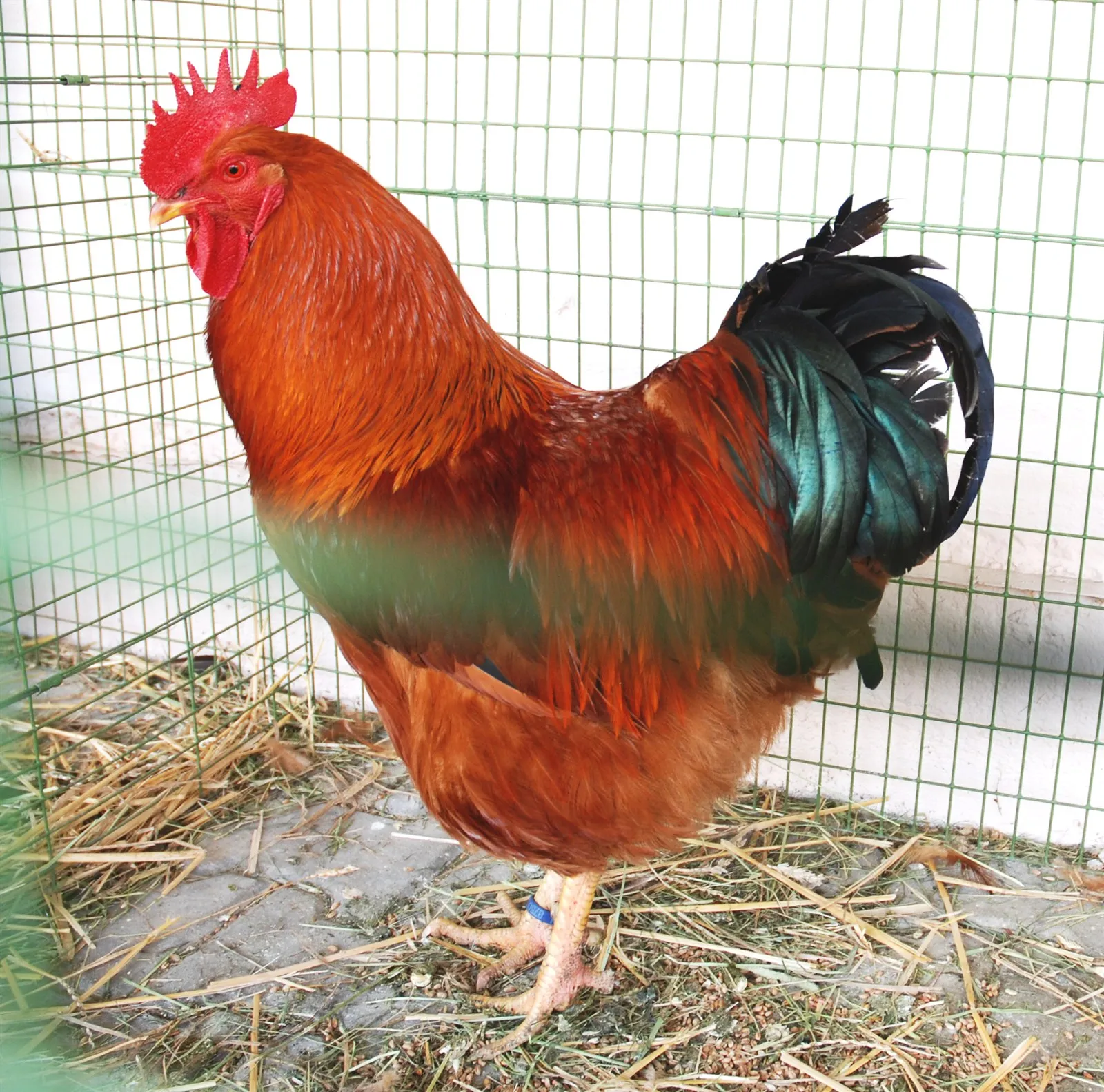
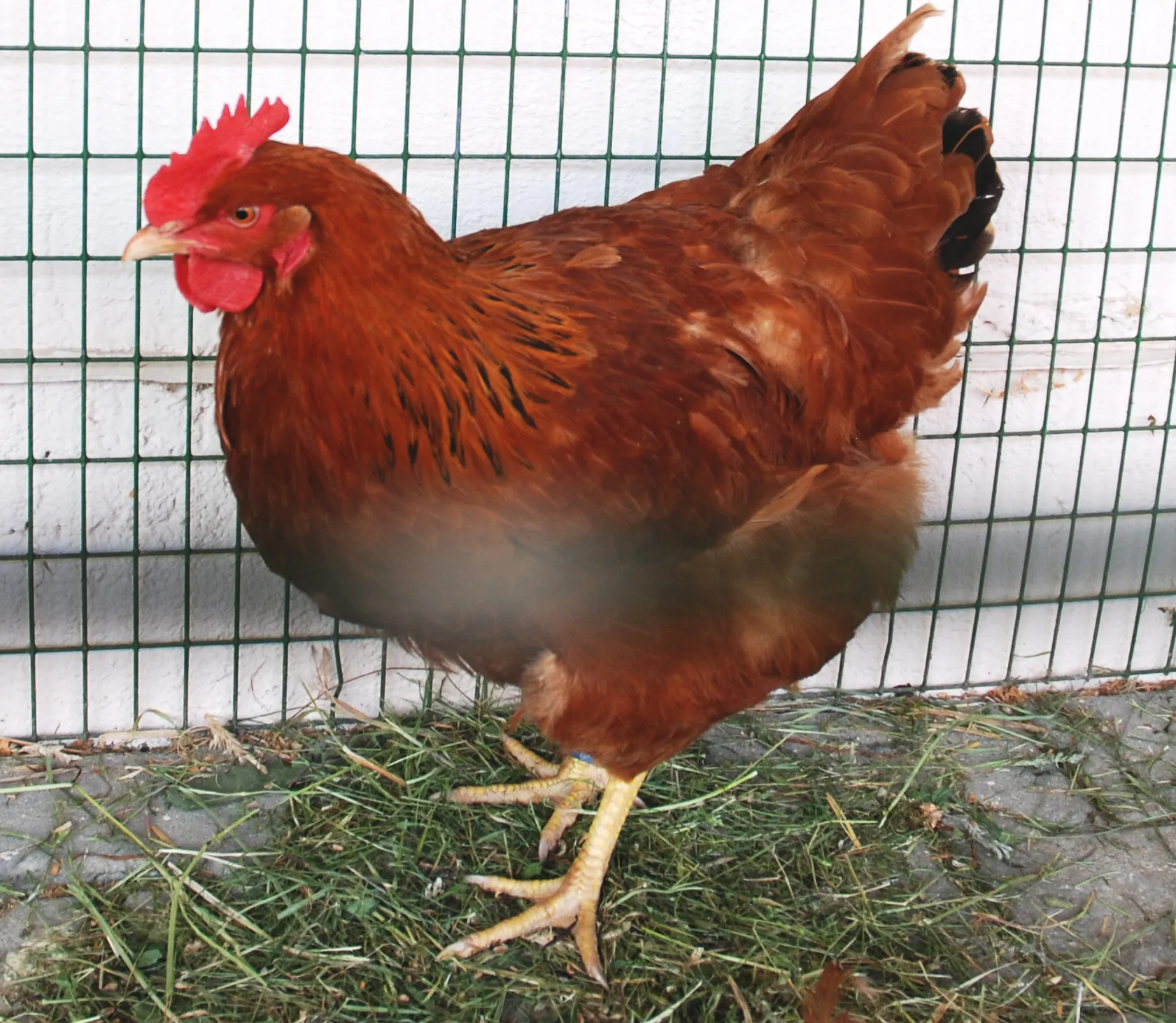
New Hampshire Red (Conservancy title: New Hampshire) is an American dual-purpose breed selected out of Rhode Island Red stock in New Hampshire and Massachusetts — lighter chestnut-red, broader and more triangular than the brick-shaped RIR — and it remains on The Livestock Conservancy’s Conservation Priority List.
The Conservancy breed page is the primary institutional history. In the early 1900s, New England poultry breeders selected Rhode Island Red hens that feathered, grew, and matured faster. University of New Hampshire professor A. W. “Red” Richardson is credited with a breakthrough that helped turn that selected strain into a distinct breed named for New Hampshire. APA Standard of Perfection admission: 1935. The breed powered a regional industry serving Northeast cities; after World War II, New Hampshires featured in the popular “Chicken of Tomorrow” contests — a New Hampshire × Cornish cross won for feed efficiency and live weight, while a white Plymouth Rock won carcass traits; today’s commercial broilers are synthetic lines largely derived from contest winners. Conservancy: still sometimes used in hybrid sex-link programs (feather-sexable at hatch).
That origin claim matches Flockmath’s breeds.json line (“selected from Rhode Island Red stock for faster maturity and broiler quality”) and Oklahoma State University’s breed page (Wayback capture 30 December 2024, timestamp 20241230072201): specialized selection out of RIR for rapid growth, fast feathering, early maturity, and vigor; New England (chiefly Massachusetts and New Hampshire); APA 1935; Chicken of Tomorrow path into the modern broiler industry. Mississippi State Extension (P3036): originated from selective breeding of Rhode Island Reds; “developed more for meat than egg production”; chestnut-red, somewhat lighter than RIRs; adults 6.5–8.5 lb; brown to dark brown eggs; hens prone to brood and good mothers.
Sex-link and Delmarva neighbors. Conservancy notes sex-link hybrid use. University of Kentucky Extension (ASC-190): Delaware hen × New Hampshire (or RIR) rooster is a classic red sex-link; reverse mating is not sex-linked; black sex-links often use RIR or New Hampshire roosters on Barred Rock hens; Gold Comet / Cinnamon Queen recipes can use New Hampshire roosters. Consistent with the Delaware profile (Barred Rock roosters × New Hampshire hens → Indian River sports; Delaware/NH broiler crosses on Delmarva). Offspring of sex-link crosses are hybrids, not pure New Hampshires — same disclosure Delaware already uses.
State poultry. Conservancy: 2018 Canaan Elementary Schools petition; signed into law June that year. New Hampshire Public Radio / Associated Press (19 June 2018): Gov. Chris Sununu signed the bill naming the New Hampshire Red official state poultry; Canaan Elementary students present; Conservancy origin summary quoted in the AP piece.
Conservation status — Conservancy materials disagree with themselves. The live breed page’s top facts box says Threatened; a second facts box lower on the same page says Watch. The 2025 Quick Reference / Pick-a-Breed chart row also prints Watch. The 2026 Conservation Priority List PDF lists New Hampshire (T) Threatened (same (T) on the 2025 CPL). This profile follows the CPL as the authoritative listing — Threatened — and names the page/chart Watch cells as internal Conservancy inconsistency, not a second live status. Cackle Hatchery (labelled hatchery) prints TLC: Threatened, matching the CPL.
Care
Eggs. The Conservancy is the main institutional annual figure: about 200–220 large light-brown eggs/year, with an explicit strain caveat — production strains for rapid growth and dressing do not lay like the standard dual-purpose bird; ask breeders, because growth, egg production, and broodiness “tend not to go together.” Pick-a-Breed chart: brown, extra large, rate of lay Fair (no numeric band on the chart row). OSU: “fair egg laying ability,” no count; some strains darker brown shells; selected more for meat than eggs. Mississippi State: brown to dark brown shells; no annual count. Cackle: 200–280 (estimates only); large–extra large brown. Flockmath’s 220 sits at the Conservancy ceiling — matching the site’s New Hampshire Red egg guide — below Cackle’s hatchery high and above OSU’s qualitative “fair.” UKY Table 2: New Hampshires brown eggs among yellow-skinned dual-purpose breeds.
Weights & type. Conservancy body / facts and Pick-a-Breed chart: male 8.5 / female 6.5 — matches Flockmath, OSU, Cackle, and Mississippi State’s adult band. Deep, broad, somewhat triangular body vs RIR’s brick shape; brilliant chestnut red with possible pale yellow highlights; sun-bleach lightens color; black tail; black-edged wing and lower-neck feathers on hens; reddish-buff/salmon pin feathers (cleaner carcass); yellow skin/shanks; single comb medium to moderately large (hens may flop).
Climate. Conservancy: known for cold tolerance; can do well in both cold and warm if housed appropriately. Pick-a-Breed: hot and cold; combs can be prone to frostbite. UKY: New Hampshire on the harsh-winter list with RIR, Rock, Delaware. Cackle lists the breed under hot-weather chickens and still flags dry winter housing for the single comb. Flockmath’s climate cold matches the Conservancy’s lead emphasis and UKY’s winter list; it is narrower than Conservancy/chart “both” — named, not papered over. Frostbite prevention: Poultry Extension (single combs riskier than pea/strawberry); UMN Extension (moisture + cold).
Pasture / dual use. Conservancy: very good pastured-poultry choice; cockerels for meat; carcass finishes well. OSU / Mississippi State: meat-leaning dual-purpose.
For coop sizing / egg modeling: coop size calculator and egg production calculator. Related profiles: Rhode Island Red, Delaware, Barred Plymouth Rock.
Temperament
Conservancy facts: Docile, or Competitive and Aggressive. Body text: usually family-friendly and good for beginners; source stocks vary from gentle to unfriendly/aggressive; may assert over more docile breeds; keep children away from aggressive roosters in breeding season; handle young birds often. Pick-a-Breed: Docile. OSU: “competitive and aggressive” (no softener). Cackle Breed Facts: Docile. Flockmath friendly / beginner-friendly aligns with Conservancy’s usual family-friendly line and Cackle/chart Docile, while the OSU flat “aggressive” and Conservancy’s dual facts box are the honest range — ask the seller, watch mixed flocks at the feeder. Noise: no fetched Conservancy/extension noise band; Flockmath moderate stands as site data without an institutional contradiction to name.
Health
No fetched Conservancy or extension page flags a New Hampshire–specific infectious disease. Honest gap. Management points that are sourced:
- Broodiness: Conservancy breed page — prone to go broody; good mothers. Pick-a-Breed — Variable. OSU / Mississippi State — prone to brood, good mothers. Cackle — Variable. Flockmath often follows the breed-page / extension “prone” line while naming the chart/hatchery Variable cells.
- Single-comb frostbite in damp cold (Poultry Extension; UMN; Conservancy chart frostbite note).
- Buyer/conservation risk: Threatened on the 2026 CPL — ask whether the bird is standard dual-purpose, a growth/dressing strain, or a sex-link parent; exhibition lines may not match production lines.
If frostbite occurs, UMN recommends a veterinarian; severe untreated frostbite can mean permanent tissue loss and may require isolation from pecking.
Chestnut Dual-Purpose: The Bottom Line
If you want the Rhode Island Red’s American farm utility selected toward faster maturity, faster feathering, and real carcass, New Hampshire Red is the Conservancy’s bird: early-1900s RIR selection, APA 1935, Chicken of Tomorrow ancestry, 2018 New Hampshire state poultry, and Threatened on the live CPL despite Watch wording elsewhere on Conservancy pages. Flockmath’s 220 eggs/year is the Conservancy’s 200–220 ceiling, not a hatchery fantasy — and the Conservancy’s own strain warning still applies: meat-selected lines will not lay like dual-purpose layers.
Expect lighter chestnut than many RIRs, 6.5 / 8.5 lb weights that institutional sources agree on, cold hardiness with a single-comb frostbite caveat, broodiness that is often useful and sometimes costly, and temperament that is usually friendly but can turn competitive — OSU says so without hedging. Cross-check the Rhode Island Red profile if eggs alone are the goal (~40 more eggs/year on Flockmath’s RIR figure), and the Delaware profile if you are buying into Delmarva history or a Delaware × New Hampshire sex-link project. You are buying a Threatened New England dual-purpose red — parent of many backyard hybrids, not a Cornish Cross and not interchangeable with production RIR stock.
Sources
- History (RIR selection; Richardson; APA 1935; Chicken of Tomorrow; sex-links); 200–220 light-brown eggs; strain caveat; weights 8.5/6.5; prone to brood; temperament Docile or Competitive/Aggressive; cold + both climates; pasture dual-purpose; 2018 state poultry; facts-box Threatened vs Watch: The Livestock Conservancy — New Hampshire Chicken
- Chart: Watch; Eggs/Meat; M 8.5 / F 6.5; brown Extra Large; Fair; Docile; Variable brooding; hot and cold; Novice; frostbite note; rapid growth / table fowl: The Livestock Conservancy — Quick Reference Guide to Heritage Chickens (2025 watermarked Pick-a-Breed PDF)
- CPL Threatened: 2026 Conservation Priority List — Poultry (
New Hampshire (T)). - OSU (RIR selection; fair layers; meat > eggs; competitive/aggressive; broody; 8.5/6.5; Chicken of Tomorrow): Oklahoma State University — New Hampshire Red Chickens (Fetched via Wayback Machine capture 30 December 2024, timestamp
20241230072201; live page Cloudflare-blocked this pass.) - Meat-leaning origin; lighter chestnut than RIR; broody/good mothers; brown–dark brown eggs; 6.5–8.5 lb; NH/RIR in sex-link recipes: Mississippi State Extension — P3036
- Winter-hardy list; dual-purpose brown eggs; Delaware × NH/RIR sex-link; NH roosters in black/red sex-links: University of Kentucky Cooperative Extension — ASC-190
- Frostbite moisture/ventilation: University of Minnesota Extension — “Caring for Chickens in Cold Weather.”
- Single vs pea comb frostbite incidence: Poultry Extension — “Frostbite in Chickens,” Dr. Jacquie Jacob, University of Kentucky.
- State poultry signing (June 2018; Canaan Elementary; Conservancy origin quoted): NHPR / Associated Press — “‘New Hampshire Red’ Becomes Official State Poultry” (19 June 2018).
- Hatchery guidance (labelled): Cackle Hatchery — New Hampshire — 200–280 eggs; APA 1935; TLC Threatened; Temperament Docile; Broody Variable; weights 6.5 / 8.5; RIR-selection history.
Ours: framing Flockmath’s 220 as Conservancy ceiling while naming Cackle 200–280 and OSU/chart “fair”; treating 2026 CPL Threatened as authoritative over Watch cells on the breed page and Pick-a-Breed chart; naming Conservancy temperament and broodiness dual language; naming Flockmath climate cold vs Conservancy/chart both-climate framing; verifying the breeds.json RIR-selection / broiler-quality description against Conservancy + OSU; cross-linking RIR / Delaware / Barred Rock consistently with those profiles’ sex-link and Delmarva language; and leaving breeds.json numbers unchanged this pass.