
standard breed · United Kingdom
Sussex (Light)
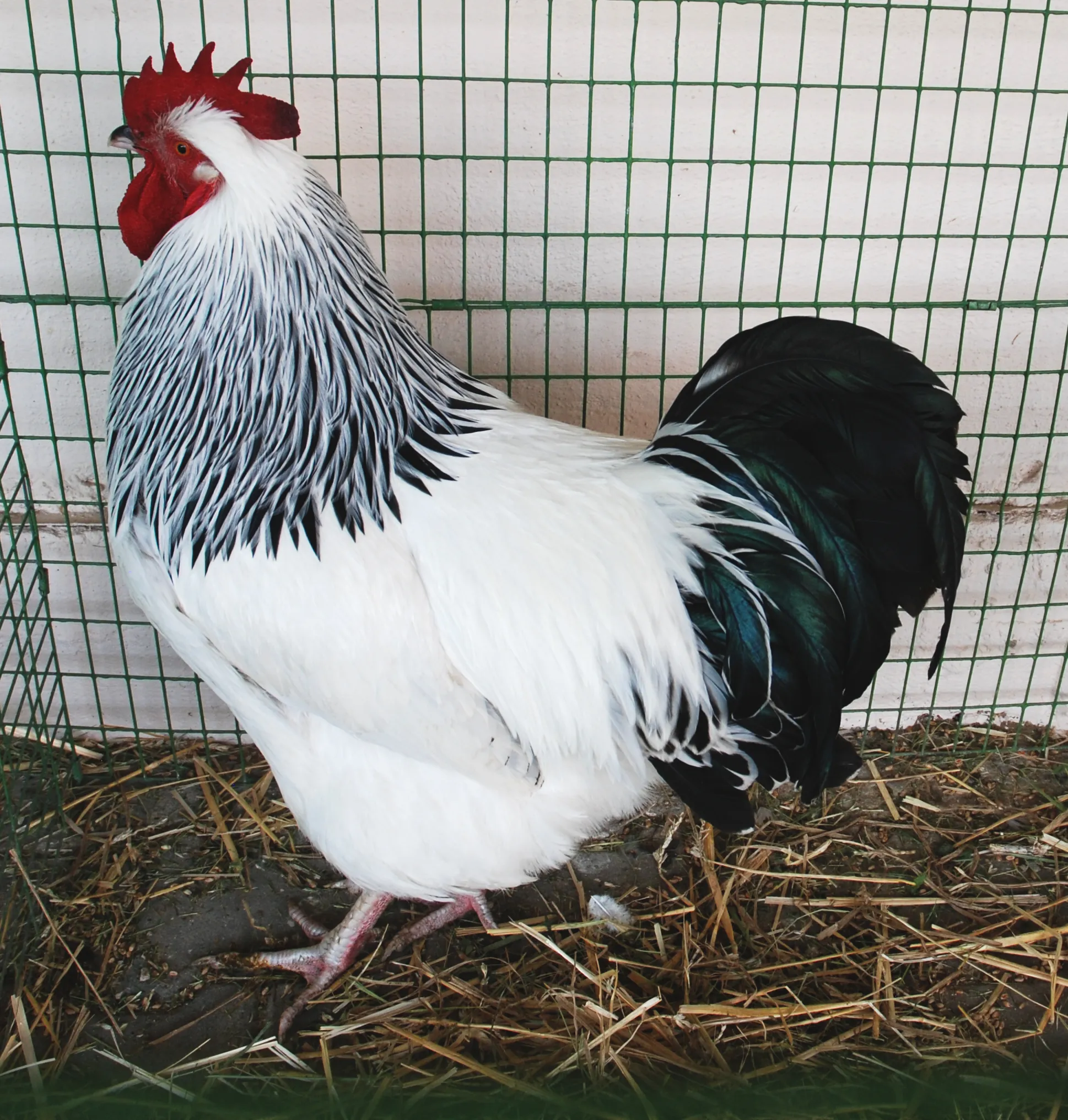
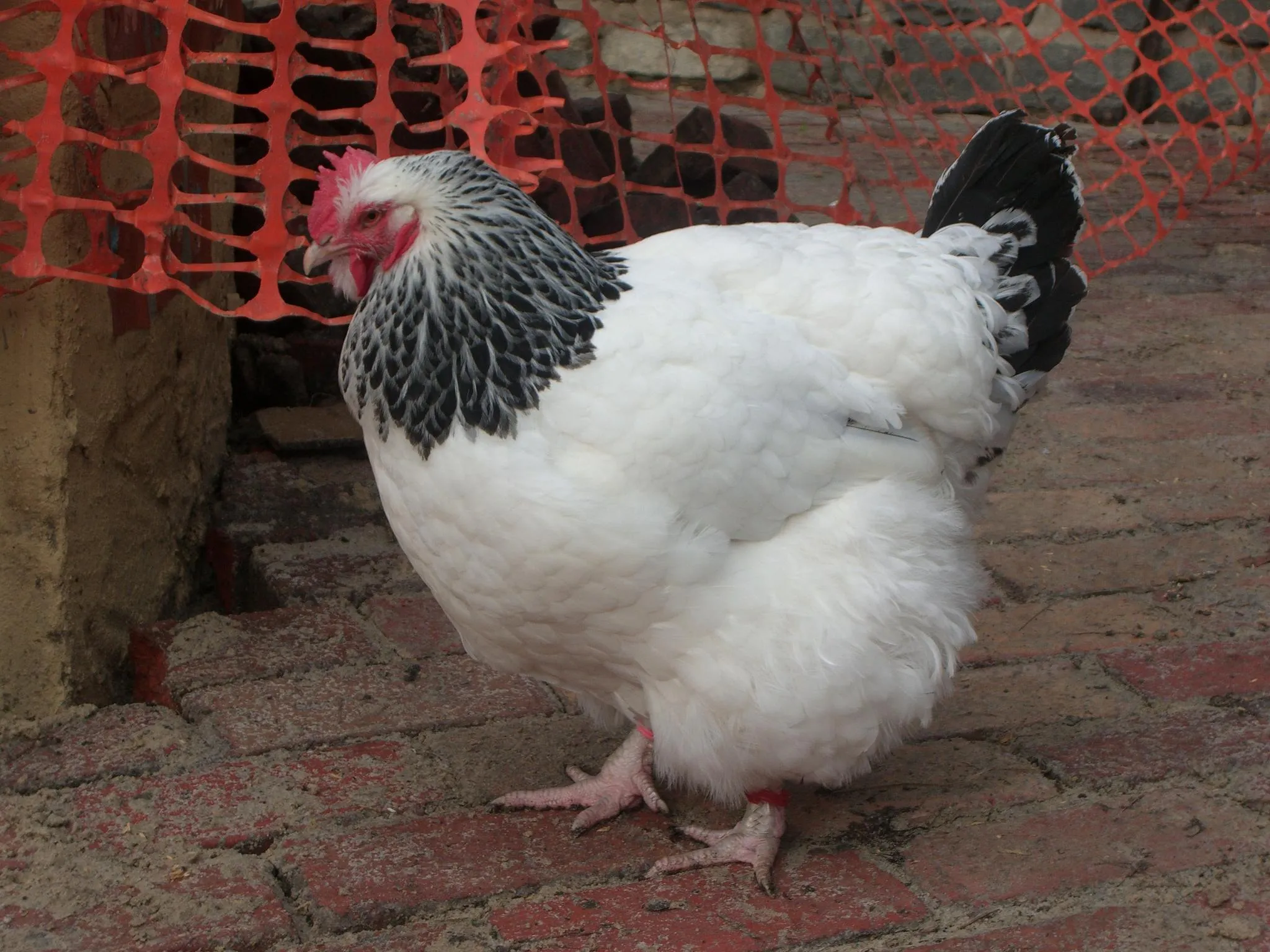
An old English dual-purpose breed: white with black neck and tail markings. Curious, hardy, and a dependable layer of brown eggs even through winter.
| Size class | standard |
|---|---|
| Weight (hen) | 7 lb (3.18 kg) |
| Weight (rooster) | 9 lb (4.08 kg) |
| Eggs per year | 240 |
| Egg color | brown |
| Egg size | large |
| Climate tolerance | All climates |
| Temperament | friendly |
| Goes broody | occasionally |
| Noise level | moderate |
| Beginner-friendly | Yes |
| Origin | United Kingdom |
Is the Sussex (Light) right for your flock?
The Sussex (Light) is a standard breed that's well-suited to first-time keepers. Hens lay around 240 brown eggs per year and tolerate most climates well.
Temperament: friendly. Broodiness: occasionally. Noise level: moderate.
What this breed needs
- Coop space: about 4 sq ft per bird inside the coop. Run the numbers for your specific flock size in the coop size calculator.
- Climate fit: adapts to a wide range of climates with no special accommodations.
- Eggs: a steady, reliable producer — a good general-purpose layer. For a month-by-month breakdown, see How Many Eggs Does a Light Sussex Lay Per Year?.


History
The Light Sussex is the white Columbian-patterned variety of one of England’s oldest farm chickens — white body, black neck (hackle) and tail markings, red single comb, white skin and shanks. Most of the institutional history is written for Sussex as a breed, not Light alone. Where a source names Light specifically, that is called out below; where it does not, treat the claim as breed-level.
The Livestock Conservancy places poultry in Kent, Sussex, and Surrey as a long-running table-bird center — white skin, legs, and feet, with a reputation for tender flesh. Early landrace flocks mixed four-toed and five-toed birds; five-toed stock became the Dorking, while four-toed flocks remained more variable. Victorian London’s egg and table markets prized Sussex-county birds. Asiatic imports in the mid-1800s pushed size up but coarsened meat; by about 1900 few “uncontaminated” old flocks remained. In 1903, Edward Brown urged Sussex farmers not to let the type die out; E.J. Wadman formed a Sussex club that same year and farmers hunted relatively pure pockets to rebuild the breed. That revival story is Conservancy history for Sussex generally — it is not a Light-only founding narrative. Birds that look like today’s Speckled and Red were likely what early shows saw; Conservancy notes the 1845 London show exhibited Kentish/Sussex stock in that vein.
Sussex reached the United States about 1912. The American Poultry Association recognized Speckled and Red in 1914 and Light in 1929 (Conservancy; Cackle Hatchery’s Light product page repeats 1929 for Light and is labelled here as hatchery confirmation of the APA year). Oklahoma State University’s breed page (Wayback capture) says birds arrived around 1912 and that the APA recognized Sussex “in 1914 and again in 1929 for the Speckled, Red, and Light varieties.” That wording names both years and all three varieties without separating which year applies to which. Conservancy’s split (Speckled/Red 1914; Light 1929) is the clearer institutional account; OSU’s sentence is less precise and is not silently rewritten here. England also recognizes Brown; Conservancy notes other colors (Coronation, Buff, White, Silver) from breeders. Flockmath’s Speckled Sussex profile is separate — this page stays on Light where sources allow.
Oklahoma State and UW–Madison Extension’s Skinner circular (A2880) both state that Sussex remain popular in Britain and that the light variety figured prominently in the development of many British commercial strains. That is the main institutional Light-specific historical claim available without leaning on hatchery blogs. OSU adds that Sussex combine exhibition and utility virtues but are more popular in Canada, England, and elsewhere than in the United States — again breed-level, not Light-only.
On conservation status, Conservancy’s Sussex breed page lists Recovering. The Conservancy’s 2026 Conservation Priority Poultry Breeds PDF lists Sussex (R) under breeds imported before 1900. The 2026 Heritage Chicken Breed Comparison Chart likewise prints Sussex as Recovering. Those Conservancy documents agree for this breed (unlike Australorp, where chart and CPL diverge).
Care
Standard weights line up across Conservancy, OSU, UW–Madison Skinner, Cackle Hatchery (hatchery guidance), and Flockmath: males 9 lb, females 7 lb (OSU/Cackle also list cockerel 7.5 / pullet 6). No weight discrepancy to resolve for this variety.
Egg planning is where institutional sources disagree, and the disagreement is breed-level (none of them publish a Light-only Conservancy-style band):
- Conservancy breed page: 200–250 large tan/brown eggs a year; hens “lay best if not allowed to get overly fat.”
- Conservancy 2026 Pick-a-Breed chart: “Very good; ~200, if hens are not overly fat.”
- Utah State University Extension’s breed table: Sussex 250–300 light-brown eggs, tagged heavy / calm, alert / excellent foraging, cold hardy.
- Cackle Hatchery Light Sussex (hatchery guidance): 240–260 (estimates only) in Breed Facts; body copy says “around 250.”
- Mile Four’s Sussex retailer guide (commercial guidance): ~240–275 at breed level.
Conservancy’s 200–250 / ~200 and USU’s 250–300 do not agree. Flockmath’s table figure of 240 sits inside Conservancy’s band and inside Cackle’s hatchery band; it sits below USU’s floor. This profile does not silently prefer USU. OSU and Skinner publish no annual count. The Conservancy fat caveat is management, not trivia: the same breed “will put on fat very easily,” which suits table use and can cut lay if birds get soft and heavy.
Climate language also splits inside Conservancy materials. The breed page says Sussex “do well in the winter but [are] not fond of the heat.” The 2026 Pick-a-Breed chart says “Good in hot and cold.” Those Conservancy documents disagree on heat. USU groups Sussex with cold-weather breeds and tags cold hardiness. Mile Four (commercial) rates cold excellent and heat moderate. Flockmath’s climate field is all — readable as “usable in many climates with management,” not as “loves extreme heat.” Practical rule from the breed page: plan shade, airflow, and cool water in hot weather; treat winter as a relative strength.
Housing and husbandry notes from Conservancy: do well in confinement if they have room to roam and some free-range time; not prone to flying; covered runs and enrichment (leaf piles, stumps, perches) help if boredom and predators are risks. Cackle (hatchery) echoes confinement suitability and “rarely fly.”
The breed carries a rich red, five-pointed single comb (Conservancy). Extension frostbite guidance for single-comb birds applies: Poultry Extension (Dr. Jacquie Jacob, University of Kentucky) flags combs, wattles, and toes, damp bedding, and poorly ventilated cold coops; University of Minnesota Extension ties frostbite to moisture plus cold and recommends wooden roosts over metal or plastic. Conservancy’s Pick-a-Breed notes also flag that combs can be prone to frostbite. Winter hardiness does not cancel comb care on hard-freeze, damp nights.
For coop space by flock size, use the coop size calculator; egg modeling belongs in the egg production calculator.
Temperament
Conservancy temperament is calm and curious: they like people, suit beginners, work for families with children interested in showing or 4-H, and are confident but not aggressive with other breeds — so monitor mixed flocks so more assertive breeds do not bully them. USU tags Sussex “calm, alert” and includes Sussex among breeds noted for children and family. OSU/Skinner: alert, attractive, good foragers, stout and easy to handle (OSU). Cackle Light (hatchery): active/curious, calm, people-friendly. Mile Four (commercial): calm, social, curious, beginner-friendly. Flockmath’s friendly, moderate noise, and beginner-friendly flags sit inside that band.
Broodiness is mostly discussed at breed level. Conservancy: hens “can be broody and are good mothers”; Pick-a-Breed lists Setters. OSU/Skinner: go broody and make good mothers. Cackle Light facts print Broody: Setter and FAQ copy says they may go broody from time to time. Mile Four (commercial guidance, fetched) is the source that splits varieties: “Speckled lines brood more often; Light Sussex brood less.” Institutional Conservancy/OSU pages do not make that Light/Speckled split. Flockmath records Light as occasionally broody — consistent with occasional sitting plus Mile Four’s “Light brood less” commercial note, and not a claim that Light never sits. Speckled-specific broodiness belongs on the Speckled profile.
Health
Neither Conservancy nor OSU flags a disease unique to Sussex beyond ordinary chicken-keeping risks. Stating that gap is better than inventing a health chapter. Recurring management points are (1) excess fat cutting lay, (2) heat stress relative to the breed’s winter strength, and (3) single-comb frostbite risk in wet cold — all husbandry, covered under Care. If frostbite occurs, University of Minnesota Extension recommends consulting a veterinarian; severe untreated frostbite can mean permanent loss of comb, wattle, or foot, and pecking of injured tissue may require isolation.
Mile Four (commercial) mentions mites hiding in dense plumage and routine external-parasite checks — labelled as commercial guidance, not as an institutional Sussex-specific diagnosis. No extension page fetched here publishes a Light-Sussex-only genetic condition.
Classic English Utility Bird: The Bottom Line
If you want a friendly dual-purpose bird with a clear English paper trail and Columbian black-and-white markings, Light Sussex is one of the cleaner heritage choices. Flockmath’s 240 eggs/year is a planning Normal inside Conservancy’s 200–250, aligned with Cackle’s hatchery 240–260, and below Utah State’s 250–300 table — that Conservancy/USU gap is named, not papered over. Keep hens in laying condition; Conservancy’s own fat warning is the lever that most clearly moves the annual total.
Expect a calm, curious, beginner-suitable bird that prefers winter over heat (breed page), even though Conservancy’s Pick-a-Breed chart also says hot-and-cold. Ask hatcheries about strain and broodiness if you need eggs over sitters; plan for occasional broodiness on Light rather than never. In hard damp cold, manage the single comb like any comparable English-class bird.
You are also buying into a Recovering Conservancy priority breed — APA Light since 1929, Speckled/Red since 1914 — with Light’s documented role in British commercial-strain history (OSU; Skinner). That is heritage utility with a white-and-black face, not a hybrid layer in disguise.
Sources
- Breed history (Roman/Victorian/1903 revival), U.S. ~1912, APA Speckled/Red 1914 and Light 1929, Recovering status, weights 9/7, 200–250 eggs, fat caveat, broodiness/good mothers, confinement/foraging, winter vs heat, temperament/beginner/family notes: The Livestock Conservancy — “Sussex Chicken.”
- 2026 CPL — Sussex Recovering: The Livestock Conservancy — 2026 Conservation Priority Poultry Breeds PDF.
- Pick-a-Breed chart — Recovering; ~200 eggs if not fat; Setters; Good in hot and cold; comb frostbite note (disagrees with breed-page heat wording): The Livestock Conservancy — Heritage Chicken Breed Comparison Chart (2026).
- Origin, Light in British commercial strains, APA year wording (less precise), broodiness, weights, varieties, dual-purpose use: Oklahoma State University — “Sussex Chickens.” (Fetched via Wayback Machine capture 5 March 2026, 14:41:44 UTC, timestamp
20260305144144, after live CDX/direct access was unreliable.) - Light commercial-strain note, varieties Light/Red/Speckled, weights, brown eggs, broodiness/good mothers: UW–Madison Extension — Skinner, “Chicken Breeds and Varieties (A2880).”
- Egg-count range 250–300 (disagrees with Conservancy 200–250), calm/alert, cold-weather grouping, children/family tag: Utah State University Extension — “Managing Chickens From Chicks to Peak Egg Production.”
- Frostbite moisture/ventilation/wooden roosts; heavier-breed winter context (does not name Sussex): University of Minnesota Extension — “Caring for Chickens in Cold Weather.”
- Comb frostbite risk and prevention (single-comb breeds generally): Poultry Extension — “Frostbite in Chickens,” Dr. Jacquie Jacob, University of Kentucky.
- Hatchery guidance (labelled as such): Cackle Hatchery — Light Sussex — 240–260 eggs; ~250 in body copy; weights 7/9; APA 1929; Broody: Setter; Recovering TLC note; cooler-weather preference; confinement / rarely fly. Same page’s “Breeder Farm Source” line refers to a “pure Speckled Sussex” strain — treated as a hatchery-page inconsistency, not as proof of a Light-vs-Speckled egg split.
- Commercial retailer guidance (labelled as such): Mile Four — Sussex — ~240–275 eggs; Light vs Speckled broodiness split; cold excellent / heat moderate; beginner-friendly temperament.
Ours: framing Flockmath’s 240 as the Normal inside Conservancy 200–250 and Cackle 240–260, while naming USU’s 250–300 as a real disagreement rather than averaging it away; treating Conservancy breed-page “not fond of heat” vs Pick-a-Breed “Good in hot and cold” as an internal Conservancy conflict; keeping Light-specific claims limited to APA 1929 timing, Columbian description, British commercial-strain role (OSU/Skinner), and hatchery/retailer Light pages; labelling Mile Four’s Light-vs-Speckled broodiness split as commercial guidance because Conservancy/OSU do not separate varieties there; and leaving breeds.json (240 eggs, all climates, friendly, occasionally broody, 7/9 lb) unchanged this pass.