
standard breed · United Kingdom
Speckled Sussex
A mahogany-feathered Sussex variety with white tipping that grows more pronounced each molt. Curious, sociable, and a winter-laying favorite.
| Size class | standard |
|---|---|
| Weight (hen) | 7 lb (3.18 kg) |
| Weight (rooster) | 9 lb (4.08 kg) |
| Eggs per year | 240 |
| Egg color | brown |
| Egg size | large |
| Climate tolerance | All climates |
| Temperament | friendly |
| Goes broody | occasionally |
| Noise level | moderate |
| Beginner-friendly | Yes |
| Origin | United Kingdom |
Is the Speckled Sussex right for your flock?
The Speckled Sussex is a standard breed that's well-suited to first-time keepers. Hens lay around 240 brown eggs per year and tolerate most climates well.
Temperament: friendly. Broodiness: occasionally. Noise level: moderate.
What this breed needs
- Coop space: about 4 sq ft per bird inside the coop. Run the numbers for your specific flock size in the coop size calculator.
- Climate fit: adapts to a wide range of climates with no special accommodations.
- Eggs: a steady, reliable producer — a good general-purpose layer. For a month-by-month breakdown, see How Many Eggs Does a Speckled Sussex Lay Per Year?.


History
Speckled Sussex is the mahogany, white-tipped variety of England’s old Sussex dual-purpose breed — same rectangular white-skinned farm chicken as Light Sussex, different APA color. Most institutional history is written for Sussex as a breed. Speckled-only claims are called out; everything else is breed-level and aligned with the Light profile rather than re-derived.
The Livestock Conservancy’s Sussex page (re-fetched this pass) is the breed-level spine already used on Light: Kent/Sussex/Surrey table-poultry country; four-toed landrace vs five-toed Dorking; Victorian London markets; Asiatic crosses coarsening meat; 1903 Edward Brown speech and E.J. Wadman Sussex club revival; U.S. arrival about 1912. Conservancy is explicit that birds at the 1845 London show were likely similar to today’s Speckled and Red, and that the APA recognized Speckled and Red in 1914 and Light in 1929. That Speckled-first U.S. recognition is the main Speckled-specific institutional date — fifteen years before Light. England also recognizes Brown; breeders have produced other colors.
Oklahoma State University (Wayback 20260305144144, same capture Light used) and UW–Madison Extension’s Skinner circular (A2880, re-fetched): Speckled, Red, and Light varieties; OSU’s wording still packs both APA years with all three varieties without separating which year belongs to which — Conservancy’s Speckled/Red 1914 / Light 1929 split remains clearer. Both OSU and Skinner call the speckled variety “especially attractive” with multi-colored plumage; Skinner/OSU add that the light variety figured in many British commercial strains — a Light-specific industrial note, not Speckled’s. Soft finding for the mahogany-tip story: neither Conservancy nor OSU/Skinner says white tipping grows more pronounced each molt. That language appears on hatchery/commercial pages (below), not in the Conservancy breed page body fetched this pass.
Conservation. Conservancy Sussex page and 2026 CPL: Recovering — same agreement Light already documented (unlike Australorp / New Hampshire status conflicts). Speckled is a variety of a Recovering breed, not a separate CPL line.
Cross-link: breed revival, dual-purpose table fame, and Recovering status are shared with Light Sussex. This page’s job is Speckled’s APA timing, plumage identity, and any Speckled-named hatchery notes — not a second full Sussex origin essay.
Care
Eggs. Planning numbers remain breed-level (no Conservancy Speckled-only band):
- Conservancy breed page: 200–250 large tan/brown eggs/year; lay best if not overly fat.
- Conservancy Pick-a-Breed chart: “Very good; ~200, if hens are not overly fat.”
- Utah State University Extension table: Sussex 250–300 light-brown (disagrees with Conservancy — already named on Light).
- Cackle Speckled (hatchery, fetched this pass): Breed Facts 200–240 (estimates only); body/FAQ copy also cites ~240–250 — hatchery page disagrees with itself; labelled hatchery.
- Mile Four (commercial): ~240–275 at breed level.
Flockmath’s 240 matches Light’s figure, sits inside Conservancy 200–250 and near Cackle’s Speckled facts ceiling, and sits below USU’s floor. Matching production detail: Speckled Sussex egg guide. Conservancy fat caveat still applies: Sussex “will put on fat very easily.”
Weights. Conservancy standard facts: male 9 / female 7 — matches Flockmath, OSU, Skinner, Cackle Speckled. Conservancy’s same page also prints a lower facts box Market Weight: 6–7.5 lbs — internal Conservancy disagreement; this profile keeps 9 / 7 as the APA-facing / Flockmath pair and names the market-weight box.
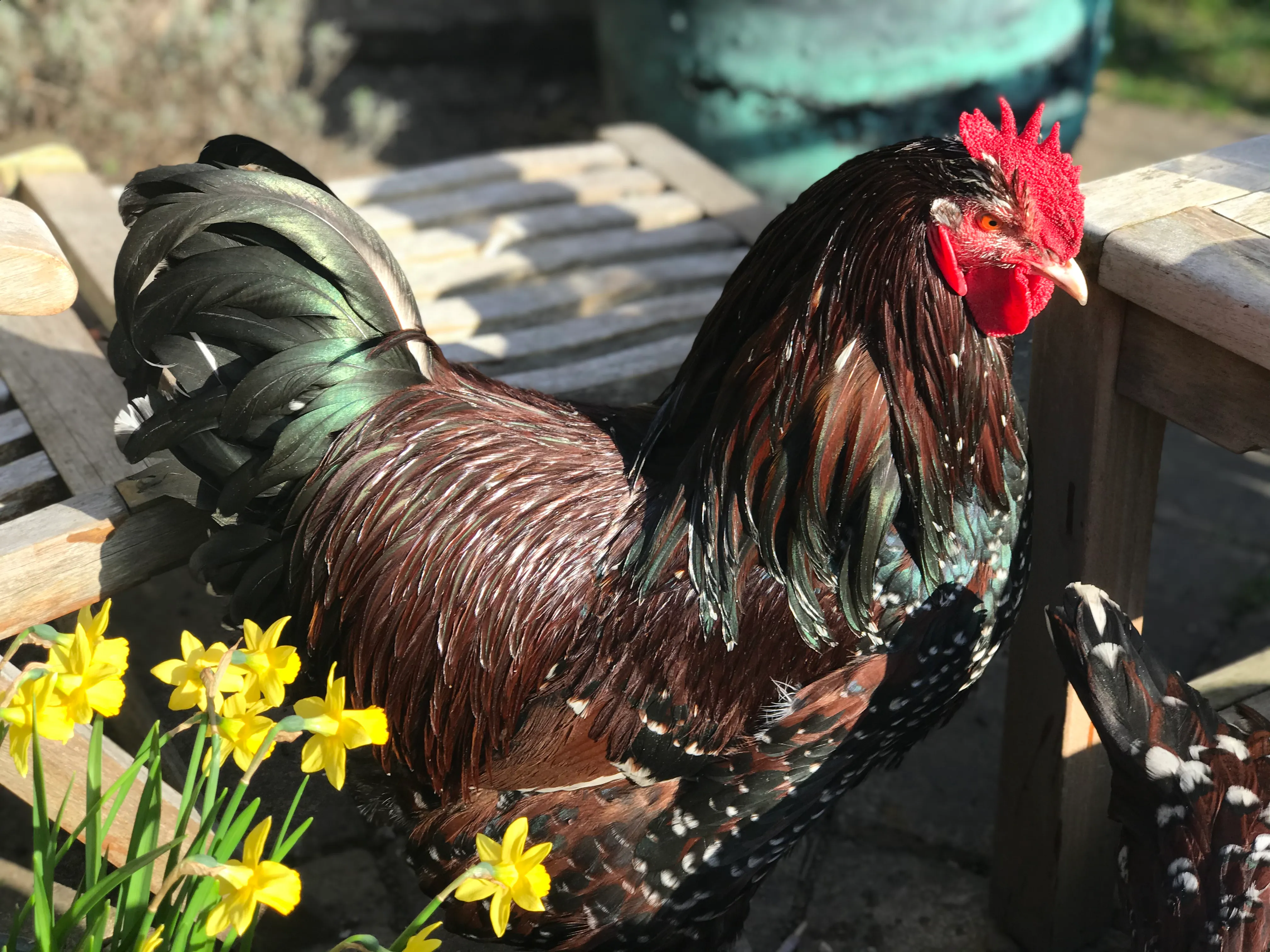
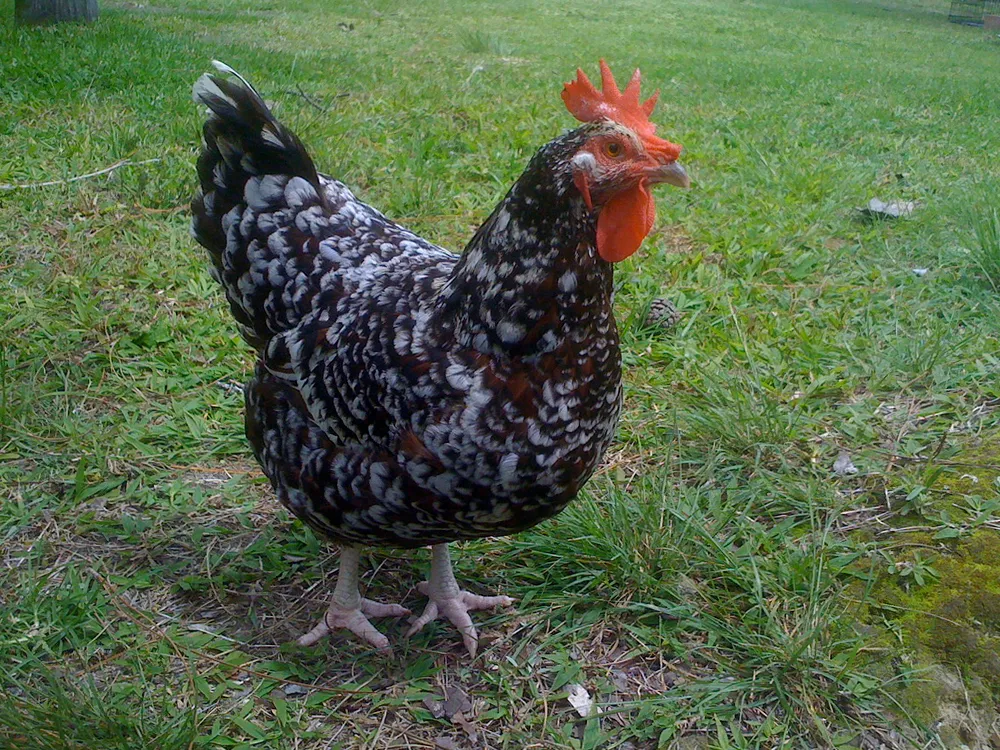
Plumage (Speckled-specific). Institutional: mahogany / multi-colored speckled plumage; APA Speckled 1914. Hatchery/commercial only (labelled): Cackle — rich feathering with white-tipped speckles; “with each yearly molt, more speckles usually appear,” so older hens often look more speckled than pullets; pattern may aid camouflage on pasture (still need fencing). Mile Four — mahogany with white speckles that “increase after each molt.” Ours / soft finding: Flockmath’s breeds.json description restates that molt-progression claim; Conservancy/extension bodies fetched here do not — do not elevate it to Conservancy fact; flag for description audit. Update: no institutional source contradicts this claim, and it is independently and consistently described by multiple breeder/genetics resources as a property of the mottling (mo/mo) gene — progressively more white-tipped feathers with successive molts. This appears to be a documented genetic mechanism rather than marketing embellishment, though the primary genetics literature on this gene was not directly fetched and is not cited here as a specific confirmed source. breeds.json’s description is left unchanged, as no basis for a rewrite was found.
Climate & housing. Breed-level, same as Light: Conservancy “do well in the winter but [are] not fond of the heat” vs Pick-a-Breed “Good in hot and cold” (internal Conservancy conflict); USU cold-hardy grouping; confinement OK with roam/enrichment; rarely fly; single red comb → frostbite care (Poultry Extension; UMN moisture rule; chart frostbite note). Flockmath climate all matches Light.
For coop sizing / egg modeling: coop size calculator and egg production calculator. Sibling variety: Light Sussex.
Temperament
Breed-level Conservancy: calm and curious; people-oriented; beginners and families/4-H; confident but not aggressive — monitor so assertive breeds do not bully them. OSU: stout, easy to handle; alert foragers. Cackle Speckled (hatchery): Active/Curious; gentle/people-friendly in body copy. Flockmath friendly / beginners sits inside that band — same temperament field as Light.
Broodiness. Conservancy: can be broody; good mothers. Pick-a-Breed: Setters. OSU/Skinner: go broody; good mothers. Cackle Speckled: Broody: Setter. Mile Four (commercial, already cited on Light): “Speckled lines brood more often; Light Sussex brood less.” Conservancy/OSU do not publish that variety split. Flockmath records Speckled as occasionally — same label as Light — while naming Mile Four’s Speckled>Light commercial split and Cackle’s Setter cell. Ask the seller if you need eggs over sitters.
Health
No Conservancy or extension page flags a Speckled-only infectious disease. Honest gap. Management points that are sourced: (1) excess fat cutting lay, (2) heat relative to winter strength, (3) single-comb frostbite in damp cold — breed-level husbandry shared with Light. Mile Four (commercial) notes mites can hide in dense/speckled plumage — labelled commercial, not an institutional Speckled diagnosis.
If frostbite occurs, UMN recommends a veterinarian; severe untreated frostbite can mean permanent tissue loss and may require isolation from pecking.
Mahogany Speckled Utility: The Bottom Line
If you want Sussex utility with the APA’s older U.S. color — Speckled 1914, fifteen years before Light — this is the mahogany, white-tipped face of the same Recovering English dual-purpose breed documented on the Light Sussex profile. Flockmath’s 240 eggs/year is the same planning Normal as Light: inside Conservancy 200–250, near Cackle Speckled’s hatchery band, and below USU’s 250–300. Keep hens in laying condition; Conservancy’s fat warning still moves the annual total.
Expect calm, curious beginners’ manners, winter strength with a heat caveat Conservancy documents disagree about, and broodiness that institutional sources treat as breed-level sitting while commercial pages say Speckled sits more than Light. Treat “more speckles every molt” as hatchery/commercial plumage lore until a Conservancy or extension page says it in the body — not as a verified genetic fact. You are buying Speckled variety of Recovering Sussex — table-bird English utility in millefleur dress — not a hybrid layer and not a different breed from Light.
Sources
Breed-level (reused from Light Sussex research; Conservancy Sussex page re-fetched this pass)
- History (revival 1903; U.S. ~1912; APA Speckled/Red 1914, Light 1929; 1845 Speckled/Red-like show birds); Recovering; 200–250 eggs; fat caveat; broodiness; temperament; confinement; winter vs heat; weights 9/7 and market-weight 6–7.5 box: The Livestock Conservancy — Sussex Chicken (re-fetched this pass; no molt-tipping claim in body).
- 2026 CPL — Sussex Recovering: 2026 Conservation Priority List — Poultry
- Pick-a-Breed — ~200 if not fat; Setters; Good in hot and cold; comb frostbite (disagrees with breed-page heat wording): Heritage Chicken Breed Comparison Chart (2026) (as cited on Light; not re-downloaded this pass).
- OSU — Speckled multi-colored attractiveness; APA year wording; broodiness; 9/7; Light commercial-strain note: Oklahoma State University — Sussex Chickens (Wayback 5 March 2026,
20260305144144— re-fetched this pass). - Skinner A2880 — Speckled multi-colored; varieties; broodiness; Light commercial strains: UW–Madison Extension — A2880 (re-fetched this pass).
- USU 250–300 (disagrees with Conservancy): Utah State University Extension — Managing Chickens From Chicks to Peak Egg Production (reuse from Light).
- Frostbite: UMN Extension — Caring for Chickens in Cold Weather; Poultry Extension — Frostbite in Chickens (reuse from Light).
Speckled-specific / this-pass fetches
- Hatchery (labelled): Cackle Hatchery — Speckled Sussex — APA 1914; TLC Recovering; 200–240 facts vs ~240–250 body/FAQ; Broody Setter; Active/Curious; weights 7/9; white tips increase with each yearly molt (hatchery claim); camouflage note.
- Commercial retailer (labelled): Mile Four — Sussex — mahogany speckles that increase after each molt; Speckled brood more / Light less; ~240–275 eggs; mites in dense plumage.
Ours: reusing Light’s breed-level Conservancy/extension spine and cross-linking that profile instead of rewriting Sussex origin; treating APA Speckled 1914 and OSU/Skinner “especially attractive” multi-colored plumage as the institutional Speckled hooks; refusing to treat “tipping grows more pronounced each molt” as Conservancy-verified — labelling it hatchery/commercial and flagging breeds.json’s description for the future description audit; naming Conservancy market-weight 6–7.5 vs standard 9/7; naming Conservancy/USU egg disagreement and Conservancy heat vs Pick-a-Breed conflict already documented on Light; naming Mile Four’s Speckled>Light broodiness split as commercial while Flockmath keeps both varieties occasionally; and leaving breeds.json numbers unchanged this pass. (Update: no contradicting institutional source was found; the claim is consistent with independently-documented mottling-gene behavior and breeds.json was left unchanged.)