
light breed · Spain
Andalusian (Blue)
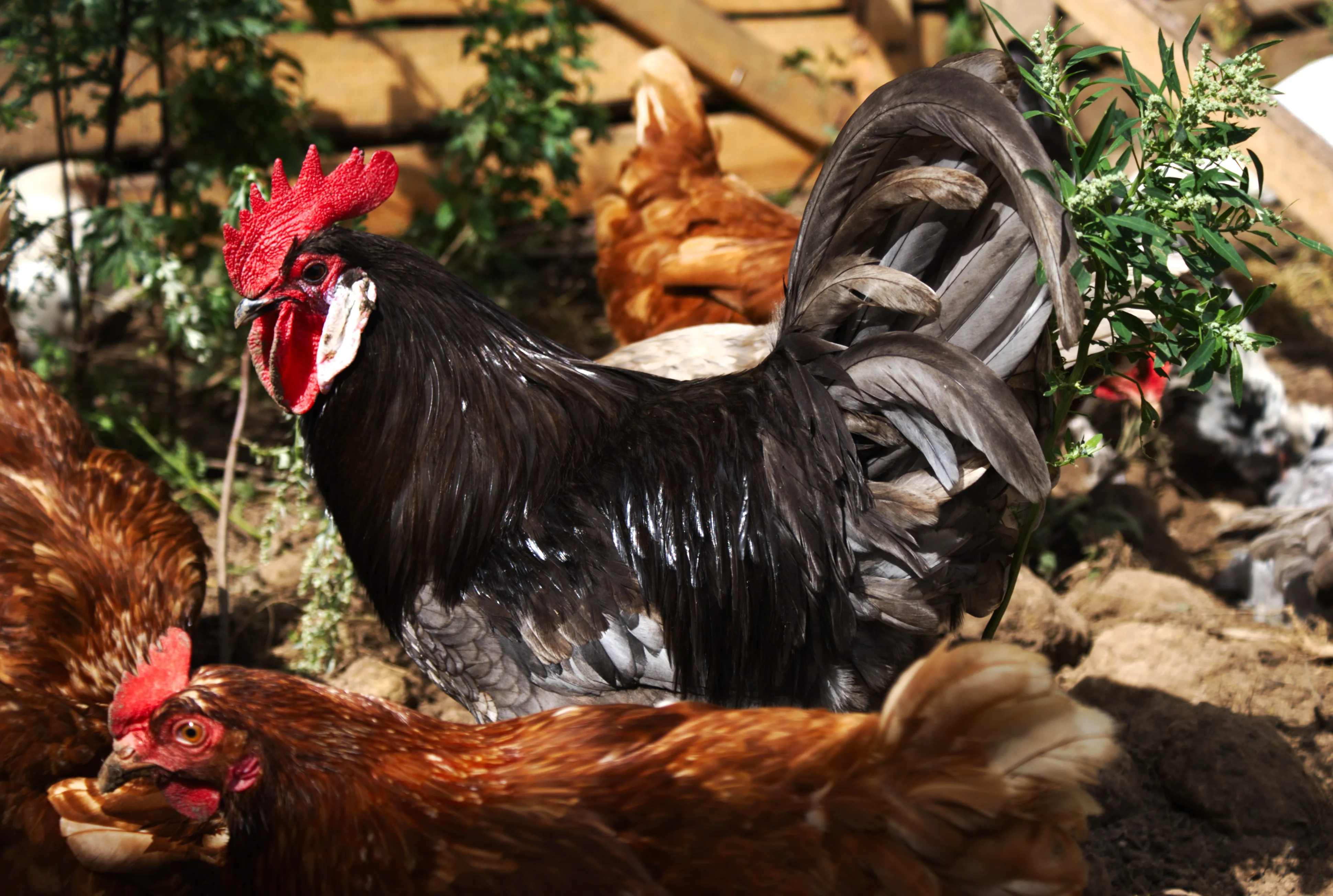
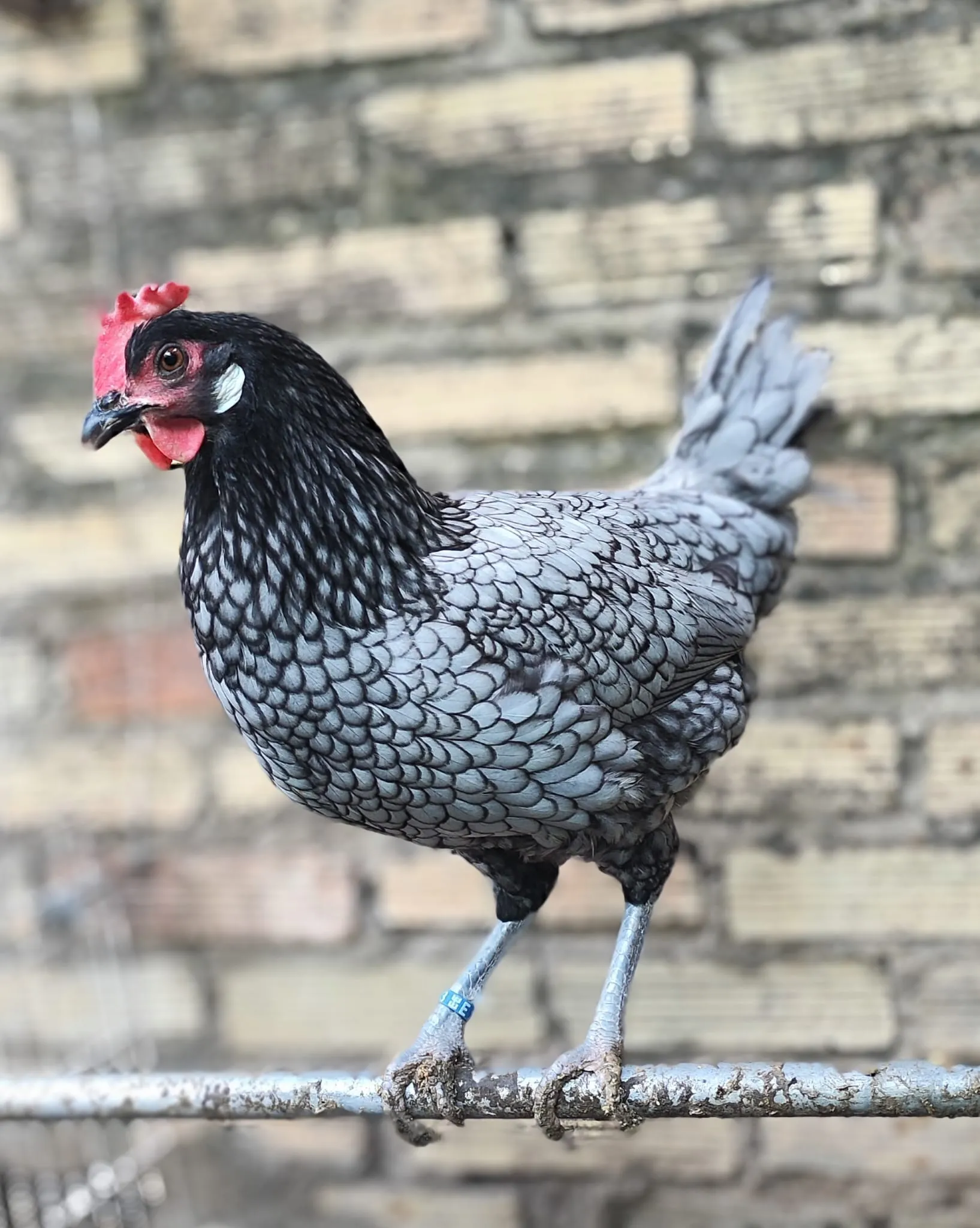
A Mediterranean breed in elegant slate blue. Heat-tolerant and a fine layer, though only about half the chicks from blue-on-blue breedings will be blue.
| Size class | light |
|---|---|
| Weight (hen) | 5.5 lb (2.49 kg) |
| Weight (rooster) | 7 lb (3.18 kg) |
| Eggs per year | 165 |
| Egg color | white |
| Egg size | large |
| Climate tolerance | hot |
| Temperament | active |
| Goes broody | rarely |
| Noise level | loud |
| Beginner-friendly | No |
| Origin | Spain |
Is the Andalusian (Blue) right for your flock?
The Andalusian (Blue) is a light breed that's better suited to experienced keepers. Hens lay around 165 white eggs per year and tolerate hot climates well.
Temperament: active. Broodiness: rarely. Noise level: loud. Worth keeping in mind if you have close neighbors.
What this breed needs
- Coop space: about 3 sq ft per bird inside the coop. Run the numbers for your specific flock size in the coop size calculator.
- Climate fit: particularly heat-tolerant; less ideal in long, snowy winters without extra shelter.
- Eggs: a moderate layer — picked more for personality or looks than raw output. For a month-by-month breakdown, see How Many Eggs Does a Blue Andalusian Lay Per Year?.


History
The Andalusian is a Mediterranean breed from the Andalusia region of southwestern Spain, and its history is tangled with the genetics that define it. The Livestock Conservancy states: “The ancient and rugged Andalusian chicken has an unknown past, though it is possible that Andalusians were created by breeding local landrace chickens (Black Castilians) with other local breeds. In type, the breed resembles the Spanish chicken, but weighs a pound less.” Oklahoma State University confirms: “The breed was initially developed in Andalusia, Spain.” No fetched institutional source provides a more specific origin date or documented founding cross — the breed’s early history is genuinely unknown.
The import story begins in 1846–47, when Leonard Barber imported Andalusian chickens into England from Xeres de la Frontera in Andalusia, “about 25 miles from Cadiz” (Conservancy). In 1851, Mr. Coles of Farnham and John Taylor of Shepherd’s Bush imported more birds — these were “paler in color, a more washed-out blue than those we have today.” The English set about enhancing and improving the color. The breed was first exhibited at the Baker Street Show in London in January 1853 (Conservancy).
The Conservancy notes that “some sources state that Andalusian chickens were widely distributed around Cornwall and Devon. Others say these areas had their own version.” This is an institutional acknowledgment of genuine historical uncertainty, not a footnote.
Andalusian chickens arrived in America “somewhere between 1850 and 1855,” and “American breeders continued to work to improve the breed” (Conservancy). The Blue Andalusian was recognized in the American Poultry Association Standard of Perfection in 1874 (Conservancy; OSU).
The genetics that define the breed. The Conservancy states plainly: “Blue-colored birds are produced by crossing black Andalusians with white. When two Blue Andalusians are mated, 25% of the chicks will have black plumage, 50% blue, and the remaining 25% white or splash.” This is the institutional basis for the breeds.json claim that “only about half the chicks from blue-on-blue breedings will be blue” — the Conservancy’s 50% matches exactly. The blue-color genetics and the cross that produces it are already documented on Flockmath’s Lavender Orpington profile, which cross-links to this same Conservancy source for the blue-inheritance ratio. That citation is reused here, not re-derived.
OSU adds a practical breeder’s note: “These whites and blacks when mated together will produce mainly blues. Andalusians are beautiful when good, but the percentage of really good ones runs low in many flocks because of this color segregation. Hence, they are not widely bred and never in large numbers.” This is the institutional explanation for the breed’s rarity — the very trait that makes Blue Andalusians visually striking also makes consistent show-quality birds difficult to produce.
Varieties. OSU lists three varieties: Black, Splash, and Blue. The Conservancy’s breed page focuses exclusively on Blue. The APA recognizes Blue as the show color; Black and Splash exist as the other two genetic outcomes of the same blue cross but are not standard show colors in the same way. The Conservancy notes that “the Spanish refer to the laced varieties as ‘English Andalusians’; ‘Spanish Andalusians’ are not laced” — a distinction between the English show standard (laced blue) and the unimproved Spanish landrace (solid blue without lacing). breeds.json treats this breed as “Andalusian (Blue)” — the Blue variety specifically — which is correct.
Conservation status. The Livestock Conservancy lists Andalusian as Watch on its Conservation Priority List, confirmed on the live CPL page (accessed this pass). The breed moved from Threatened to Watch in 2016 (Conservancy 2016 CPL Changes page). The Conservancy’s breed page consistently shows “Status: Watch.” The Mediterranean Breeders Association (Facebook group) is the closest institutional club for Mediterranean breeds including Andalusian, listed on the APA’s affiliate page, but has no fetchable institutional breed-standard page.
breeds.json description claim check: “only about half the chicks from blue-on-blue breedings will be blue” — confirmed by the Conservancy’s 50% figure exactly. “Heat-tolerant” — confirmed by the Conservancy’s Mediterranean origin framing and “better suited to locations that are warm most of the year.” “A fine layer” — confirmed by the Conservancy’s “stand high in productivity, laying about 160–200 medium/large white eggs each year.” All three claims are institutionally supported.
Care
Eggs. Institutional egg-count ranges:
- Livestock Conservancy: “about 160–200 medium/large white eggs each year,” plus “excellent winter egg producers.”
- Oklahoma State University: “An ornamental fowl with fairly good egg production potential” — no annual integer.
- The Featherbrain (commercial): approximately 160–180 white eggs per year.
The Conservancy’s 160–200 band is the widest institutional range. OSU provides no egg count, only a qualitative “fairly good.” Flockmath’s 165 sits at the low end of the Conservancy’s band — conservative but defensible, especially given the breed’s ornamental classification and the genetic-color-production tradeoff that OSU describes. For modeling: egg production calculator.
The winter-layer claim matters. The Conservancy explicitly calls Andalusians “excellent winter egg producers.” This is an institutional trait, not a hatchery marketing claim — it means the breed continues laying through shorter days when many other breeds slow or stop. No other Mediterranean breed in Flockmath’s catalog receives this specific institutional endorsement for winter production.
Weights. Conservancy and OSU agree: Male 7 lb, Female 5.5 lb (OSU adds cockerel 6 / pullet 4.5). Flockmath’s table uses hen 5.5 and rooster 7.0 — a clean match with no discrepancy.
Climate. breeds.json rates climate tolerance as hot. The Conservancy states: “While they can live in colder climates, they were developed in Spain, so are better suited to locations that are warm most of the year.” This is a partial truth — the Conservancy explicitly acknowledges cold-climate capability while noting the Mediterranean preference. The hot tag captures the breed’s heritage and primary suitability, but it does not mean Andalusians cannot survive cold. The single comb (confirmed on the Conservancy breed page) is frostbite-prone in damp cold — Poultry Extension (Dr. Jacquie Jacob, University of Kentucky) and UMN Extension both tie single-comb frostbite to moisture plus cold, not temperature alone. For frostbite management: see the egg production calculator context and Poultry Extension’s guidance.
Housing and foraging. The Conservancy is explicit: “Andalusian chickens are wonderfully designed for foraging on the range. The breed’s rugged nature makes it hardy, even in cold climates. However, it doesn’t stand confinement well and is predisposed to feather eating.” The feather-eating claim is institutional — it appears on the Conservancy breed page, not just commercial sources. The Conservancy adds: “If they are given enough space, they do well with other breeds, but can be bullies if there is not enough room if they are confined.” Flockmath’s good_for_beginners: false is consistent with the confinement intolerance, feather-eating risk, and the need for experienced management. For coop space by flock size, use the coop size calculator; for feed planning, see the feed consumption calculator.
The traditional cross. The Conservancy notes: “An excellent traditional cross is an Andalusian male over Langshans females. This produces a hardy brown egg layer that matures early.” This is an institutional breeding note, not a general-care point, but it is worth flagging for keepers interested in experimental crossing.
Temperament
Institutional temperament language for Andalusians is consistent: active, noisy, not cuddly, but not aggressive.
The Conservancy states: “This breed is not aggressive with people but is not the best choice if you want a ‘pet.’ If they are given enough space, they do well with other breeds, but can be bullies if there is not enough room.” OSU agrees: “Andalusians are small, active, closely feathered birds that tend to be noisy and rarely go broody.” The Heritage Poultry Conservancy’s classification of Andalusian as Continental class is consistent with the active/Mediterranean temperament profile.
Flockmath’s active temperament, loud noise, and good_for_beginners: false sit squarely inside that institutional band. The Conservancy adds: “Andalusians are not excessively noisy, but they are not a good breed if your neighbors don’t appreciate loudly crowing roosters.” This is a more nuanced institutional statement than a simple “loud” tag — the noise issue is specifically about rooster crowing, not hen vocalization.
Mixed-flock dynamics. The Conservancy’s warning is specific: “If they are given enough space, they do well with other breeds, but can be bullies if there is not enough room if they are confined.” This is a conditional institutional statement — space-dependent behavior, not an absolute prohibition. Compare with the Hamburg’s Conservancy recommendation against mixed flocks entirely. Andalusians can work in mixed flocks if space is adequate.
Broodiness. The Conservancy says “Hens are rarely broody.” OSU confirms: “rarely go broody.” Flockmath’s rarely is consistent.
Maturity. The Conservancy notes: “Chicks feather and mature quickly, with males crowing at seven weeks old.” This is a genuine institutional trait — faster maturation than most breeds — and is worth flagging for keepers who may be surprised by early crowing.
Health
No fetched Conservancy or OSU page flags an Andalusian-specific infectious disease unique to the breed beyond ordinary chicken-keeping risks. Stating that gap is better than inventing a health chapter.
Feather eating in confinement. The Conservancy states: “it doesn’t stand confinement well and is predisposed to feather eating.” This is an institutional, breed-specific behavioral health risk — not a generic chicken-keeping point. Feather eating (picking) can escalate to cannibalism in confined flocks, and the Conservancy’s explicit mention of this predisposition makes it a breed-specific management concern. Adequate space, enrichment, and avoidance of overcrowding are the institutional preventive measures.
Single-comb frostbite (repeated from Care because it is a health outcome). Andalusians have a large single comb (Conservancy: “Roosters have a single, bright red comb with five defined points. Hens have a medium to large, red, single comb that can flop to one side”). Poultry Extension confirms single combs are frostbite-prone in damp cold. If frostbite occurs, UMN Extension recommends consulting a veterinarian; severe untreated frostbite can mean permanent tissue loss.
Lifespan. No institutional source provides a specific lifespan figure for Andalusians. The breeds.json description does not address lifespan. This is an honest gap.
Standard health issues. Beyond these management points, Andalusians are subject to the same ordinary chicken-keeping risks (mites, lice, respiratory infections from damp coops) as any breed. The Conservancy’s note that they are “rugged” and “hardy” suggests general resilience, but this is not a claim of disease resistance.
Blue on a Mediterranean Frame: The Bottom Line
If you want a Watch-listed heritage bird with genuine Spanish origins, a large single comb, and the most visually striking blue plumage in the Mediterranean class, the Blue Andalusian is the most institutionally documented choice available. Flockmath’s 165 eggs/year sits at the low end of the Conservancy’s 160–200 band — conservative but honest for a breed where, as OSU warns, “the percentage of really good ones runs low in many flocks because of this color segregation.” The breed’s “excellent winter egg producer” endorsement from the Conservancy is a genuine institutional trait not shared by every layer in this catalog.
The breeds.json stats — 5.5/7.0 lb weights, white eggs, large size, hot climate tolerance, active temperament, rarely broody, loud noise, good_for_beginners: false — are all institutionally supported with one nuance: the Conservancy’s “not excessively noisy” language is more generous than a flat “loud” tag. The noise issue is specifically about rooster crowing, not hen vocalization, and the Conservancy frames it as a neighbor-relations concern rather than an absolute breed flaw.
You are buying a Watch-listed Mediterranean bird — one that the Conservancy traces to Black Castilian landrace origins in Andalusia, with APA recognition since 1874 and a blue-color genetics story that is already cross-linked on this site’s Lavender Orpington profile. The 50% blue yield from blue-on-blue matings (Conservancy) is not a flaw — it is the biology of incomplete dominance, and it is the reason OSU says the breed is “not widely bred and never in large numbers.” Black and Splash birds are the genetic byproducts that “repair” the blue line when it fades too light (Conservancy).
Andalusians do not like confinement, are predisposed to feather eating in tight quarters, have a large single comb that needs frostbite management in damp cold, and are not lap pets. They thrive on range as foragers, are “excellent winter egg producers” (Conservancy), mature quickly, and their blue plumage — each feather “a clear bluish slate, distinctly laced with a dark blue or black” (Conservancy) — is, as the breed’s own history confirms, the product of English breeders refining a “washed-out blue” imported from Spain in the 1840s into something worth exhibiting. If you have the space, the warm climate, and the tolerance for a bird that is beautiful but not cuddly, the Blue Andalusian delivers exactly what its Mediterranean heritage promises.
Sources
- Watch status; unknown past / Black Castilian landrace; import by Leonard Barber 1846–47 from Xeres de la Frontera; Coles/Taylor 1851 imports; Baker Street Show 1853; arrived America 1850–1855; APA 1874; blue from black × white cross; 25% black / 50% blue / 25% splash when blue × blue; laced vs unlaced (English vs Spanish); weights 7/5.5; single comb; white earlobes; 160–200 medium/large white eggs; excellent winter producers; rarely broody; chicks mature quickly/crowing at 7 weeks; rugged/hardy; foraging on range; doesn’t stand confinement well/predisposed to feather eating; bullies in confinement; can do well with other breeds if space; not aggressive but not a pet; not excessively noisy; warm-climate preference; Andalusian × Langshan traditional cross; white flesh/breast meat: The Livestock Conservancy — “Andalusian Chicken”
- Watch status confirmed on live CPL: The Livestock Conservancy — Conservation Priority List
- Andalusian moved from Threatened to Watch in 2016: The Livestock Conservancy — 2016 CPL Changes
- Developed in Andalusia, Spain; blue color unstable/typical of poultry industry; cross between black and white; blue × blue gives 1 black : 2 blue : 1 white; whites and blacks mated produce mainly blues; beautiful when good but percentage runs low/not widely bred; weights 7/5.5/6/4.5; white skin; white shell; ornamental with fairly good egg potential; references Skinner A2880: Oklahoma State University — “Andalusian Chickens”
- Blue does not breed true — blue × blue gives 25% black / 50% blue / 25% splash: The Livestock Conservancy — Andalusian Chicken. Cross-linked from the Lavender Orpington profile’s Sources block — same citation, reused here.
- APA affiliate — Mediterranean Breeders Association (Facebook group, no fetchable institutional page): APA Associate and Club Membership List
- Single-comb frostbite risk and prevention: Poultry Extension — “Frostbite in Chickens” Dr. Jacquie Jacob, University of Kentucky.
- Frostbite moisture/ventilation (single-comb breeds generally): University of Minnesota Extension — “Caring for Chickens in Cold Weather”
- Hatchery guidance (labelled, page returned 403 this pass): Cackle Hatchery — Blue Andalusian (URL recorded: https://www.cacklehatchery.com/product/blue-andalusian/)
- Commercial guidance (labelled): The Featherbrain — Andalusian breed profile (160–180 white eggs; active/flighty temperament): https://www.thefeatherbrain.com/blog/andalusian-chickens
Ours: framing Flockmath’s 165 as the low end of Conservancy 160–200 while noting OSU provides no annual integer; treating breeds.json’s climate hot as a partial truth against the Conservancy’s explicit “can live in colder climates” acknowledgment while explaining the single-comb frostbite nuance; noting the Conservancy’s “not excessively noisy” language is more nuanced than a flat “loud” tag and that the noise concern is specifically rooster crowing; flagging the feather-eating predisposition as an institutional, breed-specific health/management concern from the Conservancy page; identifying the maturity speed (crowing at 7 weeks) as a genuine institutional trait worth surfacing; cross-linking the blue-inheritance ratio to the Lavender Orpington profile rather than re-citing; and leaving breeds.json (165 eggs, hot, active, rarely, loud, false for beginners, 5.5/7.0) unchanged this pass.