
light breed · Holland and Germany
Hamburg
A small, alert, beautifully spangled or penciled breed. Excellent foragers with a long laying lifespan, but flighty and not fond of confinement.
| Size class | light |
|---|---|
| Weight (hen) | 4 lb (1.81 kg) |
| Weight (rooster) | 5 lb (2.27 kg) |
| Eggs per year | 200 |
| Egg color | white |
| Egg size | medium |
| Climate tolerance | All climates |
| Temperament | flighty |
| Goes broody | rarely |
| Noise level | moderate |
| Beginner-friendly | No |
| Origin | Holland and Germany |
Is the Hamburg right for your flock?
The Hamburg is a light breed that's better suited to experienced keepers. Hens lay around 200 white eggs per year and tolerate most climates well.
Temperament: flighty. Broodiness: rarely. Noise level: moderate.
What this breed needs
- Coop space: about 3 sq ft per bird inside the coop. Run the numbers for your specific flock size in the coop size calculator.
- Climate fit: adapts to a wide range of climates with no special accommodations.
- Eggs: a steady, reliable producer — a good general-purpose layer. For a month-by-month breakdown, see How Many Eggs Does a Hamburg Lay Per Year?.

.jpg)
History
The Hamburg’s history is genuinely murky, and the institutional sources are honest about that. The Livestock Conservancy states that “Hamburg-type chickens were found in Holland by the 14th century, but it is uncertain when they first arrived there.” Oklahoma State University confirms: “Hamburgs carry a German name, but are generally considered to have originated in Holland, though it is unclear when. They have been known to exist since the fourteenth century.” The Heritage Poultry Conservancy (prepared by Michael Schlumbohm and Keith Bramwell, Department of Poultry Science, University of Arkansas) adds that “the breed has an obscure past with several theories as to where it originated” and that “this obscure history is complicated further because there are theories that the different varieties originated in different countries as well.”
The name itself is misleading. The Conservancy notes that “although they have a German name, some experts believe Hamburgs to be an old breed from the Mediterranean area, possibly Turkey.” The Heritage Poultry Conservancy traces the name to the German port city of Hamburg: “Through this port, both Hamburgs and Polish were shipped to London for a century or two before 1850.” Harrison Weir wrote that in the 1850s he “bought Hamburgs and Polish in the London markets, which had just arrived in the country,” and that “birds of Hamburg and Polish types were collected in Holland, Belgium, Germany, and Russia for shipment to England.” The English Reverend E.S. Dixon is credited with coining the name “Hamburg” in 1848, believing the birds were originally imported from Hamburg, Germany (The Featherbrain, commercial).
The Dutch developed the Penciled varieties — Silver Penciled and Golden Penciled — while the English perfected the Black and Spangled varieties. The Conservancy states that “sometime prior to 1785 Penciled Hamburgs made their way to England.” The Heritage Poultry Conservancy is more specific: “It is fairly certain that both the Golden and Silver Penciled varieties came from Holland and were exported to England via Hamburg, Germany.” For the Spangled and Black varieties, the Heritage Poultry Conservancy notes “there is some compelling evidence to suggest that the Silver Spangled, Golden Spangled, and Black varieties were developed, at least in part, in England.”
The breed arrived in America by at least the mid-1800s. The Conservancy says “Hamburgs arrived in America prior to 1856 and were much desired for egg production.” The Heritage Poultry Conservancy cites “John Oldbird” placing arrival “nearly contemporary with that of the Polish and Black Spanish (about 1825), possibly a little earlier.” Early American names for the breed included “Pheasant Fowl,” “Yorkshire Pheasant,” “Bolton Gray,” “Moonies,” and “Dutch Everyday Layers” — the last reflecting their reputation as persistent layers. The Heritage Poultry Conservancy notes that “from an early period after their arrival in America until about 1880, Hamburgs were decidedly popular with all classes of poultry keepers. They were one of the first improved egg breeds to be used in America.”
All six Standard varieties — Silver Penciled, Golden Penciled, Silver Spangled, Golden Spangled, Black, and White — were recognized by the American Poultry Association in the Standard of Perfection in 1874 (Conservancy; Heritage Poultry Conservancy; OSU). The Conservancy notes a legend that “the first chicken show was a contest to settle the dispute of whose rooster was most magnificent. It was conducted in a pub in England around 1800 with the bartender acting as judge, a copper pot as the prize, and the competing roosters Hamburgs.”
The decline was swift. The Heritage Poultry Conservancy states: “But as the Leghorn eventually grew in favor, the Hamburg rapidly declined. By 1890 it had practically ceased to be used by utility poultry keepers and had lost a lot of its following among fanciers.” The Conservancy echoes: “By 1890, with the advent of the Leghorn breed, the Hamburg began to fall out of favor as a utility bird.”
Conservation status — a discrepancy to name. The Livestock Conservancy’s Conservation Priority List (accessed this pass) lists Hamburg as Threatened under “Breeds Imported Before 1900.” However, the Conservancy’s own Hamburg breed page contains two separate “Breed Facts” boxes: the top section reads “Status: Threatened” while the bottom section reads “Status: Watch.” These are inconsistent on the same page. The CPL — the authoritative list — says Threatened, and that is what this profile reports. The Featherbrain (commercial) references the “Watch” list, which may reflect the older bottom-section text. This is the Conservancy disagreeing with itself; both labels are named here.
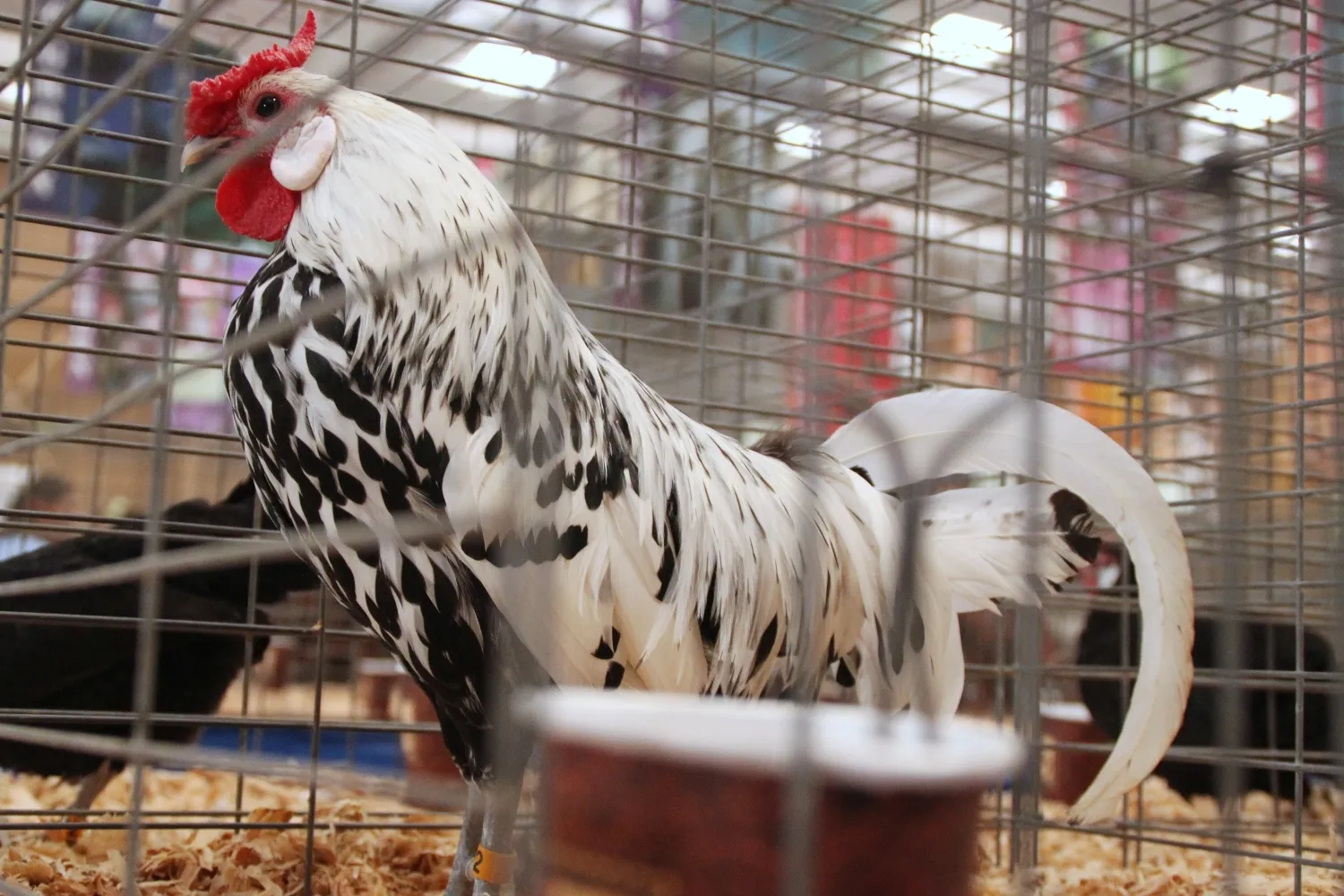
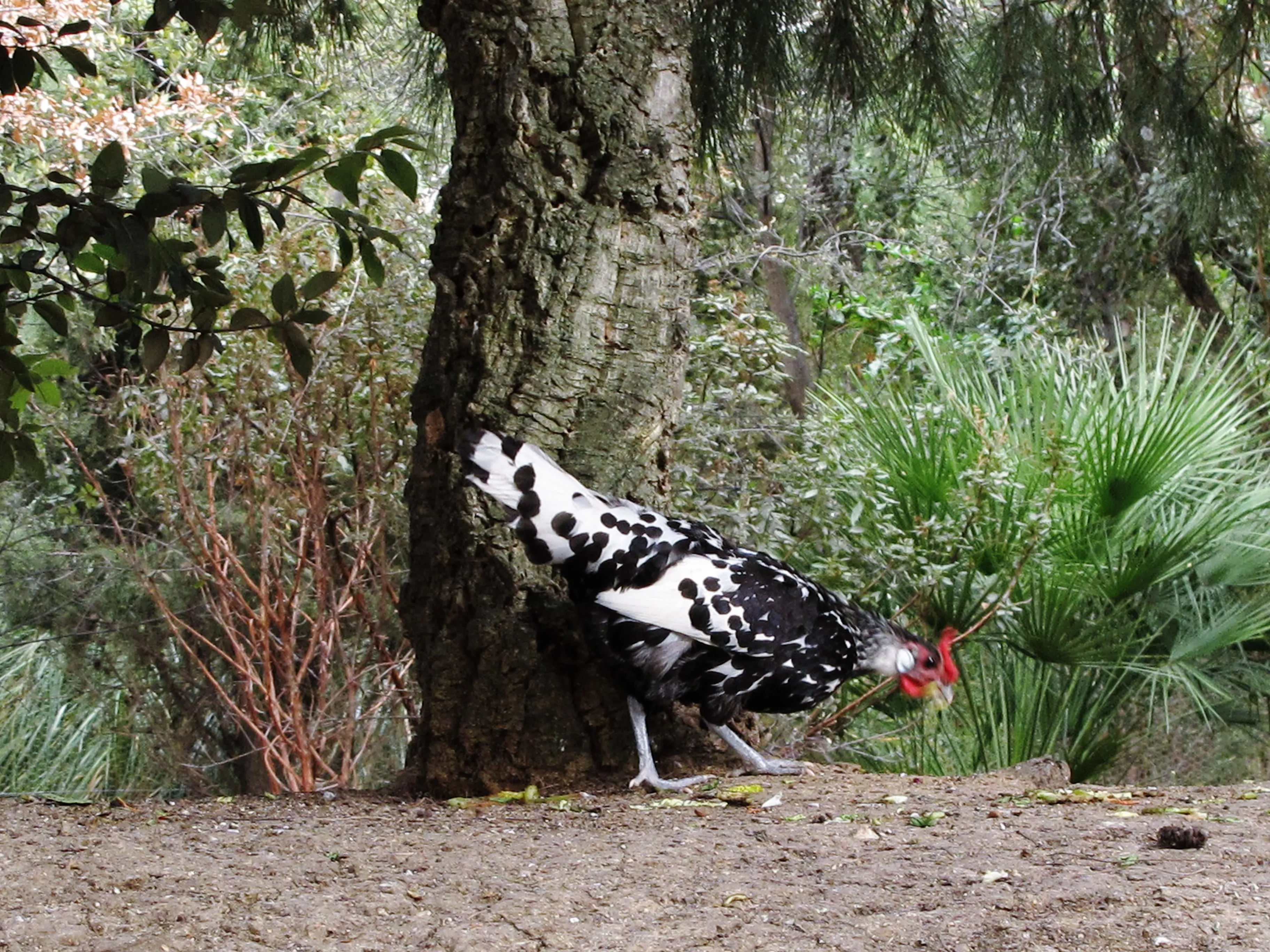
Color varieties. breeds.json treats Hamburg generically, not specifying a single color variety. This is appropriate: the APA recognizes six varieties (Silver Spangled, Golden Spangled, Silver Penciled, Golden Penciled, Black, White), and the Heritage Poultry Conservancy provides detailed descriptions of each. The Silver Spangled is by far the most popular and easiest to find in the U.S. (Conservancy; Heritage Poultry Conservancy). The Heritage Poultry Conservancy notes that the Silver Penciled, Golden Penciled, and White varieties are “rarely seen” and “in serious need of more breeders.” The Conservancy adds that “the Silver Spangled color is not found in any other breed.”
breeds.json description claim check: “excellent foragers” — confirmed by the Conservancy (“like to roam and forage”), OSU (“forage well and are capable of flying long distances”), Heritage Poultry Conservancy, and The Featherbrain (“outstanding foragers”). “long laying lifespan” — confirmed by the Conservancy (“the breed’s true gift is not in number of eggs per year, but in continued laying of a large number of eggs over several years”), OSU (“prolific layers because they continue to lay over long periods of time”), and Heritage Poultry Conservancy (“remarkable for persistent laying and efficiency”). “not fond of confinement” — confirmed by the Conservancy (“they do not like confinement”) and Carol Ekarius via The Featherbrain (“they perform poorly in close confinement”). All three claims are institutionally supported.
Care
Eggs. Institutional egg-count ranges reflect the breed’s shift from utility to ornamental:
- Livestock Conservancy: 120–225 small-to-medium white eggs per year.
- Heritage Poultry Conservancy: historical reports of 200–250 eggs/year; “remarkable for persistent laying and efficiency.”
- Oklahoma State University: “prolific layers because they continue to lay over long periods of time.”
- The Featherbrain (commercial): approximately 200 medium white eggs per year; 4 eggs/week.
The Conservancy’s 120–225 band is the widest, reflecting strain and age variation. The Heritage Poultry Conservancy’s 200–250 is historical, not modern — those are figures from the breed’s 1880s peak utility era. The Featherbrain’s 200 is a modern enthusiast estimate. Flockmath’s 200 sits at the midpoint of the Conservancy’s band, aligns with The Featherbrain, and is consistent with the Heritage Poultry Conservancy’s historical range when scoped to well-managed modern birds. For modeling: egg production calculator.
The long-laying claim matters more than the annual count. The Conservancy’s sentence is worth quoting: “The breed’s true gift is not in number of eggs per year, but in continued laying of a large number of eggs over several years.” OSU independently confirms: “prolific layers because they continue to lay over long periods of time.” This is the institutional basis for breeds.json’s “long laying lifespan” claim — Hamburgs may not match Leghorns in year-one output, but they maintain production across more years than most light breeds. No fetched source provides a specific year count for peak vs. decline.
Weights. All three institutional sources agree: Male 5 lb, Female 4.0 lb. OSU adds cockerel 4 / pullet 3.5. Flockmath’s table uses hen 4.0 and rooster 5.0 — a clean match with no discrepancy.
Climate. The Conservancy states Hamburgs “can do well in both warm and cold climates.” The Featherbrain (commercial) adds that they “fare well in cold temperatures and even in wet climates,” noting that rose combs are “much less prone to frostbite.” Flockmath’s all is consistent with the Conservancy’s dual-climate claim. The rose comb is a genuine structural advantage for cold-weather hardiness compared to single-comb breeds — Poultry Extension (Dr. Jacquie Jacob, University of Kentucky) confirms that rose combs have lower frostbite incidence than single combs.
Housing and foraging. The Conservancy is explicit: “They like to roam and forage… They can fly, and Hamburg hens were known to prefer nesting in hedgerows and had the habit of roosting very high in trees. They do not like confinement.” OSU confirms: “They forage well and are capable of flying long distances.” Carol Ekarius (via The Featherbrain) states: “Thanks to their excellent foraging ability, they do very well in backyard and barnyard settings, but they perform poorly in close confinement.” Flockmath’s good_for_beginners: false is consistent with the confinement intolerance, flightiness, and handling challenges. For coop space by flock size, use the coop size calculator; for feed planning, see the feed consumption calculator.
Fragile chicks. The Conservancy notes that “the young can be a bit delicate until this age” (referring to 4–5 months). The Featherbrain confirms: “Hamburg chicks can be fragile.” This is a management point worth flagging for keepers acquiring chicks rather than point-of-lay pullets.
Temperament
Institutional temperament language for Hamburgs is consistent: active, flighty, wild, not cuddly.
The Conservancy describes “great activity and alertness,” calls them “sometimes considered flighty,” and states directly: “They are not a good choice if you want a pet to cuddle, or for children.” The Conservancy adds: “their ‘nervous’ personality is a benefit in helping them evade predators.” OSU agrees: “active, flighty birds… trim and stylish with delicate features, and wild in nature.” The Heritage Poultry Conservancy classifies them as a “small, fine-boned egg-type breed” without explicit temperament language, but the breed’s Continental class placement and ornamental use are consistent with the active/flighty profile.
Flockmath’s flighty temperament, moderate noise, and good_for_beginners: false sit squarely inside that institutional band. The Conservancy adds: “they can tend to be noisy.” The Featherbrain (commercial) rates noise as “Moderate-high” and temperament as “Flighty, active,” with “Aggression toward flock members: Moderate-high.” No institutional source contradicts the flighty/noisy characterization.
Mixed-flock dynamics. The Conservancy warns: “the roosters can be a bit aggressive, so it’s best they are not kept in a mixed flock.” This is a stronger institutional statement than most breeds receive — the Conservancy is recommending against mixed flocks entirely, not just advising caution. The Featherbrain confirms: “They may get aggressive with other chickens.” Flockmath’s good_for_beginners: false captures this, but the Conservancy’s explicit mixed-flock warning is worth surfacing.
Predator evasion as a temperament trait. The Conservancy frames the “nervous” personality as a survival advantage: “their ‘nervous’ personality is a benefit in helping them evade predators.” The Featherbrain provides keeper accounts of Hamburgs serving as “watchbirds” for mixed flocks, alerting other breeds to aerial and ground predators. This is a genuine behavioral trait, not just flightiness — it is alertness and predator-savviness institutionalized as a breed characteristic.
Broodiness. The Conservancy states: “They do not become broody, so you will need a broody hen if you want to hatch eggs.” The Heritage Poultry Conservancy classifies them as “generally a non-sitting chicken.” Flockmath’s rarely is consistent.
Foraging and tree-roosting. The Conservancy notes Hamburg hens “were known to prefer nesting in hedgerows and had the habit of roosting very high in trees.” OSU: “capable of flying long distances.” This is not just a foraging trait — it is a management consideration. Hamburgs will fly over standard fencing and roost in trees if given the opportunity, creating both containment and predator-vulnerability challenges.
Health
No fetched Conservancy, OSU, or Heritage Poultry Conservancy page flags a Hamburg-specific infectious disease unique to the breed beyond ordinary chicken-keeping risks. Stating that gap is better than inventing a health chapter.
Fragile chicks (repeated from Care because it is a health outcome). The Conservancy notes young Hamburgs “can be a bit delicate until this age” (4–5 months). The Featherbrain confirms: “Hamburg chicks can be fragile.” This is a breed-specific health consideration during the brooding and grow-out phase — once mature, the Conservancy says they are “quite robust.” Keepers acquiring Hamburg chicks should plan for higher brooding attentiveness than with more robust breeds.
Rose comb frostbite advantage. The Conservancy’s breed page shows Hamburgs have a “bright red rose comb that tapers into a long spike on males.” Poultry Extension (Dr. Jacquie Jacob, University of Kentucky) confirms that rose combs have lower frostbite incidence than single combs. The Featherbrain explicitly notes: “The rose combs of Hamburg chickens will ideally have a leader (a point) that sticks straight backwards.” This is a genuine structural health advantage for cold-climate keeping — not just a cosmetic feature.
Light-breed predator vulnerability. At 4–5 lbs, Hamburgs are smaller than average, making them more attractive to birds of prey. The Featherbrain notes: “Hamburg chickens are smaller than your average breed, which means that they are more attractive to birds of prey. Additionally, some of the Silver Spangled Hamburgs have a lot of white in their feathers, and, therefore, stick out more in their surroundings.” One keeper quoted by The Featherbrain said: “Their coloring makes them hawk bait.” This is a management consideration, not a disease — but it is a genuine welfare concern for Silver Spangled birds in hawk-heavy areas.
Lifespan. No institutional source provides a specific lifespan figure for Hamburgs. The Featherbrain does not publish a lifespan number. The breeds.json description’s “long laying lifespan” refers to productive years, not total lifespan — the Conservancy’s framing (“continued laying of a large number of eggs over several years”) supports this interpretation.
Standard health issues. Beyond these management points, Hamburgs are subject to the same ordinary chicken-keeping risks (mites, lice, respiratory infections from damp coops) as any breed. The Conservancy’s note that they “can do well in both warm and cold climates” and are “quite robust” once mature suggests general hardiness, but this is not a claim of disease resistance.
Small, Spirited, and Still Standing: The Bottom Line
If you want a Threatened heritage bird that was once one of America’s first improved egg breeds and still lays with quiet persistence across multiple years, the Hamburg is the most institutionally documented Continental-class layer available. Flockmath’s 200 eggs/year matches The Featherbrain’s modern estimate, sits at the midpoint of the Conservancy’s 120–225 band, and aligns with the Heritage Poultry Conservancy’s historical 200–250 — though those historical numbers reflect the breed’s 1880s peak, not a modern production guarantee.
The breeds.json stats — 4.0/5.0 lb weights, white eggs, medium size, all climate tolerance, flighty temperament, rarely broody, moderate noise, good_for_beginners: false — are all institutionally supported with one nuance worth naming: the Conservancy’s temperament language (“great activity and alertness,” “nervous personality is a benefit”) is more generous than “flighty” alone. The flightiness is real, but it is paired with predator-savviness and alertness that make Hamburgs functional “watchbirds” for mixed flocks — a trait no other breed in Flockmath’s catalog receives institutional credit for.
You are buying a Threatened heritage bird — one that the Heritage Poultry Conservancy’s University of Arkansas researchers describe as “one of the first improved egg breeds to be used in America,” with APA recognition since 1874 and a history stretching back to 14th-century Holland. The Conservancy disagrees with itself on conservation status (Threatened on the CPL, Watch on the breed page’s bottom box); the CPL is authoritative and this profile uses it. The breed is rare, especially in varieties beyond Silver Spangled. The Heritage Poultry Conservancy warns that the Black Hamburg “is so scarce that unless more breeders are found, it may soon disappear completely” (citing Frances Bassom). The White is “rarely seen and is in serious need of more breeders.”
Hamburgs do not like confinement, will fly over standard fencing, roost in trees, and are not lap pets. They thrive on range as foragers, maintain production across years rather than burning out in year one, and their rose combs give them a genuine cold-weather structural advantage. If you have the space, the fencing, and the temperament-matched flockmates, they are rewarding birds — and their Silver Spangled plumage is, as the Conservancy notes, “not found in any other breed.”
Sources
- Threatened status (CPL); Hamburg-type in Holland by 14th century; Mediterranean/Turkey origin theory; Dutch developed Penciled; Penciled to England prior to 1785; named “Hamburg” in 1848 (Dixon, per The Featherbrain, commercial); first chicken show legend ~1800; arrived America prior to 1856; all six APA varieties 1874; fell out of favor by 1890 with Leghorns; 120–225 small-to-medium white eggs/year; true gift is continued laying over years; rose comb; 5/4 lb weights; white earlobes; do not become broody; pullets lay at 4–5 months; young delicate until mature; great activity/alertness; not for children/cuddling; nervous personality helps evade predators; like to roam/forage; noisy; roosters aggressive; not for mixed flocks; can fly/roost in trees/hedges; do not like confinement; both warm and cold climates; Silver Spangled most popular/not found in other breed; quality varies: The Livestock Conservancy — “Hamburg Chicken”
- Threatened status confirmed on live CPL (Breeds Imported Before 1900): The Livestock Conservancy — Conservation Priority List
- German name but originated in Holland; known since 14th century; to Britain late 1700s; to America before mid-1800s; rose comb; white earlobes; active/flighty/wild; forage well/fly long distances; prolific layers over long periods; eggs neither large nor small; six varieties; weights 5/4/4/3.5; white skin/shell; references Dr. Joe Berry / UW-Madison A2880: Oklahoma State University — “Hamburg Chickens”
- Continental class; non-sitting; white eggs/skin/earlobes; rose comb; small fine-boned egg-type; six APA varieties; obscure past; name from port of Hamburg; Hamburgs and Polish shipped via Hamburg to London before 1850; Harrison Weir 1850s London market; Holland/Belgium/Germany/Russia collection for England; English improved Continental stock; Penciled from Holland via Hamburg; Spangled/Black possibly developed in England; “John Oldbird” ~1825 U.S. arrival; 200–250 eggs/year historical; first improved egg breeds in America; small/delicate/small eggs but persistent laying; declined by 1890 with Leghorns; Silver Spangled most popular; detailed variety descriptions; Black Hamburg “so scarce”; Bantam Hamburgs recognized; prepared by Schlumbohm & Bramwell, Dept. of Poultry Science, U. of Arkansas: Heritage Poultry Conservancy — “Hamburg Chicken”
- North American Hamburg Club — APA affiliate, U.S./Canada: APA Associate and Club Membership List
- Rose comb frostbite incidence lower than single comb: Poultry Extension — “Frostbite in Chickens” Dr. Jacquie Jacob, University of Kentucky.
- Hatchery guidance (labelled, page returned 403 this pass): Cackle Hatchery — Silver Spangled Hamburg (URL recorded: https://www.cacklehatchery.com/product/silver-spangled-hamburg/) — Temperament Active/Flighty; Broody Variable; Egg Size Medium.
- Commercial guidance (labelled): The Featherbrain — “Considering Hamburg Chickens? The 16 Things You Must Know First” (200 eggs/year; 4–5 month age of lay; flighty/active temperament; not for children; predator-savvy; confinement intolerance; fragility of chicks; rooster protectiveness; Silver Spangled most common; rose comb frostbite advantage; Carol Ekarius quotes on confinement): https://www.thefeatherbrain.com/blog/hamburg-chickens
Ours: framing Flockmath’s 200 as the midpoint of Conservancy 120–225 and aligning with The Featherbrain’s modern estimate while naming the Heritage Poultry Conservancy’s historical 200–250 as peak-era figures; interpreting “flighty” as paired with predator-savviness based on the Conservancy’s “nervous personality is a benefit” and The Featherbrain’s watchbird keeper accounts; treating the Conservancy’s dual-status labels (Threatened on top, Watch on bottom) as an internal discrepancy and naming the CPL as authoritative; noting the Cackle Hatchery page returned 403 this pass; flagging the fragility of chicks as a breed-specific health/management concern; identifying the rose comb as a genuine structural advantage for cold-climate frostbite reduction based on Poultry Extension data; and leaving breeds.json (200 eggs, all, flighty, rarely, moderate, false for beginners, 4.0/5.0) unchanged this pass.