
light breed · Netherlands
Polish (White Crested)
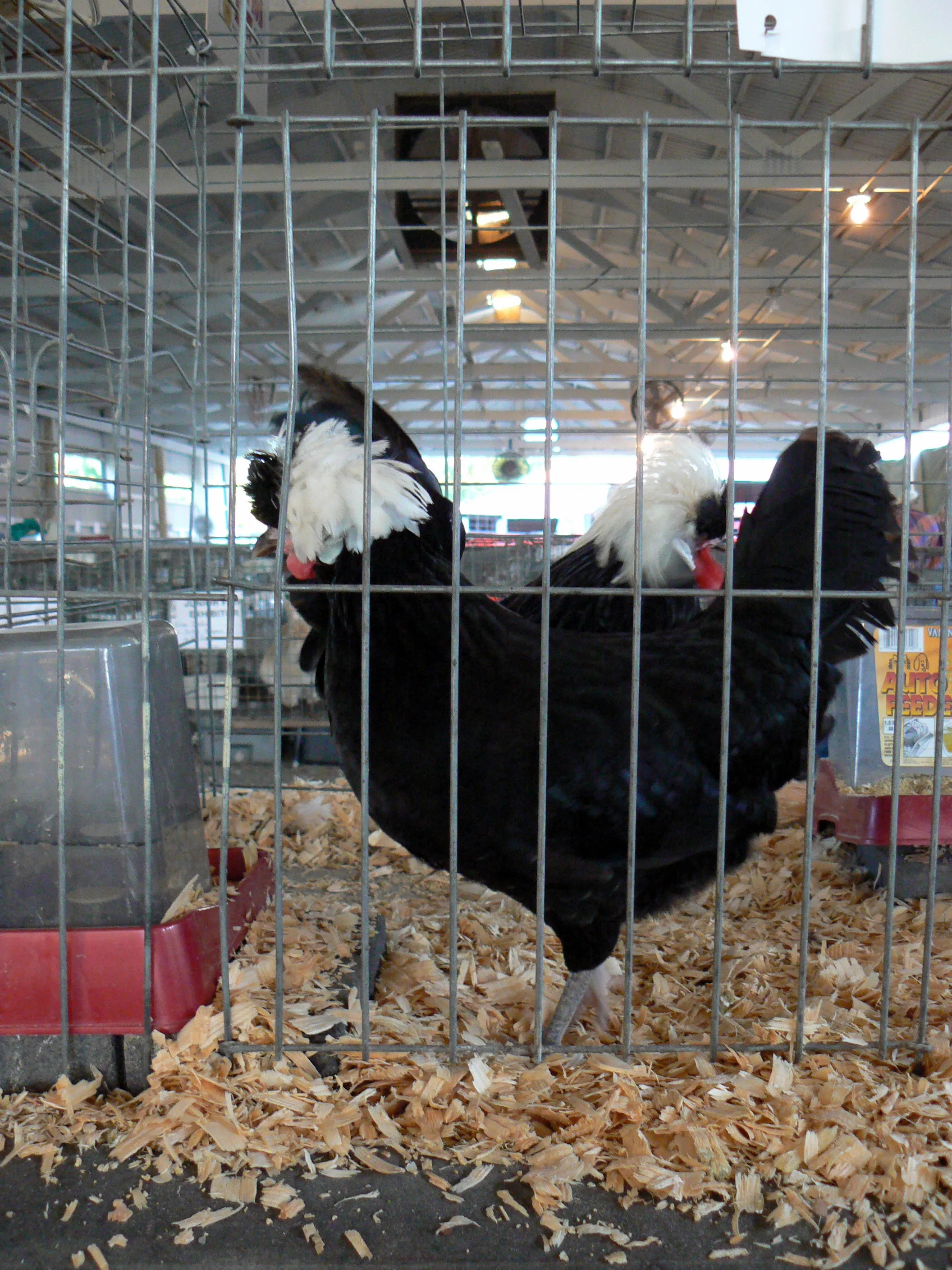
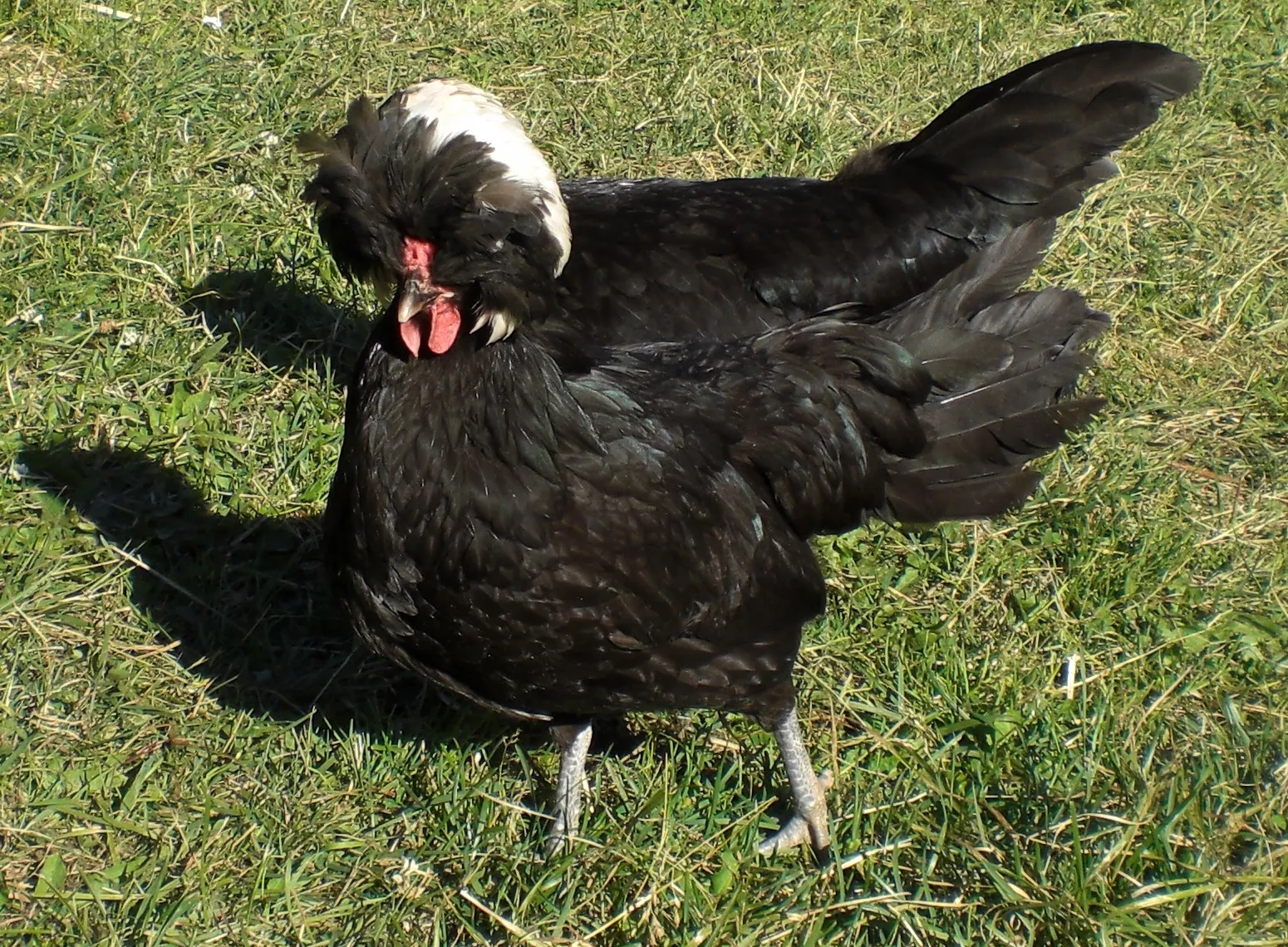
Distinguished by an extravagant feathered crest that often covers the eyes. More of a show breed than a production layer; the crest needs protection from wet, cold weather.
| Size class | light |
|---|---|
| Weight (hen) | 4.5 lb (2.04 kg) |
| Weight (rooster) | 6 lb (2.72 kg) |
| Eggs per year | 150 |
| Egg color | white |
| Egg size | medium |
| Climate tolerance | temperate |
| Temperament | flighty |
| Goes broody | rarely |
| Noise level | moderate |
| Beginner-friendly | No |
| Origin | Netherlands |
Is the Polish (White Crested) right for your flock?
The Polish (White Crested) is a light breed that's better suited to experienced keepers. Hens lay around 150 white eggs per year and tolerate temperate climates well.
Temperament: flighty. Broodiness: rarely. Noise level: moderate.
What this breed needs
- Coop space: about 3 sq ft per bird inside the coop. Run the numbers for your specific flock size in the coop size calculator.
- Climate fit: best in moderate climates without temperature extremes.
- Eggs: a moderate layer — picked more for personality or looks than raw output. For a month-by-month breakdown, see How Many Eggs Does a White-Crested Polish Lay Per Year?.


History
The Polish chicken’s history is genuinely uncertain, and the institutional sources are honest about that. The Livestock Conservancy states that birds resembling Polish chickens appear in paintings by Dutch and Italian artists “as far back as the 1400s and through the 1500–1700s” and were “also mentioned in literature of the same period. However, their exact history is unknown.” Two origin theories compete in the sourced literature: one holds that ancestors came to Central and Eastern Europe with Asian Mongols in the Middle Ages (making Poland a possible origin point); the other believes Spanish traders brought crested birds to Holland when Spaniards occupied the Lowlands in the late 16th century. Oklahoma State University’s breed page, authored by Dr. Joe Berry (Extension Poultry Specialist), independently confirms the Spanish-to-Holland route: “Some historians believe they originated from Spain and were then transported to Holland, where the Spanish occupied the area.” The Conservancy credits Dutch fanciers of the eighteenth century with “refining the color patterns and developing the crests.”
The name itself is a misnomer. The Conservancy notes that Charles Darwin “classified any chicken with a crest as a ‘Polish’ or ‘Crested’ chicken, most likely due to the resemblance of the feathering on the head of the bird to the sprouting crests on the feathered caps worn by Polish soldiers.” An alternative theory cites the Dutch word “Pol” meaning “large head.” In the Netherlands, the breed is known as “Hollandse Kuifhoen” — literally “Dutch crested hen” — or as Padua chickens, with no reference to Poland at all. The Dutch institutional naming is consistent with the breed’s origin-country association despite the English name.
Polish chickens were known in England during the 1700s and were “popular in France for egg production” (Conservancy). They arrived in America between 1830 and 1840, and by 1850 they were widespread. This is the key pivot point in the breed’s story: with the rise of Leghorn chickens in England and America during the 1850s through the 1890s, “Polish chickens lost favor as egg producers and were maintained for exhibition purposes” (Conservancy). OSU confirms: “at one time they were used for their eggs, but when the Leghorn became popular they were no longer widely used for egg production.” The breed transitioned from a working layer to a show bird — a trajectory that defines its modern identity.
APA recognition came in stages. The non-bearded White Crested Black, Golden, Silver, and White varieties were recognized in the Standard of Perfection in 1874 (Conservancy). In 1883, Bearded Golden, Bearded Silver, Bearded White, and Bearded Buff Laced were added. Non-Bearded Buff Laced followed in 1938, and Non-Bearded White Crested Blue in 1963. OSU lists nine recognized varieties: White Crested Black, Non-Bearded Golden, Non-Bearded Silver, Non-Bearded White, Non-Bearded Buff Laced, Bearded Golden, Bearded Silver, Bearded White, and Bearded Buff Laced. The White Crested Black — black body with a pure white crest — is the most iconic and recognizable variety, and the one Flockmath’s profile covers.
The Livestock Conservancy lists Polish as Recovering on its Conservation Priority List, meaning the breed has shown “substantial improvement in population numbers and conservation efforts” from a previously more endangered status. The Polish Breeders Club, a nonprofit founded in 2000, promotes exhibition of crested breeds (Polish, Crevecoeur, Houdan, and Sultan) in the U.S. and Canada, hosting district meets and National shows.
breeds.json description claim check: “extravagant feathered crest that often covers the eyes” — confirmed by the Conservancy (“feathers of both sexes can sometimes fall over the chicken’s eyes and impede its vision”), OSU (“restricted vision due to their large ‘head gear’”), and FlockGuide (“The crest significantly impairs their vision, especially peripheral vision”). “More of a show breed than a production layer” — confirmed by OSU (“mainly an ornamental bird”), the Conservancy’s historical narrative, and Chicken Fans (“mostly kept as exhibition birds”). “The crest needs protection from wet, cold weather” — confirmed by the Conservancy (“crests can become waterlogged and cause the birds to be chilled. The crest feathers can also get frozen in icy weather”) and OSU (“Ice forming in their crests from drinking water can be a problem in cold weather”). All three claims are institutionally supported.
Care
Eggs. Institutional egg-count ranges are tighter than for production breeds, reflecting the Polish’s ornamental primary role:
- Livestock Conservancy: “about 150 medium-to-large, white eggs a year.”
- Oklahoma State University: “around 200 or more eggs.”
- FlockGuide (commercial): 150–200.
- Chicken Fans (commercial): ~150.
- My Pet Chicken (commercial): 150–200.
The Conservancy’s 150 is the most conservative institutional figure. OSU’s “200 or more” appears to represent well-managed strains rather than a breed average. Flockmath’s 150 sits at the Conservancy’s figure and the floor of every commercial range — consistent with the breed’s ornamental classification and the description’s framing as “more of a show breed than a production layer.” For modeling: egg production calculator.
Weights. Conservancy and OSU agree exactly: Male 6 lbs, Female 4.5 lbs. OSU adds cockerel 5 / pullet 4. Flockmath’s table uses hen 4.5 and rooster 6.0 — a clean match.
Climate. The Conservancy states Polish “prefer a dry, warm climate, and are heat-tolerant if they are provided with shade. They do not do as well in cold weather because their crests can become waterlogged and cause the birds to be chilled.” OSU echoes: “Ice forming in their crests from drinking water can be a problem in cold weather.” Flockmath’s temperate captures the breed’s preference for moderate, dry conditions without overcommitting to either extreme. The Conservancy explicitly says they are heat-tolerant with shade, which is a warmer classification than “temperate” alone implies — but the cold-weather vulnerability of the crest (waterlogging, freezing, chilling) is the binding constraint. “Temperate” is the honest middle ground.
Crest management — the defining care requirement. This is the most important practical section for anyone considering Polish chickens. The Conservancy warns that crest feathers “can sometimes fall over the chicken’s eyes and impede its vision” and that the birds “may not know you are there and fly away” if approached silently. OSU adds: “They need plenty of space to avoid damaging each other’s crests by picking. Ice forming in their crests from drinking water can be a problem in cold weather.”
FlockGuide (commercial) provides the most detailed crest-management guidance available from any fetched source: trimming feathers around the eyes transforms behavior from flighty to relaxed; using nipple waterers instead of open dishes prevents crest-dunking; covered runs keep crests dry in rain and snow; and regular parasite checks are needed because mites and lice hide in dense crest feathers. The Conservancy’s recommendation to “talk to them when you approach” is the institutional version of the same management principle: these birds need auditory warning because their crest-impaired vision means they cannot see you coming.
Housing and foraging. The Conservancy notes that Polish “are a lightweight breed” and “good flyers” who “can sometimes be found in the branches of trees when it is time to roost.” FlockGuide recommends 5–6 foot fencing (a 4-foot fence won’t contain most Polish). OSU states they “tolerate confinement” but “can become bored if kept in too small a area.” Flockmath’s good_for_beginners: false is consistent with the crest-management overhead, predator vulnerability from impaired vision, and the need for specific flock-mate selection. For coop space by flock size, use the coop size calculator; for feed planning, see the feed consumption calculator.
Waterer choice matters. The Conservancy doesn’t explicitly name nipple waterers, but OSU’s “ice forming in their crests from drinking water” identifies the problem. FlockGuide’s institutional recommendation of nipple waterers is the practical solution. This is a breed where waterer design directly impacts health outcomes.
Temperament
Institutional temperament language for Polish is more nuanced than a single word captures. The Conservancy describes them as “calm, but flighty when disturbed” and notes they “are easily surprised and a bit nervous.” OSU says they “possess a calm and gentle disposition, however, they are easily frightened and are prone to being bullied by other more aggressive breeds.” Flockmath’s flighty captures the disturbance reaction, but the base temperament is calm — a distinction worth making explicitly.
The vision impairment is the structural cause of the flightiness. The Conservancy’s advice to “talk to them when you approach because with their crests, they may not know you are there and fly away” is the institutional framing: these are not naturally nervous birds; they are birds whose impaired vision makes them react to surprise. FlockGuide (commercial) confirms: “Trimming the crest feathers around the eyes transforms many Polish chickens from flighty to relaxed.” The vision-trim connection is consistent across institutional and commercial sources.
Mixed-flock dynamics. OSU states plainly: they “are prone to being bullied by other more aggressive breeds.” The Conservancy’s lightweight-bird, good-flyer description implies the same vulnerability. FlockGuide recommends pairing with Silkies, Cochins, or Buff Orpingtons and avoiding Rhode Island Reds or New Hampshire Reds. Chicken Fans independently confirms the same flock-mate recommendations. This is one of the few breeds where the institutional and commercial sources converge on specific companion-breed guidance — because the bullying risk is real and documented.
Broodiness. The Conservancy says Polish are “non-sitters and rarely will go broody.” OSU does not address broodiness directly. Flockmath’s rarely is consistent.
Noise. No institutional source assigns a specific noise level. FlockGuide (commercial) does not rate noise explicitly. Flockmath’s moderate is a reasonable default for a lightweight, active breed — not as quiet as Cochins, not as loud as Leghorns. No institutional source contradicts this.
Health
Polish chickens have a breed-specific health concern that no other entry in Flockmath’s profile catalog requires addressing at this depth: the crest’s bony protuberance and its neurological consequences.
The vaulted skull. The Conservancy states that “the crest is supported by a bony prominence on the skull.” This is not a trivial anatomical detail. A 2020 peer-reviewed paper in Genes (Tao et al., Huazhong Agricultural University, open access CC BY) documents that in crested chicken breeds including Polish, Houdan, and Paduan, “the unsealed frontal skull combined with misplaced sphenoid bone was observed and potentially associated with brain protuberance.” The frontal bone is “partially membranous to form an irregular skull hole,” and the telencephalon is “pushed upward to form a protuberance that resists pressure poorly.” A 2024 paper in Frontiers in Ecology and Evolution (Wolf-Vollenbröker et al., University of Düsseldorf) provides “detailed comprehensive description of the skull of crested chickens using the example of the Padovana chicken,” confirming anatomical abnormalities in the skull, endocranium, and brain. These are not welfare opinions — they are peer-reviewed anatomical findings.
The practical consequence: the bony vault that supports the crest is thinner than a normal chicken skull, making head injuries potentially more serious. FlockGuide (commercial) notes this as “skull vulnerability” but does not cite the underlying research. The institutional academic sources provide the evidence base.
Cerebral hernia and brain morphology. Tao et al. (2020) found that crested chickens show “shifted pallidum, elongated hippocampus, expanded mesopallium and nidopallium, and reduced hyperpallium” compared to uncrested breeds. Neurons showed “nuclear pyknosis and decreased density.” The paper notes that “cerebral hernia and feather crest were potentially controlled by a single gene with autosomal recessive inheritance and autosomal incomplete dominant inheritance, respectively” — meaning the crest and the brain abnormality are genetically linked but not identical traits. This is the institutional basis for the claim that crested breeds have genuine neurological differences from uncrested breeds, not merely cosmetic ones.
Vision impairment and predator vulnerability. The Conservancy is explicit: crest feathers “can sometimes fall over the chicken’s eyes and impede its vision” and the birds “are prone to aerial predation.” OSU confirms “restricted vision due to their large ‘head gear.’” FlockGuide (commercial) adds that trimming feathers around the eyes “dramatically improves their quality of life.” This is a welfare-relevant management point, not just a convenience: an untrimmed Polish in a predator-exposed run is at measurably higher risk.
Crest parasites and cold-weather health. OSU notes the “crest is also susceptible of lice.” The Conservancy’s warning about waterlogged and frozen crests identifies a hypothermia risk in cold, wet conditions. These are the two crest-specific health management points that require regular keeper attention: parasite checks (part the crest, inspect skin) and moisture management (covered runs, nipple waterers, drying birds that get wet in cold weather).
Lifespan. FlockGuide (commercial) reports 7–8 years. No institutional source provides a lifespan figure. This is noted as commercial guidance, not institutional data.
Standard health issues. Beyond crest-specific concerns, Polish are subject to the same ordinary chicken-keeping risks (mites, lice, respiratory infections from damp coops) as any breed. The crest makes parasite detection harder, requiring more diligent inspections — but this is a management point, not a breed-specific disease.
Ornamental Heritage, Not Production Muscle: The Bottom Line
If you want a bird that stops every visitor in their tracks and brings genuine European exhibition heritage to your flock, the White Crested Polish is the most institutionally documented crested breed available. Flockmath’s 150 eggs/year matches the Conservancy’s figure exactly, sits at the floor of FlockGuide’s and My Pet Chicken’s 150–200 range, and below OSU’s “200 or more” — all consistent with the breed being, as OSU states, “mainly an ornamental bird.” The 150 figure is honest: this is what a conservatively managed Polish produces, and it is more than the description’s “show breed, not production layer” framing might lead a keeper to expect.
The breeds.json stats — 4.5/6.0 lb weights, white eggs, medium size, temperate climate tolerance, flighty temperament, rarely broody, moderate noise, good_for_beginners: false — are all institutionally supported with one nuance worth noting: the Conservancy’s “calm, but flighty when disturbed” is more precise than a single “flighty” tag. The base temperament is calm; the flightiness is vision-driven and partially correctable with crest trimming.
You are buying a Recovering heritage bird — not a production machine, and not a low-maintenance pet. The crest requires active management: trimming for vision, nipple waterers for moisture control, covered runs for weather protection, parasite checks for lice, and companion-breed selection to prevent bullying. The vaulted skull is a real anatomical feature with peer-reviewed documentation (Tao et al. 2020; Wolf-Vollenbröker et al. 2024), not a hatchery curiosity. The breed’s Dutch institutional heritage (Hollandse Kuifhoen) predates its English name by centuries. And the 1874 APA recognition — the same year as Leghorns, Plymouth Rocks, and Rhode Island Reds — places it among America’s oldest standardized breeds, even if its role shifted from layer to show bird by the 1890s.
The Polish Breeders Club, founded in 2000, is the primary U.S./Canadian breed club and the institutional link between novice fanciers and established exhibitors. For anyone drawn to the breed’s drama rather than its egg count, that club — and the Conservancy’s Recovering listing — are the starting points.
Sources
- Recovering status; origin theories (Mongols, Spanish-to-Dutch); 18th-century Dutch refinement; name origin (Darwin, “Pol”); England/France 1700s; America 1830–1840; loss of egg-producer role with Leghorns 1850s–1890s; APA varieties and years (1874–1963); ~150 eggs/year; white eggs; medium-to-large; weights 6/4.5; crest supported by bony prominence; feathers impede vision; prone to aerial predation; easily startled/nervous; talk when approaching; dry warm climate preference; heat-tolerant with shade; crests waterlog and freeze in cold; need well-ventilated dry coop; friendly but fly away if startled; lightweight/good flyers/roost in trees; non-sitters/rarely broody; white skin; four toes; gray legs; v-shaped comb: The Livestock Conservancy — “Polish Chicken”
- Recovering status confirmed on live CPL: The Livestock Conservancy — Conservation Priority List
- Origin Spain-to-Holland; 1600s paintings; credit to Dutch for standardizing varieties; restricted vision; need space to avoid crest-picking; ice in crests from drinking water; crest susceptible to lice; calm/gentle disposition; easily frightened; bullied by aggressive breeds; ornamental use; 200+ eggs; weights 6/4.5/5/4; white skin/earlobes; gray shanks; nine varieties listed; references Dr. Joe Berry / UW-Madison A2880: Oklahoma State University — “Polish Chickens” (accessed via Wayback Machine, March 2026 snapshot)
- Nonprofit founded 2000; promotes Polish, Crevecoeur, Houdan, Sultan; district meets and National shows; U.S. and Canada; newsletters and breeder directory: Polish Breeders Club — “About Us”
- Cerebral hernia in crested chicken (Polish, Houdan, Paduan): unsealed frontal skull, misplaced sphenoid bone, brain protuberance, elongated hippocampus, expanded mesopallium/nidopallium, reduced hyperpallium, nuclear pyknosis, decreased neuronal density; crest and cerebral hernia potentially controlled by different genetic mechanisms; open access CC BY: Tao, Y. et al. (2020). “Deciphering the Forebrain Disorder in a Chicken Model of Cerebral Hernia.” Genes, 11(9), 1008. PMC7564858
- Detailed skull morphology and brain size in crested Padovana chicken; cranial protuberance; abnormalities in skull, endocranium, and brain: Wolf-Vollenbröker, M. et al. (2024). “Detailed analysis of skull morphology and brain size in crested Padovana chicken (Gallus gallus f.d.).” Frontiers in Ecology and Evolution, 12, 1389382. doi:10.3389/fevo.2024.1389382
- 150–200 eggs/year; crest trimming transforms behavior; nipple waterers; covered runs; parasite checks in crest; skull vulnerability; 4 sq ft coop/8–10 run; 5–6 ft fencing; 7–8 year lifespan; companion breed recommendations (Silkies, Cochins, Orpingtons); bullying by assertive breeds: FlockGuide — “Polish Chicken Breed Guide: Crest Care & Eggs” (commercial guidance, labeled)
- Dutch name “Hollandse Kuifhoen”; origin Netherlands; 150 eggs/year; history of transition from layer to show bird; companion breed recommendations: Chicken Fans — “Polish Chicken: Things To Know Before You Buy” (commercial guidance, labeled)
- 150–200 eggs/year; breed overview; bearded/non-bearded varieties; White Crested Black as most iconic variety; crest care details: My Pet Chicken — “Polish Chicken Breed: The Complete Guide” (commercial guidance, labeled)
Ours: framing Flockmath’s 150 as matching the Conservancy exactly and sitting at the floor of commercial ranges, consistent with the breed’s ornamental classification; interpreting “flighty” as vision-driven and partially correctable, based on the Conservancy’s “calm, but flighty when disturbed” and FlockGuide’s trim-behavior connection; treating the vaulted skull as the breed’s defining health concern, citing Tao et al. (2020) and Wolf-Vollenbröker et al. (2024) as the academic evidence base for what the Conservancy and OSU describe in practical terms; noting that the Conservancy’s “both cold and heat tolerant” language is not used for Polish (unlike Leghorn) — the cold vulnerability is crest-specific and genuine; and leaving breeds.json (150 eggs, temperate, flighty, rarely, moderate, false for beginners, 4.5/6.0) unchanged this pass.