
standard breed · Netherlands
Barnevelder
Dutch dual-purpose breed with stunning double-laced plumage. Quiet, mellow, and a winter-hardy layer of dark brown eggs.
| Size class | standard |
|---|---|
| Weight (hen) | 6 lb (2.72 kg) |
| Weight (rooster) | 7 lb (3.18 kg) |
| Eggs per year | 180 |
| Egg color | dark brown |
| Egg size | large |
| Climate tolerance | cold |
| Temperament | calm |
| Goes broody | rarely |
| Noise level | quiet |
| Beginner-friendly | Yes |
| Origin | Netherlands |
Is the Barnevelder right for your flock?
The Barnevelder is a standard breed that's well-suited to first-time keepers. Hens lay around 180 dark brown eggs per year and tolerate cold climates well.
Temperament: calm. Broodiness: rarely. Noise level: quiet. A reasonable choice for suburban yards.
What this breed needs
- Coop space: about 4 sq ft per bird inside the coop. Run the numbers for your specific flock size in the coop size calculator.
- Climate fit: particularly comfortable in cold climates with good winter laying.
- Eggs: a steady, reliable producer — a good general-purpose layer. For a month-by-month breakdown, see How Many Eggs Does a Barnevelder Lay Per Year?.


History
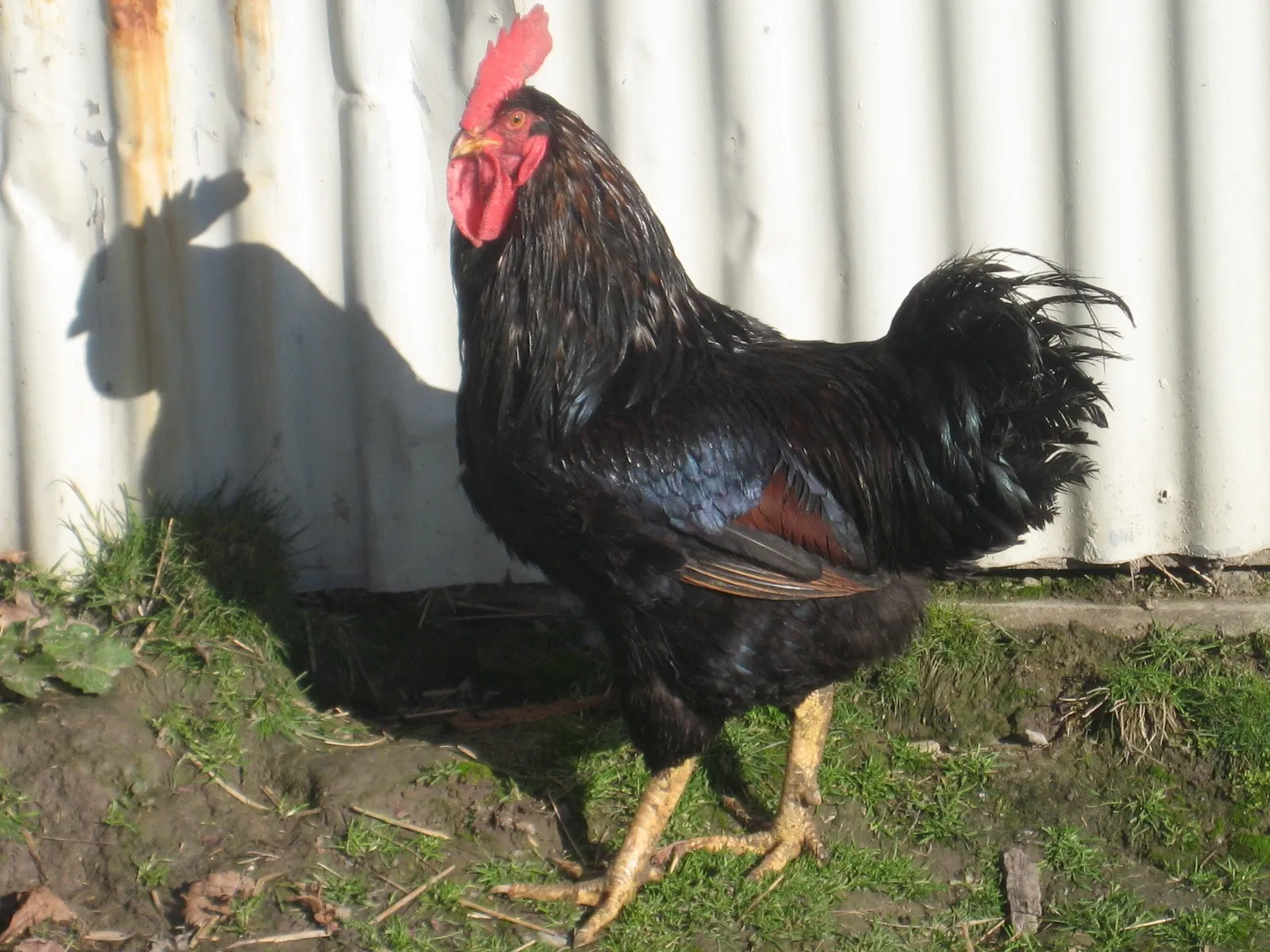
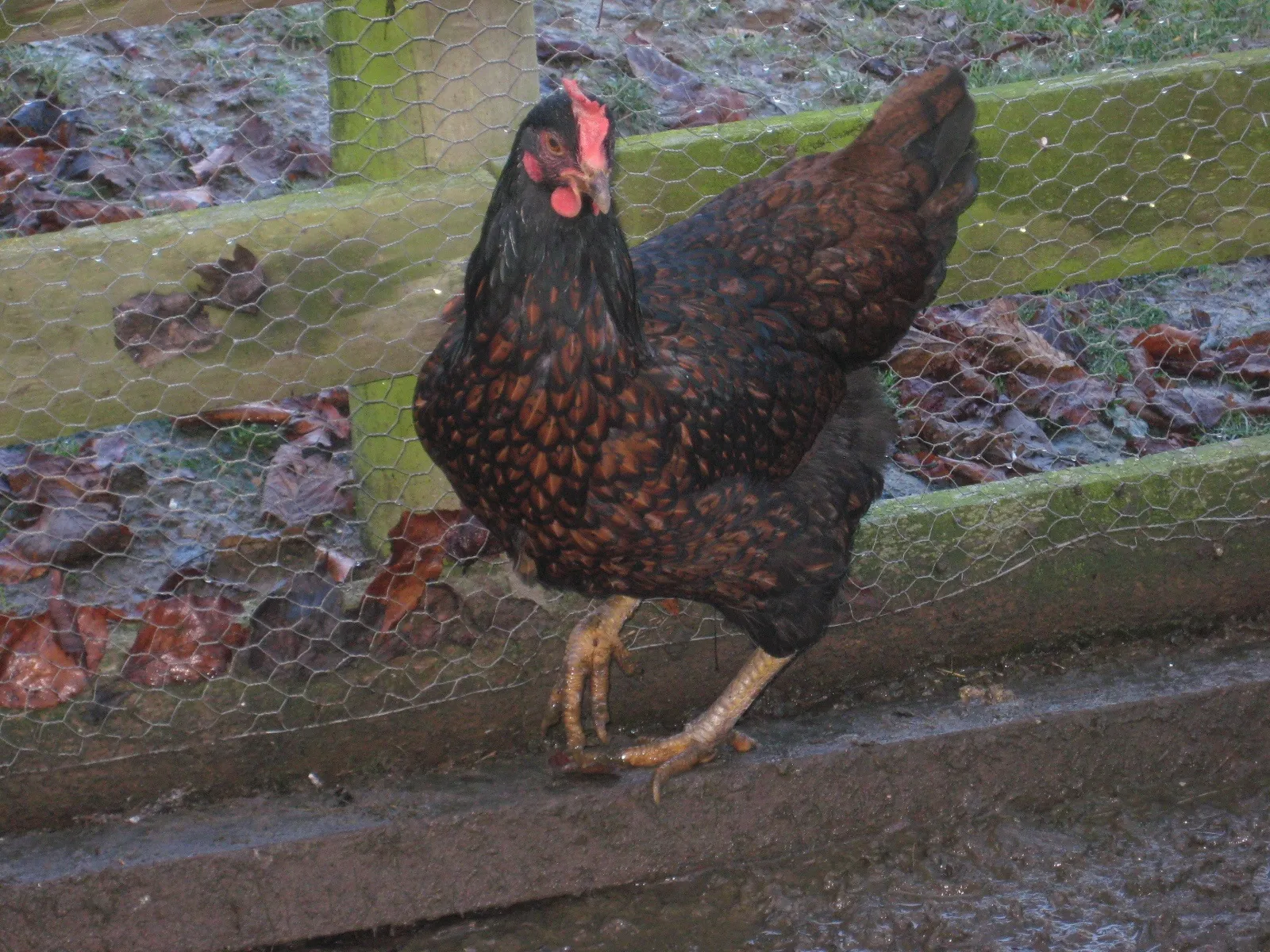
Barnevelder is a Dutch dual-purpose / dark-egg breed named for Barneveld in Gelderland — the other half of the Netherlands’ classic dark-brown pair with Welsummer. It is famous for double-laced mahogany plumage and large dark brown eggs, and it is not a Livestock Conservancy priority breed in the U.S.
The Dutch breed club (Barnevelderclub) is the origin-country primary source. Club history: around 1850, Cochins from England were kept near Barneveld for brown eggs; 1885 crosses with Brahmas and Langshans; by ~1900 local birds were becoming more uniform (sometimes called “Amerikaanse Nuthoenders”); 1898 a Barneveld breeder reported a strong heavy layer with good winter lay; 1906 Buff Orpington blood and deliberate selection for color/type; first “Barnevelders” shown at The Hague agricultural exhibition 1911; a provisional standard for the commercial type 1921; strong brown shells mattered for export to England; hybrid layers in the 1950s ended Barnevelder as a leading commercial egg breed. Club standard (KLN): medium-heavy fowl with a concave back line, known for large, very dark brown eggs; single comb; yellow legs; cock 3–3.5 kg, hen 2.5–2.75 kg. Recognized Dutch colors include double-laced (dubbelgezoomd), blue double-laced, silver double-laced, black, and white.
Elly Vogelaar’s Aviculture Europe article (fetched PDF) deepens that timeline: local farmyard fowl × Asiatic imports from the 1850s; first major Hague appearance 1911 when color mattered less than large brown eggs; first standard language 1921; double-laced admitted to the Dutch Poultry Club 1923; black Barnevelders once had a separate club when the main club refused them. Vogelaar: double lacing arose largely by selection (not the usual Indian Game story for large fowl); German and British standards differ in rooster-chest lacing and ground color. After hybrids, Netherlands hobby membership is on the order of ~200 club members (Vogelaar’s figure at time of writing).
U.S. notes. Oklahoma State University (Wayback capture 5 March 2026, timestamp 20260305145959): dual-purpose; yellow skin, single comb, red earlobes, reddish-brown eggs; cock 8.5 lb, hen 6.5 lb; 1922 standardization effort among farmers (2,000 of 100,000+ accepted). OSU also states the breed has been in Holland since the 12th and 13th century and cites “up to around 300 eggs per year” from 1925 Platt — both clash with Dutch club / Vogelaar mid-19th–early-20th-century formation and modern 175–200 planning bands (named below; not silently preferred). Cackle Hatchery (hatchery): Holland origin; APA 1991; TLC Not Listed; Continental class. Lafeber (commercial): APA 1991; double-laced large fowl; “only one” APA-recognized variety.
Conservation. Livestock Conservancy /barnevelder-chicken/ 404s. Barnevelder does not appear on the Conservancy’s fetched 2026 Conservation Priority List poultry PDF. Cackle prints TLC: Not Listed. Absence is “not Conservancy-listed,” not a Watch/Recovering status to invent.
Care
Eggs. Planning numbers disagree across the hierarchy:
- Barnevelderclub (NL): large, very dark brown eggs — no annual count on the fetched standard page.
- Vogelaar / Aviculture Europe: about 175–200 brown eggs/year, 60–65 g; shells should be solid brown without spots; pigment gland cannot always keep pace — color fades as lay increases; select breeding stock for laying ability, not exterior alone; older hens’ spring eggs can still be dark even when late-cycle shells pale.
- USU Extension table: Barnevelder 180–200 dark brown; heavy; Calm, quiet.
- Lafeber: about 180–200 (“Good”); large; dark brown / chocolate-like.
- Cackle: 150–200 (estimates only); dark brown; large.
- OSU: “up to around 300/year” (1925 Platt reference) — historical/commercial-era ceiling the sibling Barnevelder egg guide already declines for current planning.
Flockmath’s 180 sits inside Aviculture Europe’s 175–200 and USU/Lafeber 180–200, at Cackle’s mid-band, and far below OSU’s 1925-era ~300. Maine Extension groups Barnevelders with Marans and Welsummers as layers of “very dark brown, almost chocolate-colored” eggs — qualitative, no annual count. UKY ASC-190 lists Barnevelders among good egg-producing breeds with dark brown shells.
Weights & type. Dutch club / Vogelaar: hen 2.5–2.75 kg, cock 3–3.5 kg. Flockmath and Cackle: hen 6 lb, rooster 7 lb. OSU: hen 6.5, cock 8.5. Lafeber: about 5.5–8 lb. OSU’s cock weight sits above the Dutch standard band — named, not averaged. Classic look: hen double-laced dark golden-brown with beetle-green black borders; rooster mostly black with reddish-brown in back/shoulders/wing triangle (Dutch color description). APA-facing U.S. sources emphasize double-laced large fowl; Dutch clubs recognize more colors; Cackle notes its stock may produce single- and double-laced birds while aiming toward double lace.
Climate. OSU: home district has cold winds and a very damp climate; thrifty hardy type. Vogelaar/club: historically prized winter layers. Flockmath cold matches that Dutch damp-cold story more than Lafeber’s “can adapt to hot or cold, but favors warmer” — those lines disagree. UMN’s heavier winter-breed list (Rock, Wyandotte, Ameraucana, Orpington) does not name Barnevelder. Single comb: Poultry Extension — large single combs frostbite more than pea/strawberry; UMN still ties frostbite to moisture + cold.
Autosexing (qualified). Vogelaar: whitish-grey-chested chicks generally cockerels; brownish-grey-chested generally pullets — not always obvious, especially in bantams. Useful hint, not a guarantee.
For coop sizing / egg modeling: coop size calculator and egg production calculator.
Temperament
Vogelaar: “personable and quiet,” tames easily. USU: Calm, quiet. Lafeber: Calm, friendly; noise Moderate. Cackle Breed Facts: Active; product prose: quiet, handles confinement, calmer than flighty breeds. Flockmath calm / beginner-friendly / quiet aligns with Vogelaar/USU and against Cackle’s facts-table Active and Lafeber’s moderate-noise tag. This profile names that spread rather than picking the quietest marketing line.
Health
No fetched club or extension page flags a Barnevelder-specific infectious disease as a breed hallmark. Vogelaar notes historical Marek susceptibility in degenerated inbred lines after the commercial collapse — historical context, not a current closed veterinary claim for every modern strain. Honest gap on breed-unique disease rates.
Management points that are sourced:
- Dark-egg vs production / show tradeoff (Vogelaar): exterior selection can dilute laying ability and shell darkness; select roosters from proven dark-egg layers; do not assume darkest late-season eggs identify the best layers.
- Incubation: Vogelaar — strong, often very round shells can trouble artificial incubators; broody hens handle them better when available; humidity tweaks only during pipping if using a machine.
- Single-comb frostbite in damp cold (Poultry Extension; UMN moisture rule) — relevant for a cold-tagged single-comb Dutch breed.
- Broodiness: Vogelaar “largely eliminated,” occasional successful setters; Cackle Non Setter; OSU “sit and rear their own young.” OSU and Vogelaar/Cackle disagree. Flockmath rarely follows the European/hatchery non-setter framing. Plan on incubators or a surrogate if natural mothers matter.
If frostbite occurs, UMN recommends a veterinarian; severe untreated frostbite can mean permanent tissue loss and may require isolation from pecking.
Double Lace, Dark Shell: The Bottom Line
If you want a Dutch double-laced bird whose reputation is large dark brown eggs without Welsummer speckles, Barnevelder is the breed the Dutch club, Maine’s dark-brown trio note, and Vogelaar’s utility history all describe. Flockmath’s 180 eggs/year sits inside Aviculture Europe’s 175–200 and USU/Lafeber 180–200, above Cackle’s 150 floor, and far below OSU’s 1925-era ~300 ceiling. Expect shell color to lighten through a heavy lay (Vogelaar) — physiology, not a broken hen — and ask whether the line was selected for show lace or egg shade and count.
Expect APA-era U.S. recognition (1991) focused on double-laced large fowl while Dutch standards list more colors, winter-capable single-comb birds that still need a dry coop, temperament language that runs from “quiet” to Cackle’s facts-table “Active,” and broodiness claims that split OSU (sitters) from Vogelaar/Cackle (mostly not). You are buying laced mahogany with a Barneveld paper trail — sibling to Welsummer in the Dutch dark-egg story, not a Conservancy Critical listing.
Sources
- Dutch history (1850s–1921; hybrid decline 1950s); standard type; large very dark brown eggs; cock 3–3.5 kg / hen 2.5–2.75 kg; single comb; yellow legs; Dutch color list: Barnevelderclub — “Het Ras” and Standaard Barnevelder; color detail: Beschrijving kleurslagen.
- History depth; 1911/1921/1923; ~175–200 eggs/year, 60–65 g; fade without spots; broodiness largely eliminated; quiet/personable; weights matching Dutch club; autosexing chick hint; incubation shell issues; German/UK standard differences: Aviculture Europe — Elly Vogelaar, “Barnevelders” (PDF)
- Dual-purpose; reddish-brown eggs; weights 8.5/6.5 lb; hardy damp-cold origin; sit and rear young; ~300 eggs/year from 1925 Platt; 12th–13th-century claim (disagrees with Dutch club): Oklahoma State University — “Barnevelders Chickens.” (Fetched via Wayback Machine capture 5 March 2026, timestamp
20260305145959.) - Table: 180–200 dark brown; calm, quiet: Utah State University Extension — “Managing Chickens From Chicks to Peak Egg Production.”
- Dark-brown egg trio (Barnevelders, Marans, Welsummers): University of Maine Cooperative Extension — Bulletin #2104
- Barnevelders among good egg-producing breeds; dark brown eggs: University of Kentucky Cooperative Extension — ASC-190
- Frostbite moisture/ventilation; heavier winter list does not include Barnevelder: University of Minnesota Extension — “Caring for Chickens in Cold Weather.”
- Single vs pea comb frostbite incidence: Poultry Extension — “Frostbite in Chickens,” Dr. Jacquie Jacob, University of Kentucky.
- Conservancy gap:
/barnevelder-chicken/404; absent from 2026 CPL Poultry PDF; Cackle TLC Not Listed. - Hatchery guidance (labelled): Cackle Hatchery — Barnevelder — 150–200 eggs; APA 1991; TLC Not Listed; Broody Non Setter; Temperament Active vs quiet prose; weights 6/7; single- and double-laced stock caveat.
- Commercial retailer (labelled): Lafeber — Barnevelder — 180–200 eggs; APA 1991; only one variety; calm/friendly; noise moderate; favors warmer climates; 5.5–8 lb.
Ours: framing Flockmath’s 180 inside Aviculture 175–200 and USU/Lafeber 180–200 while naming Cackle 150–200 and OSU’s 1925-era ~300; naming Dutch club / Vogelaar 19th–20th-century origin vs OSU’s 12th–13th-century claim; naming broodiness (OSU sitters vs Vogelaar/Cackle largely non-setters); naming weight bands (Dutch / Flockmath–Cackle / OSU); naming Lafeber “favors warmer” and moderate noise vs Flockmath cold / quiet; naming Cackle Active vs quiet prose; cross-linking the Welsummer profile as the sibling Dutch dark-egg breed; and leaving breeds.json numbers unchanged this pass.