
standard breed · USA
Wyandotte (Silver Laced)
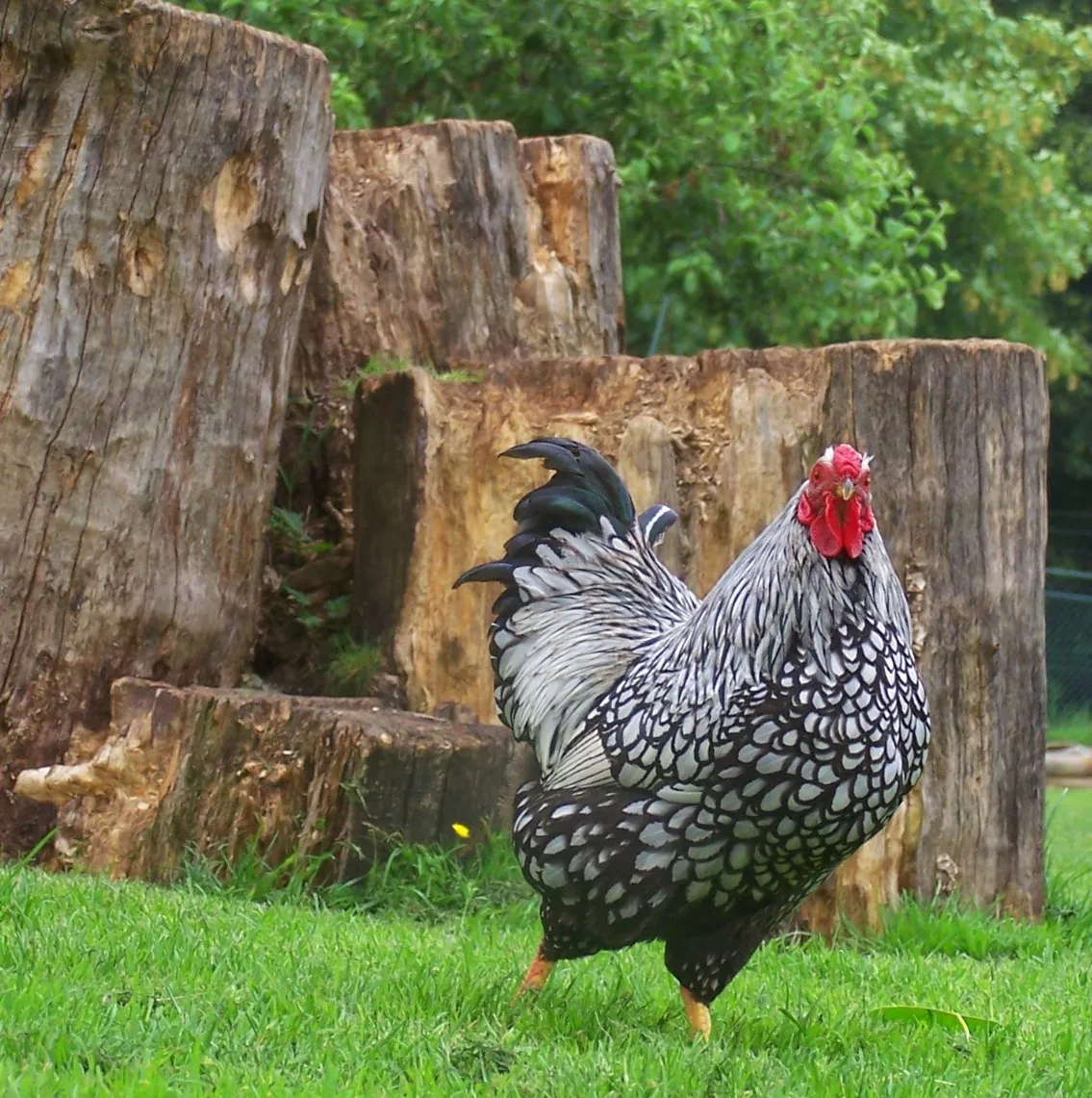
Striking laced plumage and a compact, rose-combed body that handles bitter winters with ease. Calm, self-reliant, and a frequent broody — a great choice for cold-climate hatching.
| Size class | standard |
|---|---|
| Weight (hen) | 6.5 lb (2.95 kg) |
| Weight (rooster) | 8.5 lb (3.86 kg) |
| Eggs per year | 200 |
| Egg color | brown |
| Egg size | large |
| Climate tolerance | cold |
| Temperament | calm |
| Goes broody | often |
| Noise level | quiet |
| Beginner-friendly | Yes |
| Origin | USA |
Is the Wyandotte (Silver Laced) right for your flock?
The Wyandotte (Silver Laced) is a standard breed that's well-suited to first-time keepers. Hens lay around 200 brown eggs per year and tolerate cold climates well.
Temperament: calm. Broodiness: often. Noise level: quiet. A reasonable choice for suburban yards.
What this breed needs
- Coop space: about 4 sq ft per bird inside the coop. Run the numbers for your specific flock size in the coop size calculator.
- Climate fit: particularly comfortable in cold climates with good winter laying.
- Eggs: a steady, reliable producer — a good general-purpose layer. For a month-by-month breakdown, see Wyandotte Egg Production: How Many Eggs Per Year?.


History
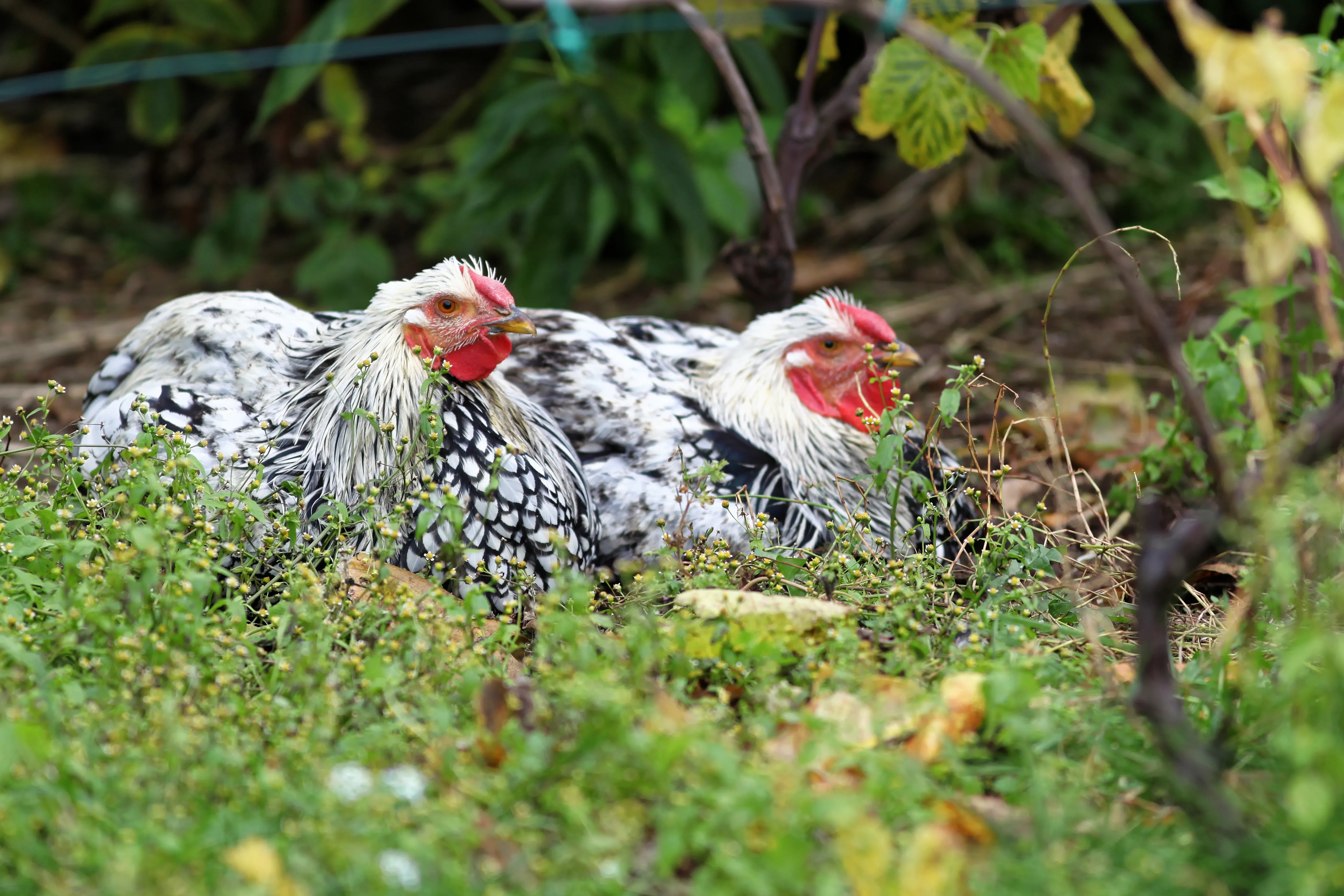
The Silver Laced Wyandotte is the original color variety of America’s classic rose-combed dual-purpose chicken — silvery-white plumage with black lacing, yellow skin, and a flat rose comb. Most institutional history is written for Wyandotte as a breed; where a source names Silver Laced (or Cackle’s “Black Laced Silver”) specifically, that is called out below.
The Livestock Conservancy places the breed’s name with a Native American tribe associated with parts of upstate New York and Ontario. Birds were first called American Sebrights; the name changed to Wyandotte when the breed entered the American Poultry Association Standard of Perfection in 1883. Conservancy states plainly that “The Silver Laced Wyandotte was the original color recognized.” Origins are uncertain; Conservancy says they are thought to have been developed from the Dark Brahma and Spangled Hamburgs, as well as other breeds, and that many other Wyandotte varieties followed Silver Laced.
Oklahoma State University’s breed page (Wayback capture) and UW–Madison Extension’s Skinner circular (A2880) agree on the American geography: Silver Laced developed in New York State, with other varieties developed in the north and northeastern states in the late nineteenth and early twentieth centuries. OSU repeats the American Sebright → Wyandotte rename and APA recognition in 1883. Skinner lists the same APA-era variety set (Black, Blue, Buff, Columbian, Golden Laced, Partridge, Silver Laced, Silver Penciled, White) and the same New York origin for Silver Laced. Neither OSU nor Skinner publishes a closed annual egg count.
Cackle Hatchery (hatchery guidance) markets this variety as Black Laced Silver Wyandotte — the same classic Silver Laced pattern under a more descriptive trade name adopted in 2014 — and repeats APA 1883 and Silver Laced as the original foundation variety. That hatchery rename is labelled commercial naming, not a separate APA variety.
On conservation status, Conservancy’s breed page lists Graduated 2016 and states the breed “is no longer considered endangered.” The Conservancy’s 2026 Conservation Priority Poultry Breeds PDF does not list Wyandotte among Critical / Threatened / Watch / Recovering chickens — consistent with graduation. The existing Flockmath Wyandotte egg guide notes the breed is also absent from the Conservancy’s 2026 Pick-a-Breed comparison chart after graduation; this profile follows the breed page + 2026 CPL (graduated / not listed). Cackle’s product facts print TLC: Not Listed, which matches that institutional status.
Care
Standard weights line up across Conservancy (~6.5 lb hens / ~8.5 lb cocks), OSU, Skinner, Cackle Hatchery (hatchery), and Flockmath: males 8.5 lb, females 6.5 lb (OSU/Cackle also list cockerel 7.5 / pullet 5.5). No weight discrepancy to resolve.
Egg planning has an honest institutional gap. Conservancy describes hens as “good mothers and egg producers” of light-to-brown eggs but publishes no annual count. OSU and Skinner likewise give brown eggshells and dual-purpose use with no eggs-per-year figure. Utah State University Extension’s breed table (fetched this pass) does not include a Wyandotte row at all, so USU cannot be used for a count. Hatchery/commercial figures fill the planning gap and must be labelled as such:
- Cackle Hatchery Black Laced Silver (production) Breed Facts: 180–260 eggs/year (estimates only); egg size printed as Medium on that facts table, while body copy says medium to large.
- Cackle heritage spotlight (hatchery/blog): 180–260 large brown eggs/year.
- Lafeber (commercial retailer): “about 200 brown eggs per year,” large, favors cooler climates.
Conservancy lists egg size as Large; Cackle’s production facts table prints Medium. Those sources disagree on shell-size wording. Flockmath’s table figure of 200 and egg_size: large sit inside Conservancy’s qualitative “egg producers” / Large language and inside the hatchery 180–260 band (near Lafeber’s ~200). This profile does not invent an institutional closed band where none exists.
Climate is one of the breed’s clearest institutional strengths. Conservancy: friendly, calm, cold-hardy, not good flyers. OSU/Skinner: suited to small family flocks “kept under rugged conditions”; rose combs do not freeze as easily as single combs. University of Minnesota Extension names Wyandotte among heavier breeds that “over-winter well.” Lafeber (commercial) says the breed can adapt either way but favors cooler. Flockmath’s climate field of cold matches that institutional cold emphasis. Shade, airflow, and cool water still matter in heat for a heavily feathered dual-purpose bird — that practical summer caveat is ours, not a Conservancy heat-tolerance claim (Conservancy does not publish a “not fond of heat” line for Wyandotte the way it does for Sussex).
The rose comb is the management point that separates this breed from single-comb dual-purpose birds. Poultry Extension (Dr. Jacquie Jacob, University of Kentucky) notes frostbite hits combs, wattles, and toes hardest in damp, poorly ventilated cold, and that smaller comb types (pea, strawberry) show much less incidence than large single combs. OSU/Skinner’s rose-comb freeze advantage is the breed-specific institutional claim; UMN still ties frostbite risk to moisture plus cold and recommends wooden roosts over metal or plastic. Cold hardiness does not cancel dry, ventilated coop management.
OSU/Skinner common faults worth knowing for breeders (breed-level, not Silver-Laced-only): narrow backs, undersized birds, relatively poor hatches, and occasional single-combed offspring from rose-combed parents — those single-combed descendants “should not be kept as breeders.” Cackle’s heritage spotlight (hatchery) explains the same rose/single genetics in commercial language.
For coop space by flock size, use the coop size calculator; egg modeling belongs in the egg production calculator.
Temperament
Conservancy temperament is calm; birds are friendly and cold-hardy. OSU/Skinner: generally good disposition; good choice for fanciers and farmers. Cackle (hatchery): docile; beginner-suitable. Lafeber (commercial): generally calm and sociable; noise level moderate. Flockmath’s calm, beginner-friendly flags sit inside that band. Flockmath’s quiet noise field is not matched by Conservancy/OSU (neither publishes a noise tag); Lafeber’s commercial overview says moderate. That quiet-vs-moderate gap is named here rather than papered over.
Broodiness is discussed mostly at breed level. Conservancy: hens are “good mothers.” OSU/Skinner: hens “make good mothers.” Neither institutional page prints “often,” “rarely,” or “setter” as a closed broodiness rate. Cackle production facts print Broody: Setter and FAQ/body copy says they may go broody from time to time and can make excellent mothers. Lafeber notes a good mothering instinct. Flockmath records often. Institutional sources support mothering/sitting capacity without quantifying frequency; Cackle’s “from time to time” is softer than Flockmath’s “often.” Keepers should treat broodiness as a real planning factor for eggs — a sitting hen lays nothing for weeks — without reading Conservancy “good mothers” as a guarantee of frequent broodiness on every hatchery pullet.
Health
Neither Conservancy nor OSU flags a disease unique to Wyandottes beyond ordinary chicken-keeping risks. Stating that gap is better than inventing a health chapter. Recurring management points are (1) rose-comb frostbite advantage that still depends on a dry coop, (2) cold hardiness that does not erase heat stress on a heavy, densely feathered bird, and (3) breeder faults OSU/Skinner already name (undersize, hatchability, single-comb throwouts). If frostbite occurs, University of Minnesota Extension recommends consulting a veterinarian; severe untreated frostbite can mean permanent loss of comb, wattle, or foot, and pecking of injured tissue may require isolation.
No extension page fetched here publishes a Silver-Laced-only genetic condition.
Cold-Country Classic: The Bottom Line
If you want laced American beauty plus a rose comb that actually earns its keep in hard winters, Silver Laced Wyandotte is one of the cleanest institutional cold-climate dual-purpose picks. Flockmath’s 200 eggs/year is a planning Normal inside the hatchery 180–260 band (Cackle) and aligned with Lafeber’s commercial ~200, while Conservancy/OSU/Skinner publish no closed annual count — that institutional silence is named, not filled with invented research. Expect broodiness/mothering as a real trait (Conservancy/OSU “good mothers”; Cackle Setter), and treat Flockmath’s often as a planning bias toward sitting rather than a Conservancy frequency number.
Expect a calm, beginner-suitable bird with Silver Laced as the original APA variety (1883), graduated from the Conservancy priority list in 2016, and explicitly named by UMN among breeds that over-winter well. Ask hatcheries whether you are buying production or exhibition Silver Laced (Cackle sells both under “Black Laced Silver”) if eggs versus show type matter. In hard damp cold, manage moisture anyway — rose combs reduce risk relative to large single combs (OSU/Skinner); they do not repeal UMN’s moisture rule.
You are getting the founding Wyandotte color — American, dual-purpose, cold-first — not a hybrid layer in lace paint.
Sources
- Breed history (American Sebright rename, APA 1883), Silver Laced as original color, Dark Brahma/Spangled Hamburg ancestry note, rose comb, calm/cold-hardy/not good flyers, good mothers and egg producers (no annual count), weights ~6.5/8.5, Graduated 2016: The Livestock Conservancy — “Wyandotte Chicken.”
- 2026 CPL (Wyandotte absent after graduation): The Livestock Conservancy — 2026 Conservation Priority Poultry Breeds PDF.
- Origin (NY Silver Laced; other varieties northeast), APA 1883, rose-comb freeze advantage vs single comb, good mothers, disposition, faults (narrow backs/undersize/poor hatches/single-comb offspring), weights, yellow skin, brown eggs, dual-purpose use (no annual egg count): Oklahoma State University — “Wyandotte Chickens.” (Fetched via Wayback Machine capture 5 March 2026, 13:39:43 UTC, timestamp
20260305133943.) - Same Skinner lineage: Silver Laced NY origin, varieties list, weights, rose-comb freeze note, good mothers, faults: UW–Madison Extension — Skinner, “Chicken Breeds and Varieties (A2880).”
- Wyandotte named among heavier breeds that over-winter well; frostbite moisture/ventilation/wooden roosts: University of Minnesota Extension — “Caring for Chickens in Cold Weather.”
- Comb frostbite risk and prevention (single vs smaller comb types generally): Poultry Extension — “Frostbite in Chickens,” Dr. Jacquie Jacob, University of Kentucky.
- USU Extension breed table checked — no Wyandotte row (cannot support an egg-count claim): Utah State University Extension — “Managing Chickens From Chicks to Peak Egg Production.”
- Hatchery guidance (labelled as such): Cackle Hatchery — Black Laced Silver Wyandotte — 180–260 eggs; Medium on facts table / medium-to-large in body copy; Broody: Setter; APA 1883; TLC Not Listed; production vs exhibition split; 2014 “Black Laced Silver” rename for Silver Laced. Cackle Hatchery — Wyandotte heritage spotlight — Silver Laced original; 180–260 large brown eggs; sometimes brood; rose comb frostbite note.
- Commercial retailer guidance (labelled as such): Lafeber — Wyandotte — ~200 brown eggs/year; calm/sociable; noise moderate; favors cooler; Silver Laced first APA variety 1883; Conservancy graduated 2016.
Ours: framing Flockmath’s 200 as the planning Normal inside hatchery 180–260 / Lafeber ~200 while stating Conservancy/OSU/Skinner publish no closed annual count; naming Conservancy Large vs Cackle Medium egg-size wording; naming Flockmath quiet vs Lafeber moderate (no Conservancy/OSU noise tag); naming Flockmath often broody vs institutional “good mothers” plus Cackle “from time to time”; treating summer heat management as practical dual-purpose husbandry rather than a Conservancy heat claim; and leaving breeds.json unchanged this pass.