
standard breed · France
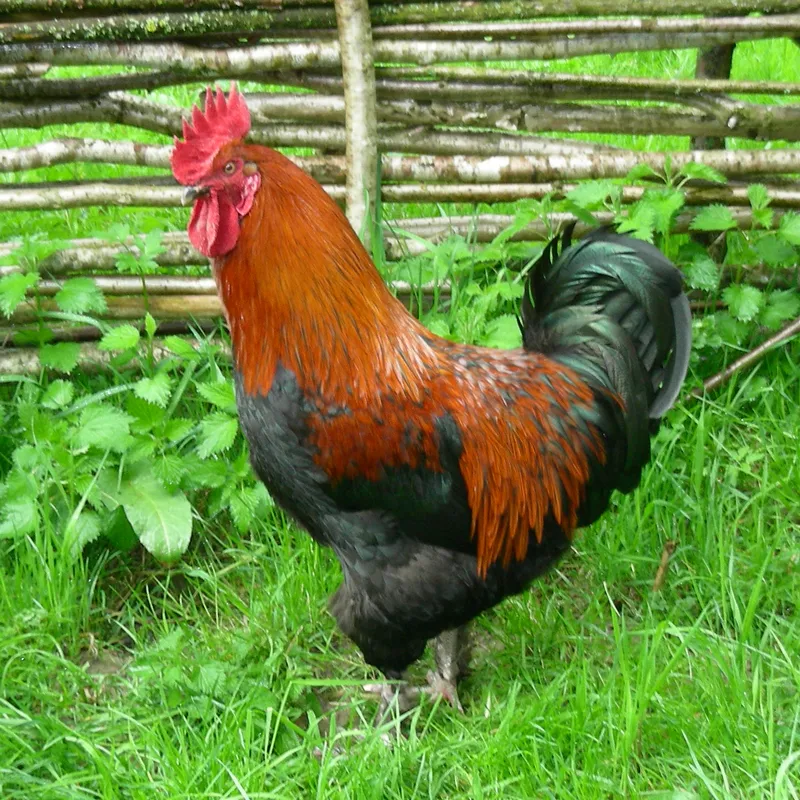
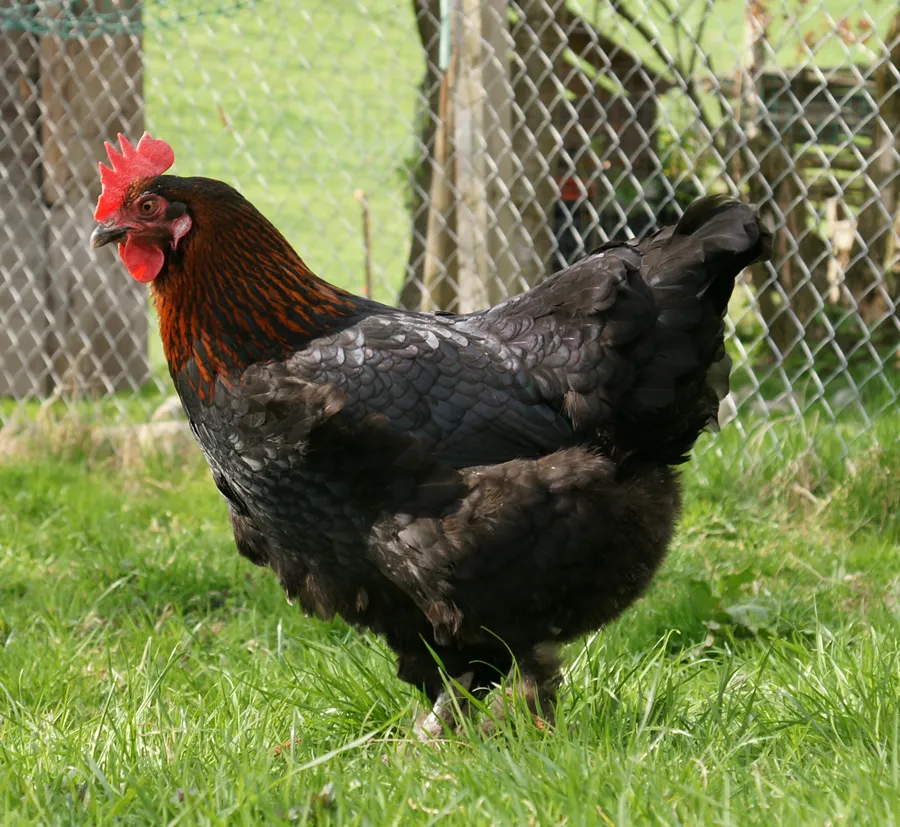
Marans (Black Copper)
Famous for laying dark chocolate-brown eggs — among the darkest in the Marans family. Calm, quiet, and adaptable, with feathered shanks on most strains.
| Size class | standard |
|---|---|
| Weight (hen) | 6.5 lb (2.95 kg) |
| Weight (rooster) | 8 lb (3.63 kg) |
| Eggs per year | 180 |
| Egg color | dark chocolate brown |
| Egg size | large |
| Climate tolerance | All climates |
| Temperament | calm |
| Goes broody | occasionally |
| Noise level | quiet |
| Beginner-friendly | Yes |
| Origin | France |
Is the Marans (Black Copper) right for your flock?
The Marans (Black Copper) is a standard breed that's well-suited to first-time keepers. Hens lay around 180 dark chocolate brown eggs per year and tolerate most climates well.
Temperament: calm. Broodiness: occasionally. Noise level: quiet. A reasonable choice for suburban yards.
What this breed needs
- Coop space: about 4 sq ft per bird inside the coop. Run the numbers for your specific flock size in the coop size calculator.
- Climate fit: adapts to a wide range of climates with no special accommodations.
- Eggs: a steady, reliable producer — a good general-purpose layer. For a month-by-month breakdown, see Marans Egg Production: How Many Eggs Per Year?.


History
Black Copper Marans is one color variety of Marans, a French dual-purpose breed named for the port town of Marans on the Atlantic marsh coast. Most institutional history is written for Marans as a breed; Black Copper is named where sources single it out.
Marans Chicken Club USA’s approved general description places the type in marshy Atlantic-coast France, with early crosses between local marsh hens and gamecocks brought into the port — development said to begin as early as the 13th century, with Brahma and Langshan blood in the late 1800s. Modern-form birds began appearing in French shows in 1914; the Marans Club of France organized in 1929 and set the first standard in 1931. U.S. imports arrived in small numbers over many years (often dated around the post–WWII period), from France and also England, Canada, Australia, and possibly Belgium and Switzerland. MCCUSA notes that English-type clean-legged flocks (especially Cuckoo) became common in the U.S., while the American standard follows the French call for lightly feathered shanks and toes.
The Marans Club’s published standard language (also on themaransclub.com resources) frames the breed as general-purpose meat and eggs, white skin, and eggshells “very dark reddish brown,” famous for large dark chocolate-russet eggs and meat flavor. Standard weights: cock 8 lb, hen 6.5 lb.
Oklahoma State University’s breed page (Wayback capture) opens from Marans, France, calling the rare breed “chocolate eggers” for deep chocolate-brown eggs, and states: “The Black Copper variety, and less so, the Silver Cuckoo, have the darkest coloration and are therefore the most valuable.” That is a within-Marans darkness ranking, not a claim that Marans (or Black Copper) lay the darkest brown eggs of every breed on earth. OSU lists many color names and says the APA recognizes White, Wheaten, and Black Copper, while Silver Cuckoo is “the most common variety in North America.” Marans Chicken Club USA’s homepage states the APA currently recognizes four varieties: Black, Black Copper, Wheaten, and White. OSU’s three-name APA list and MCCUSA’s four-name list disagree on whether standalone Black is APA-recognized. Cackle Hatchery (hatchery guidance) dates APA recognition of French Black Copper Marans to 2011 and prints TLC: Not Listed.
Livestock Conservancy coverage is an honest gap for this breed: livestockconservancy.org/marans-chicken/ 404s; Marans does not appear on the Conservancy’s 2026 Conservation Priority Poultry Breeds PDF (fetched); the existing Flockmath Marans egg guide already notes no Pick-a-Breed chart row. Conservation status claims that still say “Watch” on commercial blogs are not used here without a live Conservancy page.
Care
Club/standard weights match Flockmath: hen 6.5 lb, rooster 8.0 lb (The Marans Club / MCCUSA; Cackle). OSU describes a “large, heavy chicken (typically 7–8 lbs)” without splitting cock/hen — a looser range, not a clean contradiction of the 8 / 6.5 standard.
Egg planning has a real institutional band. Utah State University Extension’s table: Marans 150–200 dark chocolate brown eggs, heavy, reserved, “known for rich egg color.” OSU: “laying three large eggs a week” (~156/year arithmetic) with no closed annual range. Club pages emphasize dark shells and dual purpose but publish no annual count. Cackle Black Copper (hatchery): 200+ eggs/year (estimates only); shell color #5 to #8 on Breed Facts, while body copy also mentions #4–#6 and older flock notes of #4–#8 with rare #9 — hatchery copy is internally soft on the shade band. Flockmath’s 180 sits inside USU 150–200 and below Cackle’s 200+ ceiling; that Conservancy-style silence on Conservancy pages is replaced here by USU + hatchery, not invented Conservancy numbers.
Egg color grading (not folklore): MCCUSA instructs breeders to select hens that lay a 4 or better on the MCCUSA egg shade card and to hatch the darkest eggs each season. The Marans Club standard language is qualitative (“very dark reddish brown”), not a numbered chart on the fetched page. No fetched institutional source supports the absolute marketing line “darkest brown eggs of any breed.” OSU’s institutional claim is narrower: Black Copper (and, less so, Silver Cuckoo) are the darkest among Marans varieties. As of commit 644119b, Flockmath’s breed description has been rewritten to match this narrower, sourced claim.
Climate: OSU notes winter hardiness and that they “deal with confinement well.” UMN Extension’s cold-weather page names heavier breeds that over-winter well (Plymouth Rock, Wyandotte, Ameraucana, Orpington) and does not name Marans — so no UMN Marans-specific winter endorsement. Flockmath’s climate field is all. Club and hatchery do not publish a closed hot/cold rating on the fetched pages; treat “all” as usable with management. The breed carries a single comb (club standard; OSU). Poultry Extension frostbite guidance for large single combs still applies; UMN ties frostbite to moisture plus cold and recommends wooden roosts. Lightly feathered shanks (French/American standard) need dry bedding — Cackle (hatchery) flags mud/snow on feathered feet.
For coop space / egg modeling: coop size calculator and egg production calculator.
Temperament
Institutional sources disagree on temperament. OSU: “not especially docile, although they do exhibit brooding behavior well.” USU tags Marans “Reserved.” Cackle (hatchery): Docile. MCCUSA’s fetched pages emphasize rustic farm character and breeding goals more than a calm/friendly tag. Flockmath’s calm / beginner-friendly fields align with hatchery marketing and sit against OSU’s “not especially docile.” Both OSU and USU are named; this profile does not silently pick Cackle. Quiet noise is not tagged by Conservancy (absent), OSU, or USU on fetched pages — Flockmath quiet is an unverified JSON field relative to those sources.
Broodiness: OSU says they “exhibit brooding behavior well.” Cackle prints Broody: Setter and notes occasional broodiness/good mothers in FAQ-style copy. Flockmath occasionally fits the softer hatchery wording better than a “often” claim; club pages fetched here do not quantify broodiness frequency.
Health
Neither OSU nor the fetched club standard pages flag a Marans-specific disease beyond ordinary chicken-keeping risks. Honest gap. Management points: single-comb frostbite risk in wet cold; feathered-shank hygiene; and the tradeoff that selecting hard for dark shells can pull production toward the low end of the 150–200 band (planning synthesis already used on the site’s Marans egg guide — labelled ours when framed as a rule of thumb). If frostbite occurs, UMN recommends a veterinarian; severe untreated frostbite can mean permanent tissue loss and may require isolation from pecking.
Dark Eggs, Honest Limits: The Bottom Line
If you want a French dual-purpose bird whose reputation is egg color, Black Copper Marans is the variety OSU calls among the darkest inside the Marans family (with Silver Cuckoo second). Flockmath’s 180 eggs/year is a planning Normal inside Utah State’s 150–200, above OSU’s “three a week” arithmetic floor, and below Cackle’s hatchery 200+. Club language is “very dark reddish brown” / chocolate-russet with MCCUSA’s shade-card ≥4 breeding target — not a verified “darkest brown egg of any breed on earth” ranking. The JSON description was rewritten to this narrower claim in commit 644119b.
Expect APA-era Black Copper recognition (2011 on Cackle; variety lists differ slightly between OSU and MCCUSA), French lightly feathered legs on the American standard, winter hardiness noted by OSU, and a temperament that extension sources call reserved / not especially docile even when hatcheries say docile. Ask sellers about French vs English leg type and about color-selected vs production-selected lines if the basket shade matters more than count.
You are buying chocolate shells with a paper trail from French and U.S. Marans clubs and from OSU/USU — not a hybrid layer, and not an unverified “darkest on earth” trophy claim.
Sources
- Breed history (French marsh coast, 13th-c. narrative, 1914 shows, Club of France 1929/1931, U.S. import paths, French vs English legs, dual-purpose, dark chocolate-russet eggs, weights 8/6.5, feathered shanks, disqualifications): Marans Chicken Club USA — General Description (approved text dates on page).
- APA varieties (Black, Black Copper, Wheaten, White); breed-for-shade guidance (4+ on MCCUSA egg shade card); club context: Marans Chicken Club USA — home
- Standard economic qualities, “very dark reddish brown” shells, weights, shape (lightly feathered shanks): The Marans Club — Official Marans Standard / Resources
- Chocolate eggs; Black Copper (and less Silver Cuckoo) darkest among Marans; APA White/Wheaten/Black Copper; ~3 large eggs/week; winter hardiness; confinement; “not especially docile”; good brooding: Oklahoma State University — “Marans Chickens.” (Fetched via Wayback Machine capture 5 March 2026, 14:03:36 UTC, timestamp
20260305140336.) - Egg-count range 150–200, dark chocolate brown, reserved temperament, rich egg color tag: Utah State University Extension — “Managing Chickens From Chicks to Peak Egg Production.”
- Frostbite moisture/ventilation (does not name Marans); heavier-breed winter list does not include Marans: University of Minnesota Extension — “Caring for Chickens in Cold Weather.”
- Comb frostbite risk (single-comb breeds generally): Poultry Extension — “Frostbite in Chickens,” Dr. Jacquie Jacob, University of Kentucky.
- Conservancy gap: no live Marans breed page (404 on
/marans-chicken/); Marans absent from 2026 CPL Poultry PDF. - Hatchery guidance (labelled as such): Cackle Hatchery — French Black Copper Marans — 200+ eggs; #5–#8 facts / #4–#6 body copy; APA 2011; TLC Not Listed; Broody: Setter; French feathered legs; docile.
Ours: framing Flockmath’s 180 inside USU 150–200 while naming Cackle 200+ as a hatchery ceiling; refusing the absolute “darkest brown eggs of any breed” claim because fetched institutional sources only support dark Marans shells and OSU’s within-breed Black Copper ranking; naming OSU “not especially docile” / USU “Reserved” vs Cackle “Docile” / Flockmath “calm”; naming OSU’s three APA colors vs MCCUSA’s four; and leaving breeds.json numbers unchanged this pass. (Update, commit 644119b: the description line was rewritten to “among the darkest in the Marans family,” matching OSU’s within-breed ranking.)