
standard breed · Australia
Australorp
Holder of the historical egg-laying record (364 eggs in 365 days). A glossy black, even-tempered, productive layer that thrives in nearly any climate.
| Size class | standard |
|---|---|
| Weight (hen) | 6.5 lb (2.95 kg) |
| Weight (rooster) | 8.5 lb (3.86 kg) |
| Eggs per year | 280 |
| Egg color | brown |
| Egg size | large |
| Climate tolerance | All climates |
| Temperament | calm |
| Goes broody | occasionally |
| Noise level | quiet |
| Beginner-friendly | Yes |
| Origin | Australia |
Is the Australorp right for your flock?
The Australorp is a standard breed that's well-suited to first-time keepers. Hens lay around 280 brown eggs per year and tolerate most climates well.
Temperament: calm. Broodiness: occasionally. Noise level: quiet. A reasonable choice for suburban yards.
What this breed needs
- Coop space: about 4 sq ft per bird inside the coop. Run the numbers for your specific flock size in the coop size calculator.
- Climate fit: adapts to a wide range of climates with no special accommodations.
- Eggs: a top-tier producer — among the most productive backyard breeds. For a month-by-month breakdown, see How Many Eggs Does an Australorp Lay Per Year?.


History
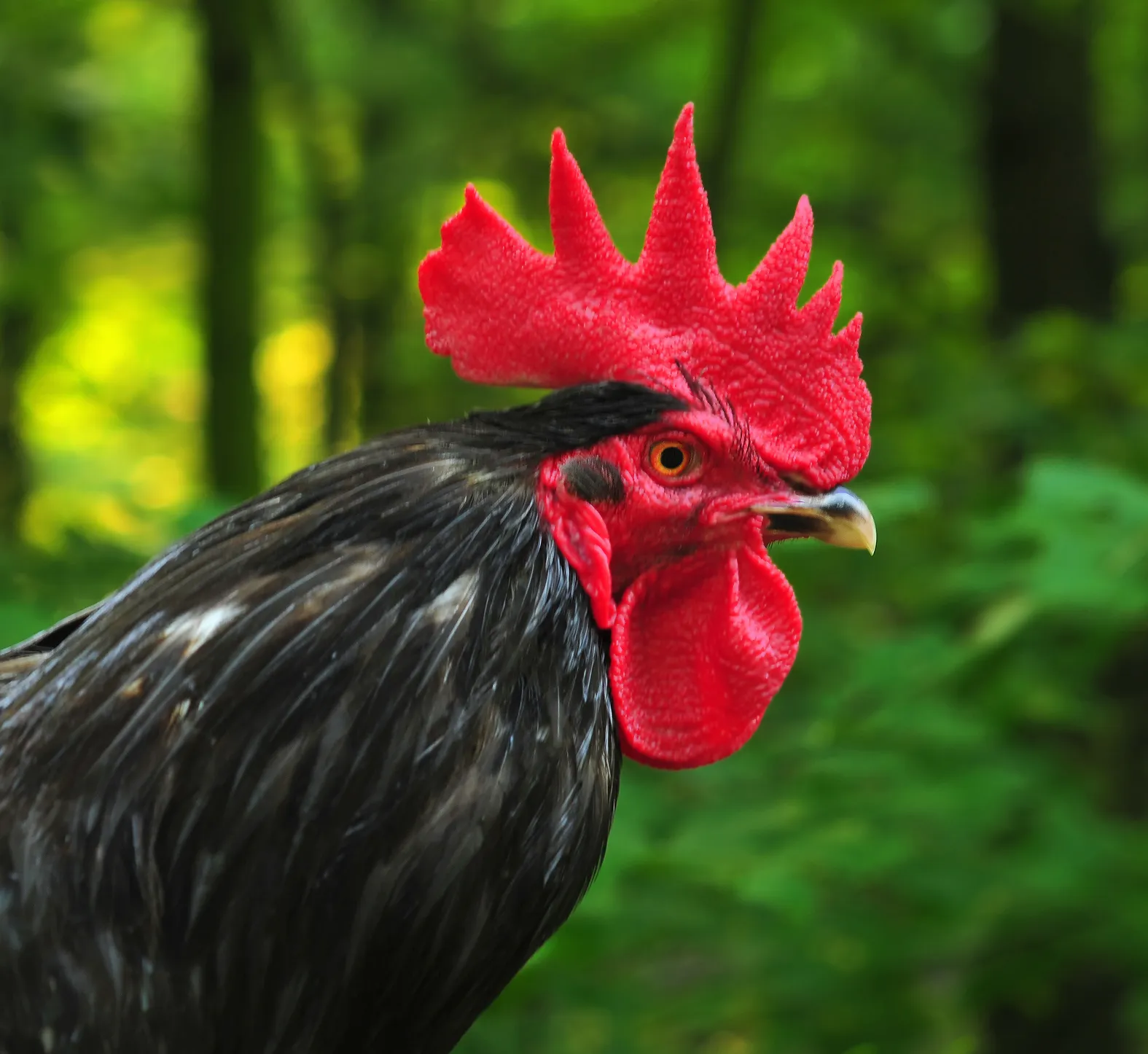
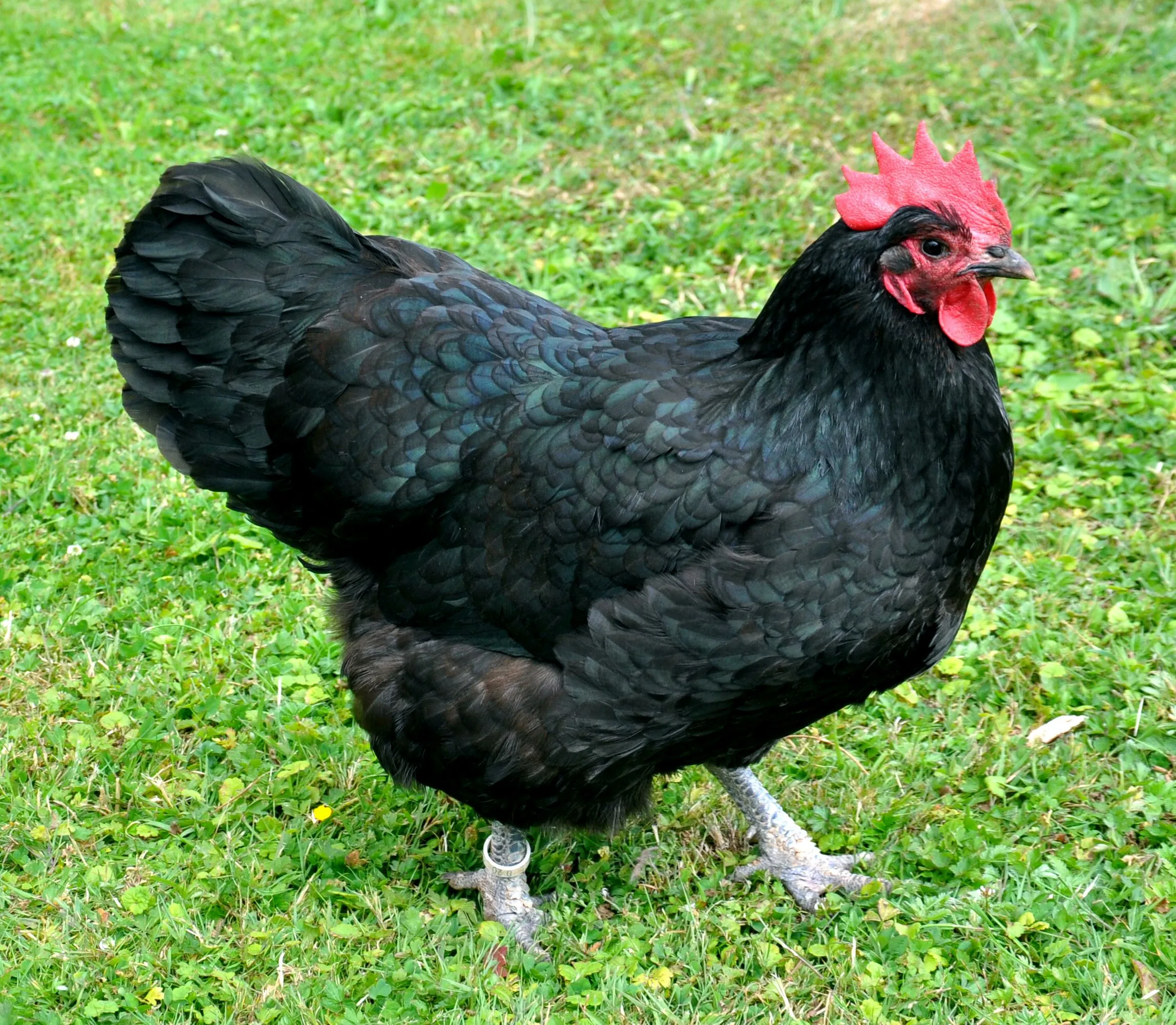
The Australorp is Australia’s answer to a practical question: can you take an English Black Orpington and breed it harder for eggs without throwing away a useful dual-purpose body? The Livestock Conservancy traces the foundation stock to Black Orpingtons from the yards of William Cook and Joseph Partington, imported into Australia between about 1890 and 1900. In England in that same period, Black Orpingtons were being refined toward meat type. Australian breeders kept the earlier utility emphasis and, with egg production as the singular goal, outcrossed to Minorca, White Leghorn, and Langshan — the same kind of practical crossing William Cook himself had used when creating the Orpington. The result, the Conservancy notes, was an excellent production chicken that little resembled the Orpingtons bred elsewhere.
Oklahoma State University’s breed page states the same core origin more briefly: developed in Australia from Black Orpington stock, smaller than the Orpington, with a trimmer appearance. OSU does not retell the 1890–1900 import window or the Minorca/Leghorn/Langshan outcrosses on its page; those details come from the Conservancy.
Contest laying put the breed on the world map. The Conservancy records a 1902 winter contest at Hawkesbury Agricultural College in which Australian-bred Black Orpingtons took seven of thirteen top placements among 41 pens — an early signal of what the type could do. By 1922–23, “Australian Laying Orpingtons” were setting records. At Geelong, Victoria, a pen of six hens laid 1,857 eggs in 365 days — an average of 309.5 each. At Grafton in 1923–24, one hen laid 347 eggs in 365 days. A Burns-bloodline hen then laid 354 in twelve months. Another hen set a still-famous mark: 364 eggs in 365 days. Oklahoma State University independently states that Australorps “hold the world’s record for egg production with one hen having laid 364 eggs in 365 days under official Australian trap-nest testing.” Those two institutional pages agree on the 364-in-365 figure and on Australian official testing as the setting. They do not name the same individual hen or give an identical contest calendar on the OSU page; the Conservancy supplies the Geelong / Grafton / Burns sequence. Treat 364 as a verified contest-trial outlier, not a backyard planning number.
Five primary Australorp bloodlines — Graham, Burns, Christie, Bertelsmeier, and Drewitt — were developed between about 1900 and 1922, per the Conservancy. Breeders worked from Cook’s general type while competing hard on lay, and they bred to reduce broodiness, which the Conservancy links to the breed’s commercial success and its separation from Orpington identity. Early export names struggled: Australs, Australian Utility Black Orpingtons, Australian Laying Orpingtons. The Conservancy says the name settled as Australorp in the early 1920s. Birds reached England and America in that decade; the American Poultry Association recognized the breed in the Standard of Perfection in 1929 (Conservancy; also stated on Cackle Hatchery’s Black Australorp product page, labelled here as hatchery confirmation of the APA year, not as the primary source).
OSU notes a Midwestern commercial chapter in the 1930s–40s: the AustaWhite cross (Australorp × White Leghorn) briefly succeeded purebreds on many farms before falling to inbred hybrids such as Hyline and DeKalb. Broodiness in the cross and market discounting of tinted eggs were part of why that cross faded — an OSU-specific detail not repeated on the Conservancy breed page.
In the United States the Conservancy lists only the black variety as found, while noting other colors exist outside the U.S. OSU’s variety line lists Black, Blue laced, and White. That is a soft disagreement on what “counts” for U.S. keepers: Conservancy emphasizes the APA black; OSU prints additional color names without claiming APA status for each.
The Australorp graduated from the Livestock Conservancy’s Conservation Priority List in 2023 (breed page). The Conservancy’s 2026 Conservation Priority Poultry Breeds PDF does not list Australorp among Critical / Threatened / Watch / Recovering chickens — consistent with graduation. Separately, the Conservancy’s own 2026 Heritage Chicken Breed Comparison Chart still prints Australorp with CPL status Recovering and still carries a full breed row. Those Conservancy documents disagree with each other. This profile follows the breed page + 2026 CPL (graduated / not listed), the same choice already documented on Flockmath’s Australorp egg guide; the chart’s “Recovering” label is named, not silently preferred.
Care
Standard weights on Conservancy and OSU pages match each other and match Cackle Hatchery’s printed weights: males 8.5 lb, females 6.5 lb (OSU and Cackle also list cockerel 7.5 / pullet 5.5). Flockmath’s breed table matches: hen 6.5 lb, rooster 8.5 lb. For coop-space numbers by flock size, use the coop size calculator; those figures already reflect this breed’s standard size class.
Climate is where institutional language is usefully specific. The Conservancy’s breed page warns that because of their black color, Australorps “do best if they have ample shade in warm weather so they don’t get overheated,” while also describing them as productive dual-purpose birds that forage and can fatten if kept only in confinement. The Conservancy comparison chart states they “do well in both cold and heat.” Utah State University Extension groups Australorp among breeds suited to cold weather and tags the breed “gentle, quiet” with excellent lay. University of Minnesota Extension’s cold-weather page names heavier breeds that over-winter well (Plymouth Rock, Wyandotte, Ameraucana, Orpington) and does not list Australorp by name — so we are not claiming a UMN Australorp-specific winter endorsement. Flockmath’s climate rating of all sits with the Conservancy chart’s hot-and-cold line, with the breed-page shade caveat treated as the practical summer rule for a black bird.
The breed carries a moderately large red single comb with no more than seven points (Conservancy). Extension frostbite guidance for single-comb birds still applies: Poultry Extension (Dr. Jacquie Jacob, University of Kentucky) flags combs, wattles, and toes, damp bedding, and poorly ventilated cold coops; University of Minnesota Extension likewise ties frostbite to moisture plus cold and recommends wooden roosts over metal or plastic. Australorp hardiness does not cancel comb care on hard-freeze nights.
Conservancy management notes worth keeping visible: they do well in confinement if also allowed some foraging; exclusive confinement can lead to fat birds; they enjoy foraging. Provide shade, airflow, and cool water in heat — Conservancy and hatchery guidance agree on that summer point (Cackle labelled as hatchery).
Temperament
The Conservancy lists temperament as “active, yet gentle,” calls them friendly (even the roosters), good with children who show in 4-H, and suitable with other breeds of like temperament. Utah State University Extension’s table tags Australorp “gentle, quiet” and includes the breed among options noted for children and family. Cackle Hatchery (hatchery guidance) echoes “active yet gentle” and markets the breed as beginner- and family-friendly. Flockmath’s calm / quiet / beginner-friendly fields sit inside that institutional band.
Broodiness is the soft conflict to leave visible. Conservancy history says early lines were bred to eliminate broodiness — and the same Conservancy breed page says Australorps are “generally considered good sitters and mothers.” The Conservancy comparison chart lists brooding/mothering as Setters. Cackle’s product facts print Broody: No, while Cackle FAQ copy on the same site says they may go broody. Flockmath records occasionally. That is a multi-source disagreement, not a single wrong number. We are not changing breeds.json here; keepers should not read “occasionally” as never, or Conservancy “good sitters” as a guarantee for every hatchery pullet.
Health
Neither Conservancy nor OSU flags a breed-specific disease unique to Australorps beyond ordinary chicken-keeping risks. Stating that gap is better than inventing a health chapter. The recurring management points are summer heat on black plumage (shade) and single-comb frostbite risk in wet cold — both housing and husbandry, covered under Care. If frostbite occurs, University of Minnesota Extension recommends consulting a veterinarian; severe untreated frostbite can mean permanent loss of comb, wattle, or foot, and pecking of injured tissue by flock mates may require isolation.
Beyond that, the breed’s documented productivity and dual-purpose farm history are resilience signals in the sourced literature, not immunity to parasites, respiratory problems from damp coops, or other cross-breed risks.
Record Layer, Everyday Flock Bird: The Bottom Line
If you want heritage-tier brown-egg production without jumping to a modern hybrid, the Australorp is one of the clearest institutional recommendations available. Flockmath’s planning figure of 280 eggs per year sits inside Utah State University Extension’s 250–300 band, above the Conservancy’s backyard floor of 250+, and at the top of Cackle Hatchery’s 250–280 hatchery estimate band (labelled as hatchery guidance). Oklahoma State does not publish a competing typical annual figure on its breed page — only the 364-in-365 contest record under official Australian trap-nest testing, which the Conservancy also documents as part of the 1920s Australian laying-contest story. 364 is history and proof of genetic ceiling under contest conditions; 250–300 is the honest backyard planning band; 280 is Flockmath’s Normal inside that band.
Expect a calm, quiet, beginner-friendly black bird with a beetle-green sheen (OSU), dual-purpose body, and a summer shade requirement. Ask whether you are buying a production-leaning or exhibition-leaning strain if you are chasing the top of the band. Plan for occasional broodiness rather than none, given Conservancy “good sitters” language, even though early breeding aimed to reduce broodiness and some hatchery sheets print Broody: No. In winter, manage the single comb like any comparable breed; in heat, prioritize shade because the plumage is black.
Either way, you are getting Australia’s utility Orpington descendant — APA-recognized since 1929, famous for contest records that still define the breed’s reputation, and a 2023 Conservancy graduate whose breed page and CPL no longer list it as a priority concern, even while one Conservancy comparison chart still prints “Recovering.”
Sources
- Breed history, bloodlines, contest-laying sequence including 364 eggs/365 days, APA 1929, weights, temperament, broodiness tension, confinement/foraging/shade notes, U.S. black-only variety note, CPL graduation 2023: The Livestock Conservancy — “Australorp Chicken.”
- 2026 CPL (Australorp absent after graduation): The Livestock Conservancy — 2026 Conservation Priority Poultry Breeds PDF.
- Internal Conservancy conflict — chart still prints Recovering / Setters / 250+ lay / both climates: The Livestock Conservancy — Heritage Chicken Breed Comparison Chart (2026).
- Origin from Black Orpington, beetle-green sheen, AustaWhite cross history, 364-egg trap-nest record, standard weights, varieties (Black, Blue laced, White): Oklahoma State University — “Australorp Chickens.” (Fetched via Wayback Machine capture 5 March 2026, 14:52:36 UTC, timestamp
20260305145236, after direct fetch timed out.) - Egg-count range 250–300, temperament/family tags, cold-weather grouping: Utah State University Extension — “Managing Chickens From Chicks to Peak Egg Production.”
- Frostbite moisture/ventilation/comb care (single-comb breeds generally); winter breed list does not name Australorp: University of Minnesota Extension — “Caring for Chickens in Cold Weather.”
- Comb frostbite risk and prevention: Poultry Extension — “Frostbite in Chickens,” Dr. Jacquie Jacob, University of Kentucky.
- Hatchery guidance (labelled as such): Cackle Hatchery — Black Australorp — egg estimate 250–280; weights matching Conservancy/OSU; Broody: No on the facts table; FAQ elsewhere on the same site says hens may go broody; TLC: Not Listed; APA 1929.
Ours: framing Flockmath’s 280 as the Normal inside Conservancy 250+ / USU 250–300 / Cackle 250–280, while treating Conservancy/OSU’s 364-in-365 figure as contest history rather than a planning target; naming the Conservancy breed-page/CPL vs Pick-a-Breed “Recovering” conflict; and naming the broodiness multi-source disagreement (eliminate broodiness / good sitters / Setters / Cackle No vs FAQ / Flockmath occasionally) without forcing a single verdict.