
standard breed · France
Salmon Faverolles
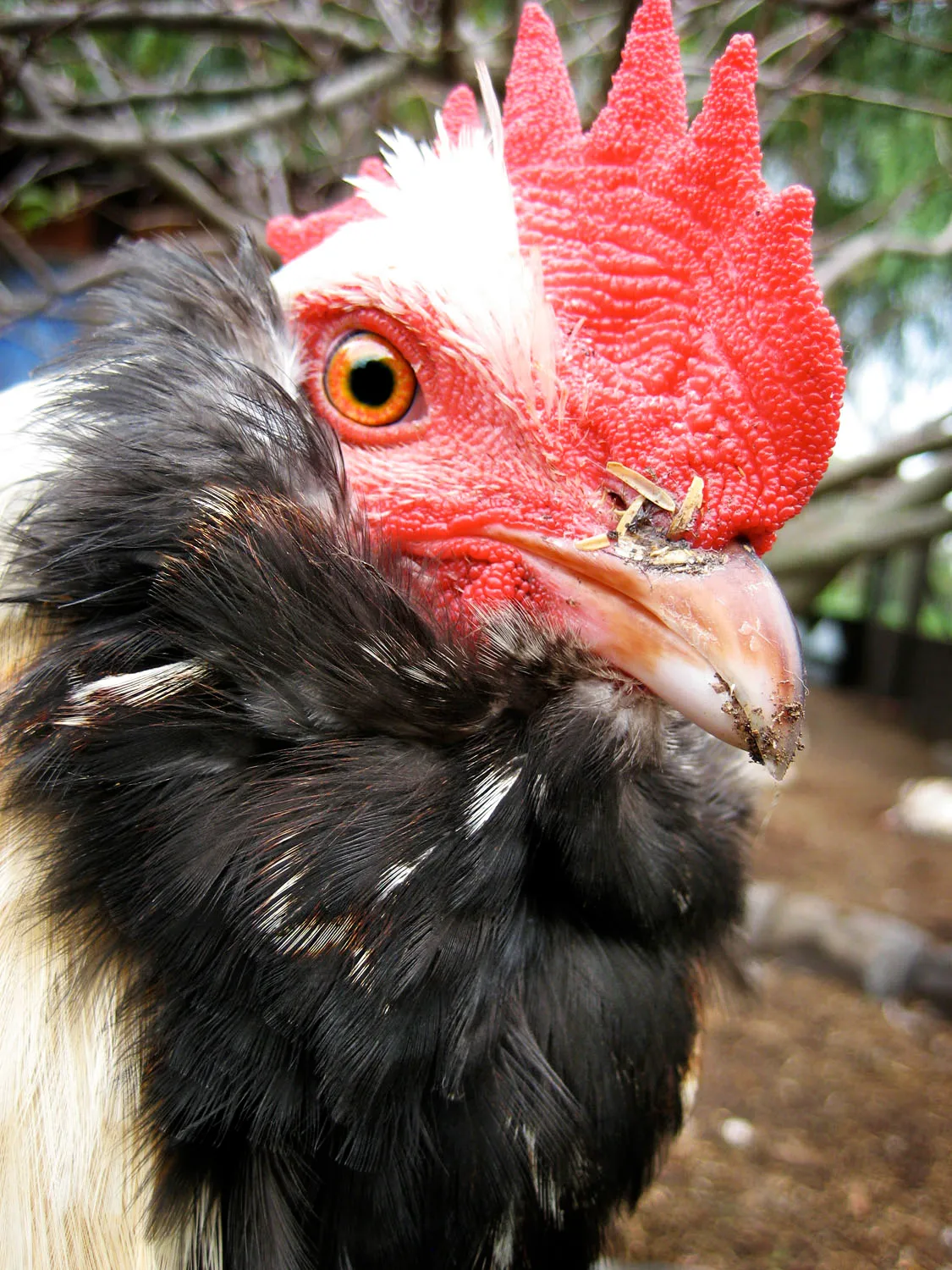
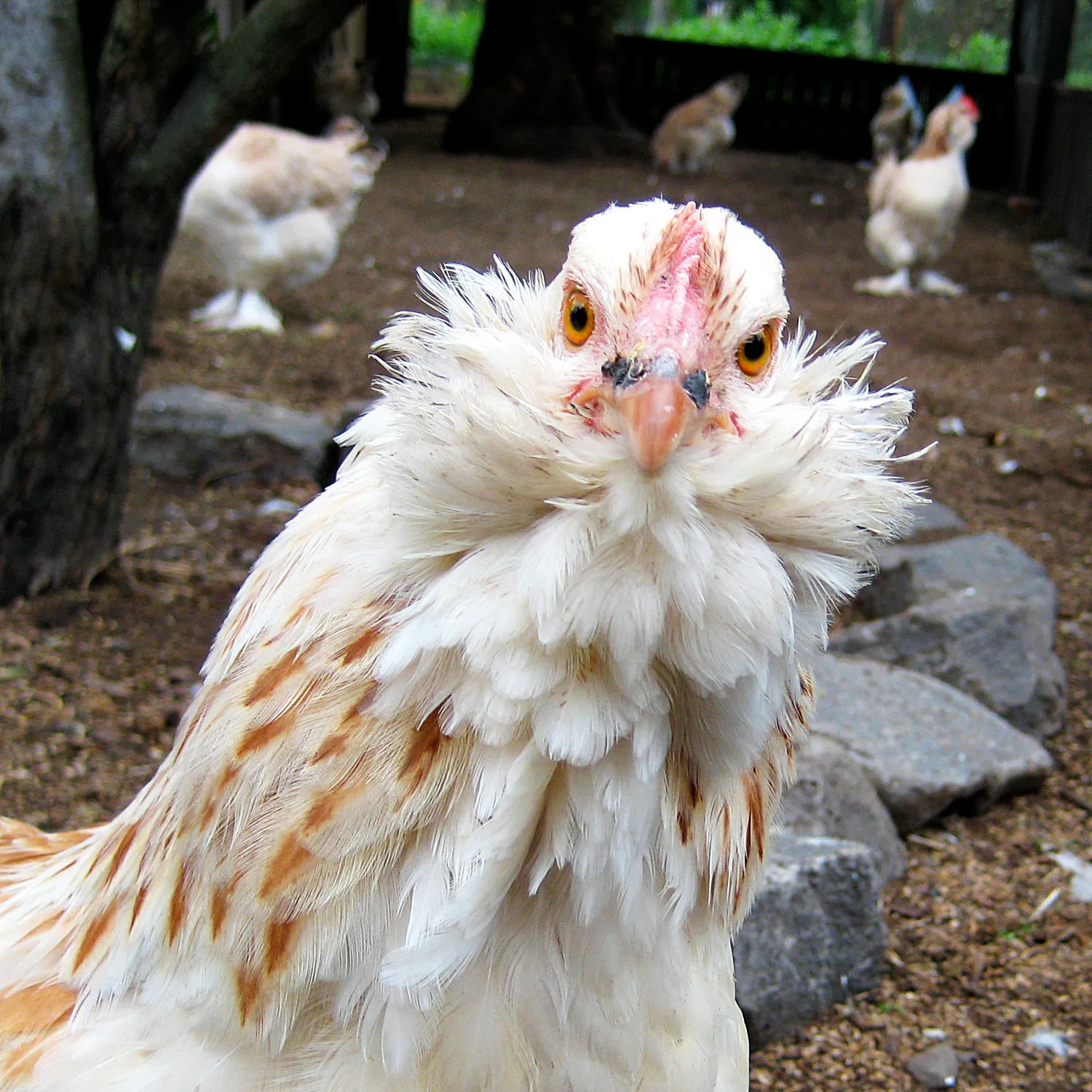
Beard, muffs, feathered legs, and five toes — and a personality so gentle they're often bullied by more assertive breeds. Best kept with other docile birds.
| Size class | standard |
|---|---|
| Weight (hen) | 6.5 lb (2.95 kg) |
| Weight (rooster) | 8 lb (3.63 kg) |
| Eggs per year | 180 |
| Egg color | tinted cream |
| Egg size | medium |
| Climate tolerance | cold |
| Temperament | gentle |
| Goes broody | often |
| Noise level | quiet |
| Beginner-friendly | Yes |
| Origin | France |
Is the Salmon Faverolles right for your flock?
The Salmon Faverolles is a standard breed that's well-suited to first-time keepers. Hens lay around 180 tinted cream eggs per year and tolerate cold climates well.
Temperament: gentle. Broodiness: often. Noise level: quiet. A reasonable choice for suburban yards.
What this breed needs
- Coop space: about 4 sq ft per bird inside the coop. Run the numbers for your specific flock size in the coop size calculator.
- Climate fit: particularly comfortable in cold climates with good winter laying.
- Eggs: a steady, reliable producer — a good general-purpose layer. For a month-by-month breakdown, see How Many Eggs Does a Salmon Faverolles Lay Per Year?.


History
Salmon Faverolles is the APA’s flagship color of Faverolles — a French dual-purpose breed named for the village of Faverolles (Eure-et-Loir), southwest of Paris — bearded, muffed, five-toed, feather-legged, and built for Paris winter markets. Most institutional history is written for Faverolles as a breed; Salmon is named where sources single it out.
The Livestock Conservancy breed page (fetched this pass) is the primary U.S. institutional history. Development crossed Houdan, Brahma, French Rennes, Flemish Cuckoo, Malines, and Dorking, then selected for production. A consistent type emerged by about 1886; early-1900s writers called it among the best French breeds yet produced. England 1894; Dr. A.H. Phelps of Glen Falls, NY, imported to America 1901/1902. APA: Salmon 1914, White 1981. Conservancy: Salmon is a unique color pattern found only on Faverolles — males a light Golden Duckwing type, females a light Wheaten type; when most keepers say “Faverolles,” they mean Salmon.
Oklahoma State University (Wayback 30 December 2024, 20241230072201): France ~1800s; same ancestor list (plus Cochin in OSU’s theorized set); U.S. early 1900s; APA Salmon 1914, White 1981; winter laying when others stop. UW–Madison Skinner (A2880, re-fetched): developed in Faverolles from Houdans, Dorkings, and Asiatics; Salmon and White; winter laying as an original purpose; chiefly ornamental with some utility.
French club. The Houdan–Faverolles–Mantes Club de France (HFMCF, houdanfaverollesclub.free.fr) publishes the French large-fowl standard (fetched): origin Faverolles village; farm hens crossed with Brahma, Houdan, Dorking, Cochin, Langshan; standard homologué 1930; “owl head” (tête de hibou) with beard and muffs; lightly feathered pinkish-white shanks; five well-separated toes; selected for fine flesh, early lay, and plumage. Froment argenté (silver-wheat / Salmon) is described in full cock/hen color language. Minimum hatching-egg weight 55 g; shell lightly pinkish (légèrement rosée). Mass: cock 3.5–4 kg, hen 2.8–3.5 kg. Club pages distinguish Faverolles française from Faverolles allemande (German Lachshuhn) — U.S. Salmon profiles track the French/APA line, not the German national test floor.
Conservation status — Conservancy materials disagree. Top facts box on the live breed page: Watch. Lower facts box on the same page: Threatened. Pick-a-Breed chart 2026: Threatened. 2026 CPL PDF: Faverolles (W) Watch. This profile follows the CPL — Watch — and names the Threatened cells as internal inconsistency (same discipline as New Hampshire Red). Cackle Hatchery (labelled) prints TLC: Watch, matching the CPL. McMurray’s 2023 blog still says “Recovering” from a 2021–22 census — stale against the 2026 CPL Watch line.
Care
Eggs. Conservancy publishes two granularities:
- Breed page: 150 to over 200 tinted eggs/year (light brown to pink tint not unknown); winter egg-laying for the Paris market.
- Pick-a-Breed chart: Very Good; 180–200; tinted to light brown; medium to large.
- OSU: 150–200 light brown; continues in winter when others stop.
- Skinner: light brown shells; winter laying as original purpose — no annual count.
- Cackle Salmon (hatchery): 180–240 (estimates only); light brown to peach.
- French club: lightly pinkish shell; ≥55 g hatching eggs — no annual count.
Flockmath’s 180 sits at the Conservancy chart floor and inside OSU’s band — matching the site’s Salmon Faverolles egg guide. Site egg color tinted cream is a synthesis across Conservancy tinted/pink, OSU/Skinner light brown, and hatchery cream/peach — labelled ours in Sources. Chart egg size Medium to Large vs Flockmath medium sits inside the chart, not against it.
Weights. Conservancy facts box: male 7 / female 5.5. Conservancy body text: males 8 / females 6.5. Chart / OSU / Skinner / Flockmath: 8 / 6.5. French club kg band overlaps the heavier pair. This profile keeps Flockmath 8 / 6.5 with body/chart/extension and names the lighter facts-box pair.
Climate & housing. Conservancy: hardiness and winter eggs; roam/forage but can also do well in confinement; alert. Chart: can do well in any climate; productive with ground contact — “does not like confinement”; comb frostbite note. Those Conservancy documents disagree on confinement phrasing (productivity note on the chart vs breed-page tolerance) — named, as on the egg guide. Flockmath climate cold matches the founding winter-market purpose and heavy feathering; it is narrower than the chart’s “any climate.” Single red comb: Poultry Extension frostbite guidance; UMN moisture + cold. Feathered shanks/toes need dry footing in mud/snow as ordinary feathered-leg husbandry — no Conservancy Faverolles-specific mud disease page fetched.
For coop sizing / egg modeling: coop size calculator and egg production calculator. Calm flock-mate peer: Light Sussex.
Temperament
Conservancy: Active, yet gentle; energetic, adaptable, curious; family breed and beginners; gets along with people of all ages; loudly warn of strange animals. Chart: Docile but Active. Cackle: Active but docile; calm/friendly body copy. Flockmath gentle / beginners aligns with Conservancy gentle + chart Docile.
Bullying / mixed flocks (description claim). Conservancy is silent on bullying. Cackle (hatchery, fetched): because they are so calm, they may sit lower in the pecking order with more assertive breeds — pair with other docile chickens and give enough space/stations. McMurray blog (commercial, fetched): careful putting them into established flocks with strong personalities — can end up bottom of the pecking order and may be bullied. UMN cold-weather page (general, not Faverolles-named): heavier/dominant birds may peck lighter or less dominant flockmates away from feed/water/roost. Soft finding: breeds.json’s “often bullied by more assertive breeds” is hatchery/commercial language, not Conservancy or extension breed text — keep the management advice, do not pretend Conservancy said it. Update: multiple independent hatchery/commercial and forum sources consistently describe this pattern with no contradicting source found. breeds.json’s description is accurate as written and is left unchanged.
Noise. Conservancy’s “loudly warn” sits against Flockmath quiet — named disagreement; no Conservancy “quiet breed” tag was fetched.
Broodiness. Conservancy: some lines excellent sitters and mothers. Chart: Variable. Cackle: Variable. Flockmath often leans sitting-side of that spread without claiming every hen sits every spring.
Health
No Conservancy or extension page flags a Faverolles-specific infectious disease. Honest gap. Management points that are sourced: single-comb frostbite in damp cold; heat stress on a heavily feathered bird (McMurray commercial heat caution — labelled); ground-contact productivity; mixed-flock stress if housed with bullies (hatchery). If frostbite occurs, UMN recommends a veterinarian; severe untreated frostbite can mean permanent tissue loss and may require isolation from pecking.
Gentle French Winter Layer: The Bottom Line
If you want a Watch-status French dual-purpose bird with beard, muffs, five toes, and Salmon’s unique light duckwing/wheaten look, Salmon Faverolles is the Conservancy’s Paris-market winter layer — APA Salmon 1914, French club standard 1930, still the color most keepers mean by “Faverolles.” Flockmath’s 180 eggs/year is the Conservancy chart floor inside OSU’s 150–200, below Cackle’s hatchery 180–240.
Expect gentle, people-oriented manners that hatcheries warn can lose the pecking-order game; build a calm flock (or plenty of space) rather than assuming Conservancy silence means “fine with Reds.” Treat winter eggs as the feature and summer shade as the tax. You are buying owl-headed French utility in salmon dress — not a hybrid layer, and not an unverified “always quiet” bird when Conservancy says they sound the alarm.
Sources
- History (ancestors; ~1886 type; England 1894; Phelps 1901/1902; APA Salmon 1914 / White 1981; Salmon-only color note); eggs 150–over 200 tinted; winter Paris market; weights facts 7/5.5 vs body 8/6.5; Active yet gentle; family/beginners; confinement OK; loudly warn; some lines sitters; Watch vs Threatened facts boxes: The Livestock Conservancy — Faverolles Chicken
- Chart: Threatened cell; M 8 / F 6.5; Very Good 180–200; Docile but Active; Variable brooding; any climate; ground contact / confinement note; frostbite: Heritage Chicken Breed Comparison Chart (2026)
- CPL Watch: 2026 Conservation Priority List — Poultry (
Faverolles (W)). - French club standard (1930; froment argenté; owl head; five toes; pinkish eggs ≥55 g; weights kg): HFMCF — Standard Faverolles française Grande Race; club hub houdanfaverollesclub.free.fr
- OSU (150–200 eggs; winter lay; 8/6.5; APA years; five toes/beard/muffs): Oklahoma State University — Faverolles Chickens (Wayback 30 December 2024,
20241230072201). - Skinner A2880 — Salmon/White; 8 / 6½; winter laying purpose; morphology: UW–Madison Extension — A2880
- Frostbite / winter moisture; general mixed-flock dominance pecking note: UMN Extension — Caring for Chickens in Cold Weather
- Single-comb frostbite: Poultry Extension — Frostbite in Chickens
- Hatchery (labelled): Cackle Hatchery — Salmon Faverolle — 180–240 eggs; APA 1914; TLC Watch; Broody Variable; Active but docile; pecking-order / assertive-breed caution; weights 6.5 / 8.
- Commercial (labelled): Murray McMurray Hatchery Blog — Breed Spotlight: Salmon Faverolles — 180–200 eggs; bullying/pecking-order warning; occasionally broody; stale “Recovering” status claim; heat caution.
Ours: framing Flockmath’s 180 as Conservancy chart floor while naming page 150–over 200, OSU 150–200, and Cackle 180–240; treating 2026 CPL Watch as authoritative over Threatened cells; naming Conservancy weight and confinement-language internals; verifying bullying only to hatchery/commercial sources and Conservancy silence — flagging the breeds.json description for the description audit; naming Conservancy “loudly warn” vs Flockmath quiet; naming climate cold vs chart any-climate; synthesizing tinted cream across shell-color adjectives; and leaving breeds.json numbers unchanged this pass. (Update: investigated — no contradicting source found; breeds.json’s bullying claim is left unchanged.)