
heavy breed · China
Cochin
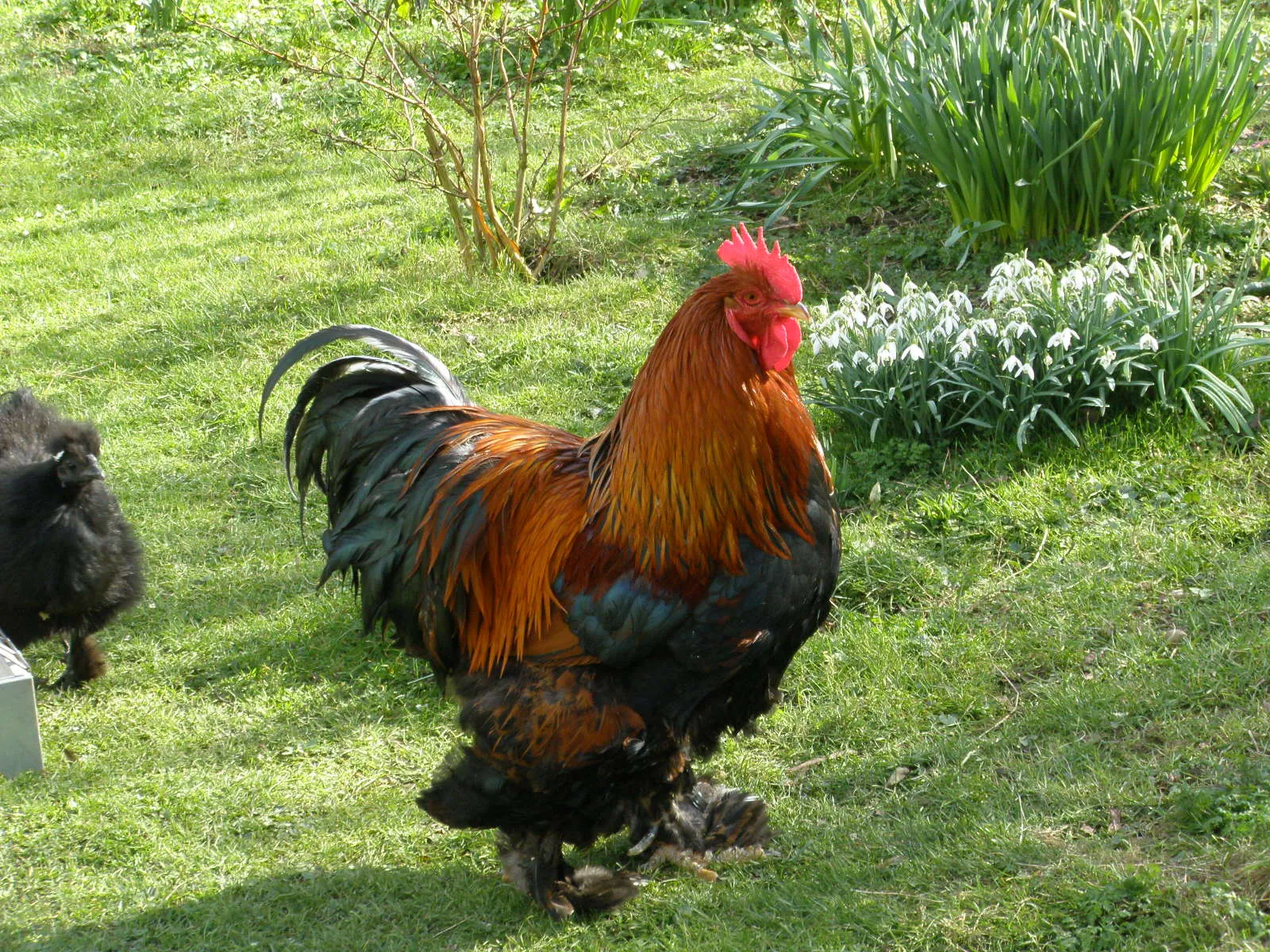
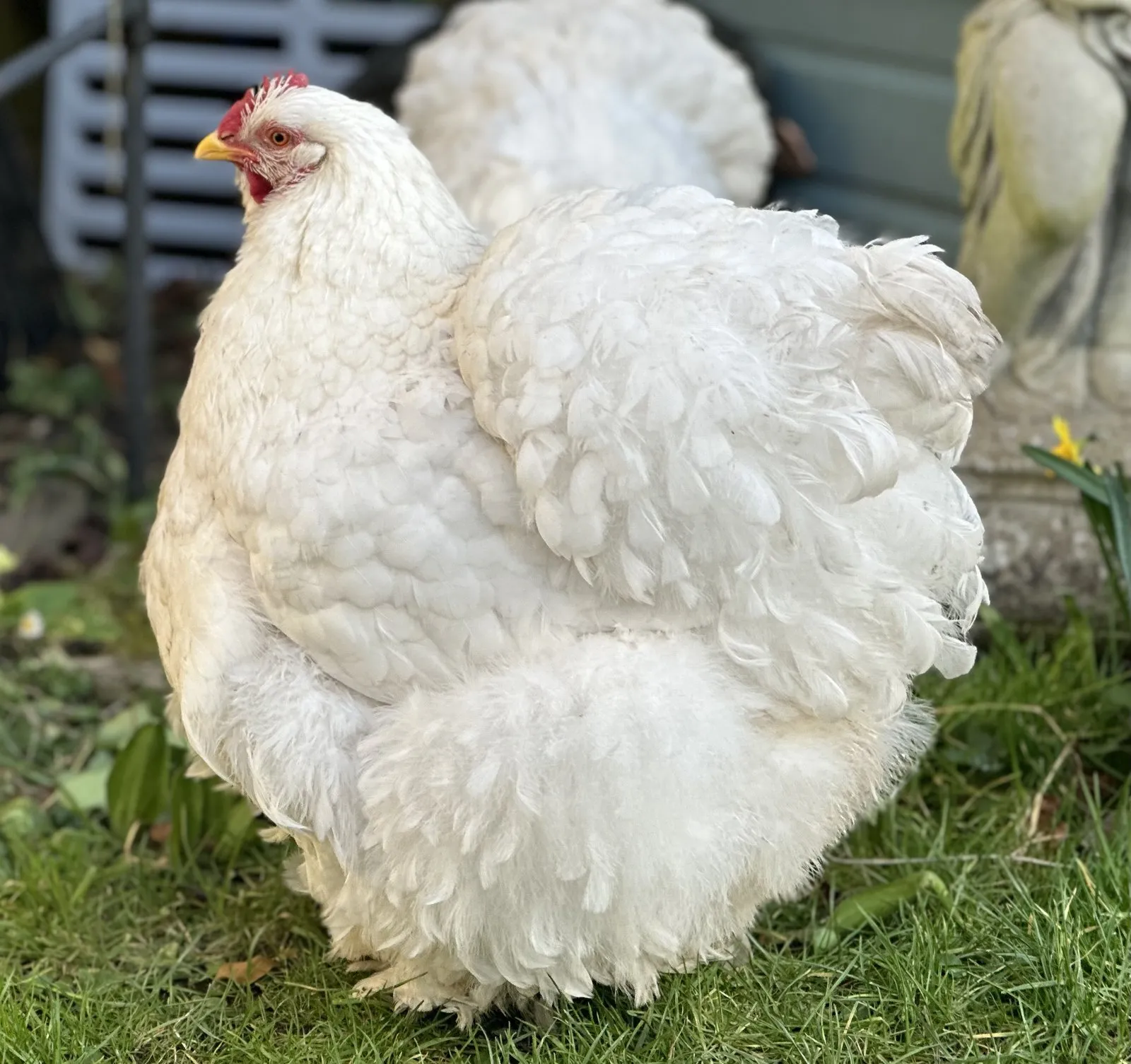
Round, heavily-feathered, and unmistakable. Cochins are calm to a fault and reliable broodies — many keepers use them to hatch eggs from other breeds.
| Size class | heavy |
|---|---|
| Weight (hen) | 8.5 lb (3.86 kg) |
| Weight (rooster) | 11 lb (4.99 kg) |
| Eggs per year | 160 |
| Egg color | brown |
| Egg size | large |
| Climate tolerance | cold |
| Temperament | docile |
| Goes broody | very often |
| Noise level | quiet |
| Beginner-friendly | Yes |
| Origin | China |
Is the Cochin right for your flock?
The Cochin is a heavy breed that's well-suited to first-time keepers. Hens lay around 160 brown eggs per year and tolerate cold climates well.
Temperament: docile. Broodiness: very often. Noise level: quiet. A reasonable choice for suburban yards.
What this breed needs
- Coop space: about 5 sq ft per bird inside the coop. Run the numbers for your specific flock size in the coop size calculator.
- Climate fit: particularly comfortable in cold climates with good winter laying.
- Eggs: a moderate layer — picked more for personality, looks, or broodiness than raw output. For a month-by-month breakdown, see Cochin Egg Production: How Many Eggs Per Year?.


History
The Cochin arrived in the West as a spectacle, and the institutional sources still describe it that way. The Livestock Conservancy places its development in Shantung Province north of Shanghai, where it was originally called “Ju-chin,” meaning “nine picules” — a picule being roughly 1¼ pounds. “Importation records of Cochins (sometimes called Shanghai chickens) go back to about 1846,” the Conservancy writes, though it notes the birds likely reached America decades earlier.
The three institutional sources give three different origin datings, and none is obviously wrong. Oklahoma State says “the Cochin originates from China in the Shanghai province, in 1840.” The Conservancy points to Shantung Province — a different province — with import records from about 1846. The Poultry Club of Great Britain writes that the breed “originally came from China in the early 1850s, where it was known as the Shanghai, and later still as the Cochin-China.” Some of that spread is the difference between when birds first moved and when records began, but the province disagreement is real and we have not resolved it.
What all sources agree on is the effect. Imported birds were given to Queen Victoria in England, “starting what became known as ‘hen fever’” (Conservancy) — and Oklahoma State names the co-conspirator directly: “Along with the Brahma, the Cochin was part of the reason for ‘Hen Fever,’ a crazy over chicken breeds in the United States and England around the mid-1800’s.” The two breeds that most often get mistaken for each other today entered Western consciousness as a joint craze. The Light Brahma profile tells the other half of this story, including the nine birds sent to Queen Victoria in 1852.
The Poultry Club of Great Britain supplies the most consequential sentence in the breed’s history, and it explains the egg numbers further down this page. On arrival the Cochin “created a sensation in this country in poultry circles because of its immense size and table properties. Moreover, it was an excellent layer.” Then: “It was developed, however, for wealth of feather and fluff for exhibition purposes to the extent that its utility characteristics were neglected, if not made impossible, in winning types.” That is a breed club stating plainly that show selection was allowed to break the bird’s usefulness. Cochins International, the American breed club, states its own mission as “The Advancement of Exhibition Cochins” — the exhibition emphasis is not a lapse, it is the declared purpose.
The Cochin was admitted to the American Poultry Association’s Standard of Perfection in 1874. The Conservancy lists nine colours “in order of their development”: Buff, Partridge, White, Black, Silver Laced, Golden Laced, Blue, Brown, and Barred. Oklahoma State and UW–Madison’s Skinner (A2880) list the same nine; Cochins International gives acceptance dates spanning 1874 to 1982 for large fowl. breeds.json treats Cochin generically rather than naming one colour, so this profile stays at breed level — the same discipline applied to Light and Speckled Sussex, in reverse.
One transatlantic split is worth knowing before you shop. Cochins International covers “Large Fowl, Bantams and Pekins,” and lists eighteen bantam varieties accepted between 1874 and 2018 — many more colours than the large fowl standard. Oklahoma State likewise notes “There are also Bantam Varieties.” The Poultry Club of Great Britain says flatly: “There are no Cochin bantams.” In Britain the small feather-legged bird is the Pekin, treated as its own breed. This page is about large fowl.
On the Conservancy’s 2026 Conservation Priority List, Cochin is listed as Recovering (R) under “Breeds Imported Before 1900.” The Conservancy defines Recovering as “breeds once listed in another category, but have exceeded Watch category numbers, and still need monitoring.” Its 2026 Heritage Chicken Breed Comparison Chart says Recovering too, as does the breed page — all three Conservancy documents agree here, which is worth noting given how often they have not on this site.
Care
Weights. This is the cleanest data point on the page: the Conservancy, Oklahoma State, Skinner’s A2880, and the 2026 comparison chart all give males 11 lb and females 8.5 lb, matching Flockmath’s breed table exactly. OSU and Skinner add cockerel 9 lb and pullet 7 lb. No source disagrees. For flock sizing use the coop size calculator.
Skinner puts the shape better than we could: “Cochins are literally big, fluffy balls of feathers,” with “profuse leg and foot feathering.” The Conservancy is precise about how far that feathering goes — “the feathering extends down the legs to the feet and toes, with only the inner two toes being naked.” Oklahoma State calls the Cochin “one of the largest breeds of Chickens.”
The single comb changes the winter maths. Cochins have “small rounded single combs in hens and medium size in roosters” with red earlobes (Conservancy); OSU confirms “single combs with red wattle and earlobes.” This is the sharpest practical difference from the Brahma, and it cuts the other way. Poultry Extension (Dr. Jacquie Jacob, University of Kentucky) states that “the incidence of frostbite in chickens with the smaller comb types, such as pea and strawberry, is much less” — a protection the pea-combed Brahma gets and the single-combed Cochin does not. The Cochin’s cold hardiness rests on feathering, not on comb shape, so the comb stays exposed.
Cold hardiness itself is well supported: “profuse feathering makes them an ideal choice for colder climates” (Conservancy), “Best in cold climates” (2026 chart), and OSU’s “fluffy fowl with a thick of feathers… well protected in winter conditions.” Flockmath’s cold climate field follows those. Frostbite prevention is housing, not breed: University of Minnesota Extension ties it to coop moisture and recommends wooden roosts over metal or plastic “that retain the cold,” and Poultry Extension advises increasing ventilation if there is morning condensation on windows or walls. An honest gap — UMN’s cold-weather page names Plymouth Rock, Wyandotte, Ameraucana, and Orpington as heavy breeds that over-winter well, and does not name Cochin.
Mud is the breed-specific problem, and every source says so. The Conservancy warns about frostbite in muddy conditions and requires dry ground. The 2026 chart’s note reads: “Excellent broody breed, especially for turkey and duck eggs; needs to be kept on well-drained soils.” OSU: “The feathers around the shanks tend to collect dirt, especially during rain, therefore a dry area is needed with these fowl.” Skinner is the most actionable — Cochins are “well suited to close confinement” and should be shut in “on wet days and where yards become muddy” to prevent feather matting. Wet feet on a feather-legged bird in freezing weather is the failure mode all four are circling. The same husbandry applies to Salmon Faverolles and the Light Brahma.
Heat is the real risk, and here two institutional sources disagree. The Conservancy states Cochins “suffer in the heat and need shade.” Oklahoma State says the opposite in passing: “This fowl, much like the Brahma, is fine in different conditions.” Given that the Conservancy’s own chart limits the breed to cold climates and that this is a bird whose entire selling point is a dense feather mass, we follow the Conservancy — but OSU’s line is on the record. No source publishes Cochin-specific heat thresholds, so the numbers are general: UMN Extension puts the poultry thermoneutral zone at 60–75°F, notes reduced feed intake and production toward 85°F, warns of lethal core temperatures toward 100°F without relief, and reports water intake rising 2–4× under heat stress, with airflow at bird level the first priority.
Confinement suits them, which is unusual among heavy breeds. The Conservancy says they are “not inclined to wander” and “readily accept confinement”; OSU says the breed “does well in closed quarters”; Skinner calls them “well suited to close confinement.” OSU adds a detail keepers can spend money on: “These fowl are not known to be at flight risk, so a tall fence is unnecessary.”
Temperament
The institutional language here is the warmest on this site. The Conservancy describes “extremely gentle dispositions” and birds that are “easily tamed.” OSU: “The Cochin has a calm disposition.” The 2026 chart tags temperament simply Docile. Flockmath’s docile field is fully supported, and breeds.json’s “calm to a fault” is a fair reading of “extremely gentle” rather than an invention.
Beginner suitability is verified here in a way it could not be for the Brahma. Because Cochin still appears on the 2026 comparison chart, it carries an owner-experience rating, and that rating is Novice. Flockmath’s good_for_beginners: true rests on an actual Conservancy column, not on inference.
Broodiness is where this breed is not merely docile but exceptional. The Conservancy: “As a broody fowl, they have no equal.” Hens “will hatch more than one batch per year, if allowed,” and are “considered the best fowls for hatching and brooding ducks and turkeys.” The 2026 chart classes them Setters and notes they are an “excellent broody breed, especially for turkey and duck eggs.” Skinner says Cochins “exhibit extremely persistent broodiness, are good mothers,” and are “frequently used as foster mothers” — indeed A2880 frames the breed as “mainly an ornamental fowl, but their ability as mothers is widely recognized.” OSU: “just like the Brahma, the Cochin does go broody.”
Flockmath records broodiness as very often, corrected from a prior often that undersold “no equal” and “extremely persistent.” The Light Brahma field was corrected the same direction for the same reason — both breeds’ data understated what their own institutional sources say; an earlier draft of this page claimed the Brahma’s field over-promised broodiness instead, which was backwards, and is corrected here. The breeds.json description’s claim that “many keepers use them to hatch eggs from other breeds” is the best-verified description claim we have checked — three independent institutional sources say it, and two name turkey and duck eggs specifically. If you want a living incubator, plan around the incubation calendar.
One field has no institutional backing. Noise: no Conservancy, extension, or club page we fetched rates Cochin noise at all. Flockmath’s quiet is unsupported here — and unlike the Brahma, we could not even reach a hatchery page to attribute it to.
Health
No Conservancy, extension, or club page we fetched names a disease or genetic condition specific to Cochins. Stating that gap is better than inventing a breed-health narrative, the same finding recorded for Plymouth Rock, Faverolles, and Light Brahma.
The documented risks follow from the feathering. The first is scaly-leg mites. Poultry Extension’s external-parasites page describes Knemidokoptes mutans living “under the scales on birds’ legs and feet,” making legs “thick and crusty,” and warns that in severe cases “the blood supply to the toes may be cut off, and the bird may lose toes.” Treatment is coating the leg with petroleum jelly or dipping in linseed oil to suffocate the mites, plus treating the house, nesting area, roosts, and crevices. The same limit applies as on the Brahma page: that source does not say feather-legged breeds are at higher risk, and no institutional source we found does. The reason to inspect a Cochin’s legs deliberately is that the Conservancy’s own description — feathering down to the toes, with only the inner two toes bare — leaves very little bare scale visible to inspect.
The second is feather matting and frostbite from wet ground, covered under Care because the fix is drainage and dry housing, not treatment. If frostbite occurs, Poultry Extension advises soaking frostbitten feet in slightly warm water to bring the temperature back slowly, and UMN recommends veterinary advice.
The third is heat, also under Care. On a bird the Conservancy says suffers in heat, shade and airflow are health measures, not comfort measures.
Worth flagging as a management reality rather than a disease: the Conservancy notes hens “will hatch more than one batch per year, if allowed.” A hen who broods repeatedly is not laying, is eating less, and loses condition over a long sit. Persistent broodiness is this breed’s most likely welfare issue precisely because it is also its most celebrated trait.
Feather-Legged Foster Mother: The Bottom Line
If you want a calm, cold-hardy, confinement-tolerant bird that will hatch anything you put under her, the Cochin is the breed the Livestock Conservancy rates as having “no equal” for brooding — a Recovering Asiatic heavyweight at 11 lb and 8.5 lb, Novice-rated, and unmistakable in shape.
On eggs, the Conservancy disagrees with itself and you should know it. The breed page says Cochins “supply 150-200 medium/large brown eggs per year” — carrying the crucial qualifier when not brooding. The 2026 comparison chart rates the same breed “Fair; up to 140.” Those two Conservancy documents cannot both be a ceiling. Flockmath’s planning figure of 160 sits comfortably inside the breed page’s band and above the chart’s ceiling; we follow the breed page because its “when not brooding” qualifier explains the whole spread, and because our Cochin egg guide is already built on that reading at ~160 Normal. Model your own flock with the egg production calculator, then subtract the weeks she sits.
Two more numbers to plan around. The Conservancy warns the breed “is slow to develop and may not begin laying until they are about 8 months old” — roughly two months later than a production pullet, and OSU adds that “the plumage on Cochin comes at a slow pace.” And the reason the egg figure is modest at all is documented, not mysterious: the Poultry Club of Great Britain records that a bird which arrived as “an excellent layer” was then bred “for wealth of feather and fluff for exhibition purposes to the extent that its utility characteristics were neglected.” You are buying the outcome of that choice.
Expect, then, a gentle, tameable, non-flighty bird that will not test your fences, wants dry ground far more than it wants space, holds up in cold on feathering rather than on comb shape, needs real shade in summer, and will stop laying to sit on eggs — hers or somebody else’s. Keep her out of the mud and she is one of the easiest birds in this catalogue. Put her on wet clay through a freezing winter and her best feature becomes her worst.
Sources
- History (Shantung Province, “Ju-chin”/nine picules, import records ~1846, Shanghai chickens, Queen Victoria and “hen fever”); APA 1874; nine colours in order of development; weights 11 / 8.5; small rounded single combs in hens, medium in roosters, red earlobes; feathering to the toes with only the inner two naked; 150–200 medium/large brown eggs when not brooding; laying from about 8 months; extremely gentle dispositions, easily tamed, not inclined to wander, readily accept confinement; ideal for colder climates but suffer in heat and need shade; frostbite in muddy conditions; “As a broody fowl, they have no equal,” more than one batch per year if allowed, best fowls for hatching and brooding ducks and turkeys; Recovering: The Livestock Conservancy — Cochin Chicken
- Chart row (Recovering; Meat/Ornamental; M 11 / F 8.5; Brown; Large; “Fair; up to 140”; Docile; Setters; “Best in cold climates”; Novice; “Excellent broody breed, especially for turkey and duck eggs; needs to be kept on well-drained soils”): Heritage Chicken Breed Comparison Chart (2026)
- Conservation status and its definition: 2026 Conservation Priority List — Poultry —
Cochin (R)under “Breeds Imported Before 1900”; Recovering defined as “breeds once listed in another category, but have exceeded Watch category numbers, and still need monitoring.” - Origin “Shanghai province, in 1840”; Cochin and Brahma jointly behind “Hen Fever”; further developed in the U.S.; APA 1874; fluffy/thick feathering and winter protection; “one of the largest breeds”; shank feathers collect dirt in rain and need a dry area; calm disposition; does well in closed quarters; single combs with red wattle and earlobes; “much like the Brahma, is fine in different conditions”; goes broody; slow plumage development; not a flight risk; weights 11 / 8.5 / 9 / 7; nine varieties; brown eggshell; meat harvested at 15–16 months, mainly ornamental in America, large eggs especially in winter: Oklahoma State University — Cochin Chickens (fetched directly with a browser user-agent). Note: OSU’s own reference list cites Skinner’s A2880, the Livestock Conservancy, and Cochins International — it is not an independent source for this breed, the same disclosure made on Light Brahma and Hamburg.
- Asiatic class; nine varieties; weights cock 11 / hen 8½ / cockerel 9 / pullet 7; brown eggs; “mainly an ornamental fowl, but their ability as mothers is widely recognized and Cochins are frequently used as foster mothers”; “extremely persistent broodiness, are good mothers”; “big, fluffy balls of feathers”; profuse leg and foot feathering; well suited to close confinement; confine on wet days and muddy yards to prevent feather matting; Brahma weight comparison: UW–Madison Extension — Chicken Breeds and Varieties (A2880), John L. Skinner
- Breed club (US) — purpose covering “Large Fowl, Bantams and Pekins (International)”; mission “The Advancement of Exhibition Cochins”: Cochins International — variety lists and acceptance dates (large fowl 1874–1982; eighteen bantam varieties 1874–2018): Standardized Varieties
- Breed club (UK) — “originally came from China in the early 1850s, where it was known as the Shanghai, and later still as the Cochin-China”; arrived as “an excellent layer” with “immense size and table properties”; “developed… for wealth of feather and fluff for exhibition purposes to the extent that its utility characteristics were neglected”; “There are no Cochin bantams”: The Poultry Club of Great Britain — Cochin
- Comb type and frostbite incidence (pea and strawberry combs much less affected — the comparison that cuts against a single-combed breed); combs, wattles and toes most vulnerable; ventilation and condensation; warm-water soaking: Poultry Extension — Frostbite in Chickens, Dr. Jacquie Jacob, University of Kentucky.
- Scaly-leg mites: Poultry Extension — External Parasites of Poultry. Contains no feathered-leg or breed-predisposition claim.
- Cold-weather moisture and frostbite; wooden roosts; heavy breeds that over-winter well (Cochin not among them): University of Minnesota Extension — Caring for Chickens in Cold Weather
- Heat stress thresholds and management: University of Minnesota Extension — Preventing Heat Stress in Poultry. General poultry guidance; does not name Cochin.
- No hatchery source this pass. Cackle (403), Murray McMurray (500), and Hoover’s Hatchery (404) all failed to return a Cochin page body, so no hatchery figure is cited here. Our Cochin egg guide carries hatchery and commercial figures gathered in an earlier pass.
Ours: following the Conservancy breed page’s 150–200 “when not brooding” over its own chart’s “Fair; up to 140,” and framing Flockmath’s 160 as sitting inside the former and above the latter rather than picking one silently; following the Conservancy’s heat intolerance over OSU’s “fine in different conditions”; framing the single comb as removing the pea-comb frostbite advantage the Brahma has, which is our inference from Poultry Extension’s comb-type finding rather than a Cochin-specific claim any source makes; naming the three-way origin-dating spread (OSU 1840 Shanghai province / Conservancy ~1846 Shantung / PCGB early 1850s) without resolving it; treating the PCGB exhibition-selection sentence as the explanation for modest modern egg numbers; correcting broody from often to very often and egg_size from medium to large to match the Conservancy breed page and its 2026 chart, both flagged as understated by this profile’s own earlier research; keeping noise_level: quiet as wholly unsourced; and keeping this profile at breed level because breeds.json specifies no colour.